

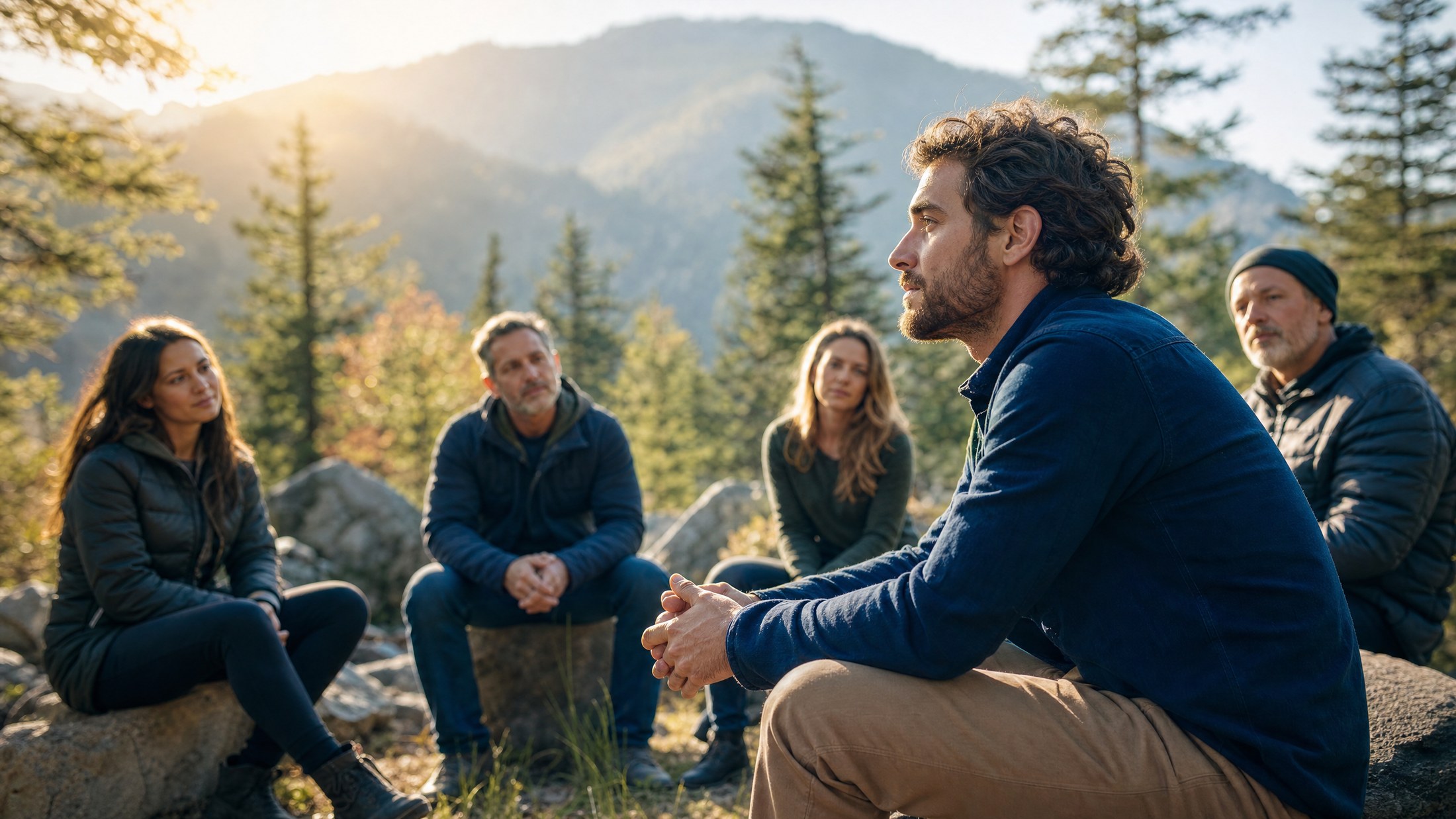


What Is a Recovery Support Specialist?

Key Takeaways
- A recovery support specialist is a trained, often certified worker in stable recovery who provides non-clinical support alongside your care team, distinct from a therapist, sponsor, or case manager.
- The role combines lived experience with formal training, offering emotional, informational, instrumental, and affiliational support during the ordinary hours between clinical appointments where recovery actually happens.
- Certification standards vary by state, with Oregon requiring 40 hours for Peer Support Specialists and Wyoming using IC&RC credentials, but core competencies like trauma-informed care and ethical boundaries stay consistent 3.
- Specialists won't diagnose, prescribe, or run therapy, and they won't do the work for you, but they extend a stretched behavioral health workforce and improve treatment engagement 11, 14.
The Person Who Walks Beside You After Detox
The first weeks after detox are honest work. Your body has cleared the substance, but your life hasn't caught up yet. Appointments pile up. Sleep is uneven. Old routines pull at you, and new ones haven't set. This is the stretch where having the right person in your corner matters most.
A recovery support specialist is that person. Not a therapist. Not a sponsor. Not a case manager. Someone who has lived through their own recovery from a substance use disorder, completed formal training, and now shows up alongside you as you rebuild 1. They know what a craving feels like at 3 p.m. on a Tuesday. They know how strange it feels to sit in a doctor's office sober for the first time in years.
If you're in or considering an intensive outpatient program somewhere in the Pacific Northwest, or looking at Wyoming drug rehab options, you'll likely meet one. This guide walks you through what they do, how they're trained, and how to use their support well during the fragile window between detox and steady ground.
Defining the Role in Plain English
Here's the plainest version: a recovery support specialist is a person in stable recovery from a substance use disorder (or, in some cases, a mental health condition) who has completed formal training to help other people do the same work. They're sometimes called peer support specialists, peer recovery specialists, or certified recovery peer advocates, depending on the state. The job title changes. The core idea does not.
What makes the role distinct is the combination of two things at once: real lived experience with addiction and recovery, plus structured training in how to use that experience to help someone else without projecting or overstepping 1. It's not a friend who happens to be sober. It's not a volunteer telling their story. It's a trained worker who has been credentialed by a state or nationally recognized body to provide non-clinical recovery support as part of your care team 13.
Non-clinical is the key word there. A recovery support specialist does not diagnose you, prescribe anything, or run therapy sessions. They work alongside the clinicians who do. In Oregon addiction treatment programs and Wyoming drug rehab settings alike, they show up in the spaces between formal appointments — the parts of recovery where you actually live your life. That's where the road gets bumpy, and that's where they're built to help.
How This Role Differs From a Therapist, Sponsor, or Case Manager
Four Roles, Four Different Jobs
People often lump these four roles together because they all involve helping someone in recovery. They're not the same job, and knowing the difference protects you from asking the wrong person for the wrong kind of help.
A licensed clinician — your therapist, counselor, or psychiatrist — is trained and licensed by the state to diagnose conditions, deliver therapy modalities like CBT or DBT, and prescribe or oversee medication when relevant. Their relationship with you is clinical. They keep formal notes, follow a treatment plan, and see you during scheduled sessions.
A 12-step sponsor is a volunteer from a mutual-aid fellowship like AA or NA. They aren't paid, aren't certified, and aren't part of your treatment team. They guide you through the steps of a specific program based on their own experience. That relationship is spiritual and fellowship-based, not clinical.
A case manager coordinates services. They handle referrals, help with paperwork, track appointments, and connect you with benefits, housing programs, or medical care. They're focused on logistics across systems.
A recovery support specialist sits in a different space. They're a trained, often certified worker who uses their own lived recovery experience to provide non-clinical support as part of your care team 1. They help you develop a recovery plan, build coping and life skills, and stay engaged with treatment — drawing on both personal experience and formal training 8. They're not diagnosing you like a clinician, not volunteering like a sponsor, and not primarily doing paperwork like a case manager. They help with the daily practice of staying in recovery 2.
One rough way to hold it in your head: the clinician treats the condition, the sponsor walks the program, the case manager works the system, and the recovery support specialist walks the day with you.
Why Lived Experience Changes the Relationship
Here's the piece that's hard to describe until you've been in the room for it.
When you tell a therapist about a craving that hit you in a grocery store parking lot, they can help you work through it clinically. Good therapists do this every day. But when you tell a recovery support specialist the same thing, and they say, "Yeah, mine used to hit hardest in the car, and here's what I did," something different happens. The shame drops a level. You're not the patient anymore. You're two people who know the same territory.
Researchers who studied peer support in real recovery systems described the relationship as reciprocal and grounded in shared experience — closer to mutual mentorship than a professional service transaction 9. That reciprocity is the point. You're being helped by someone who is also, in a real sense, still walking the road themselves.
This doesn't make lived experience better than clinical training. It makes it different, and useful for different things. A therapist can help you understand why a craving hit. A recovery support specialist can help you get through the next 20 minutes and text you the following morning to see how you slept. In a well-run Oregon addiction treatment or Wyoming drug rehab program, you get both — not one instead of the other.
What They Actually Do: Four Categories of Support
The federal framework for peer recovery support services groups the work into four categories: emotional, informational, instrumental, and affiliational 2. That sounds tidy on paper. In practice, all four blur together on a single Tuesday afternoon. Still, the categories are worth knowing because they help you understand what you can actually ask for.
Emotional support is the piece most people picture first. It's the phone call when a craving hits at 9 p.m. and you're pacing your apartment. It's the person who sits next to you before your first family therapy session and says, "Mine went sideways too. You'll survive it." It's someone who takes your fear seriously without making it bigger than it is. This is where lived experience does the heaviest lifting.
Informational support is coaching on how recovery actually works. What does an intensive outpatient program schedule really look like? What happens if you miss a group? How does Medicaid billing intersect with your treatment plan? Recovery support specialists have usually been through some version of this themselves, so they can translate the system into plain English instead of clinical jargon.
Instrumental support is the concrete, unglamorous stuff. Rides to appointments when your license is suspended. Help filling out a housing application. Sitting with you while you make a hard phone call to a landlord or an employer. Practical help with employment, housing, and treatment navigation is a documented core function of the role 2. This is often what makes the difference between staying in a program and quietly falling out of one.
Affiliational support is connection to sober community. Introducing you to a home group. Bringing you to a Wellbriety circle for the first time. Sitting with you at a recovery event so you don't have to walk in alone. Isolation is one of the biggest risks in the post-detox window, and this category exists specifically to counter it.
Notice what's not on that list: therapy, prescriptions, diagnoses, or clinical case notes. A recovery support specialist works across all four categories without crossing into clinical territory. That's the design, and it's the reason the role fits so well alongside — not instead of — the clinicians on your team in an Oregon addiction treatment or Wyoming drug rehab program.
Training and Certification: What 'Trained' Actually Means
The Oregon Model: 40 Hours vs. 80 Hours
When someone says a recovery support specialist is "trained," that word carries real weight in Oregon. It's not a weekend workshop or an online quiz. The state sets a specific number of hours you have to complete before you can be certified to do this work under Oregon's Traditional Health Worker program.
Here's the breakdown. To become a certified Peer Support Specialist in Oregon, you complete a 40-hour training program. To become a Peer Wellness Specialist — a related role with a broader whole-health focus — you complete an 80-hour training program 6. Both tracks require that you self-identify as being in recovery from a substance use disorder, a mental health condition, or problem gambling, or that you have received services yourself 5.
Why the two tiers? The 40-hour PSS track prepares you to provide peer recovery support specifically around addiction or mental health. The 80-hour PWS track goes further into wellness coaching — nutrition, physical health, chronic disease self-management — alongside the peer support core. Neither replaces the other. They're built for different jobs.
When you meet a recovery support specialist inside an Oregon addiction treatment program, you can ask which certification they hold. It's a fair question, and a good one tells you what kind of help they're trained to offer.
Wyoming and Other State Models
Cross the state line and the paperwork changes, but the shape of the role holds.
In Wyoming, peer specialists are trained and certified through Recover Wyoming, using standards set by the International Certification & Reciprocity Consortium — IC&RC for short 7. IC&RC is a body that standardizes credentials across states, which means a certification earned in Wyoming often transfers if you move. For anyone leaning on Wyoming mental health resources or entering Wyoming drug rehab, that reciprocity matters. It signals that your specialist has met competencies recognized well beyond the state's borders.
Other states use their own labels. New York calls the role a Certified Recovery Peer Advocate, and defines them as workers who draw on personal experience and professional training to deliver non-clinical support inside a patient's treatment plan 8. Oklahoma uses Certified Peer Recovery Support Specialist, with duties spanning crisis support, advocacy, and connecting people to services 15.
Different titles. Different training hours. Same core job. If you're moving between states during recovery, ask the treatment program how the specialist you'll be working with was credentialed. It's a small question that clears up a lot.
Core Competencies Behind Every Certification
Underneath the different state labels sits a shared set of skills every recovery support specialist is expected to build during training. SAMHSA, the federal agency that shapes much of this work, publishes a core competencies framework that most state programs draw from 3.
A few of the domains matter especially to you as the person receiving support.
- Recovery principles
- Means your specialist has been trained to treat recovery as self-directed — your goals, your pace, not a template dropped on you.
- Trauma-informed care
- Means they've learned to recognize how past trauma shapes present behavior, and to work in ways that don't re-injure.
- Ethical responsibility
- Means they've been trained on boundaries — what to share, what not to share, when to hand something off to a clinician.
Real Recovery Starts in Portland, Oregon
Call now or verify insurance to take the first step toward lasting recovery in Portland.
A Typical Week With a Recovery Support Specialist
Categories are useful. What's more useful is a week.
Picture a Monday morning in an intensive outpatient program somewhere in Portland or Central Oregon. You're two weeks past detox. Your specialist texts you at 7:45 a.m. to make sure you're up for the 9 a.m. group. That's not babysitting — it's the kind of small, external structure your brain can't quite hold yet on its own. You show up. They're in the back of the room, not leading the session, just present.
After group, you grab coffee together. Fifteen minutes, tops. They ask how the weekend went. You mention a rough Saturday night. They don't lecture. They ask what you did instead of using, and they name it out loud so you can hear yourself say something worked.
Wednesday might be a ride to a probation check-in, or help drafting an email to an employer about a gap in your work history. Practical, unglamorous, the stuff that gets skipped when nobody's watching 14.
Thursday evening, a Wellbriety circle or a home group meeting. Your specialist walks in with you the first time, then steps back once you know a few faces. The point isn't to hold your hand forever. It's to lower the activation cost of showing up while your nervous system relearns what safety feels like in sober company.
Friday afternoon, a check-in call. Ten minutes. Weekend plan. Who you'll text if things get loud in your head. What time you'll be at the Sunday meeting.
That's a week. Not dramatic. Not therapy. Not a sponsor's spiritual guidance. A steady, trained presence in the ordinary hours where recovery actually happens or quietly falls apart 2.
Why This Role Is Growing Right Now
If it feels like you're hearing about recovery support specialists more than a few years ago, you're not imagining it. The role is expanding fast, and there's a reason behind the growth that has nothing to do with trends.
The behavioral health workforce in the United States is stretched thin. Federal workforce planners have pointed to peer specialists, alongside telebehavioral health and integrated care, as one of the practical ways to close the gap between how many people need substance use and mental health support and how many clinicians are available to provide it 11. Therapists and prescribers can only see so many people in a week. Recovery support specialists extend the reach of a treatment team without replacing the clinical work.
There's a second reason, quieter but just as real. Research on peer support across behavioral health settings — community centers, hospitals, outpatient programs — keeps finding that it improves treatment engagement and helps reduce substance use 14. People stay in programs longer when someone who has walked the road is walking it with them. That's why you'll see the role built into more Oregon addiction treatment programs and Wyoming mental health resources every year. It works, and the system is finally catching up.
Honest Limitations: What a Recovery Support Specialist Won't Do
Loving this role means being honest about its edges.
A recovery support specialist won't diagnose you, prescribe medication, or run a therapy session. That's not a gap in their training — it's the boundary the training draws on purpose. When something you're describing needs clinical eyes, a well-prepared specialist hands it off to your counselor or prescriber and stays connected to the practical side of your week 3.
They also won't do the work for you. They'll drive you to a meeting; they won't sit in the chair for you. They'll help you draft the email to your employer; they won't send it. That's not stinginess. It's how skill-building actually works after detox.
The role itself is still evolving. A 2025 review of the peer support workforce named the real tension out loud: as certification, reimbursement, and formal competencies expand, the field is working to keep the mutuality and lived-experience authenticity that made peer support powerful in the first place 10. Your specialist is a trained professional and a person still walking their own road. Both things are true, and knowing that keeps your expectations honest — of them and of yourself.
How to Use This Support Well in Your First 12 Weeks
Knowing what a recovery support specialist is matters less than knowing how to actually work with one. Here's how to get the most out of the relationship during the stretch that matters most.
Ask for what you need in plain language. Your specialist isn't a mind reader. If cravings hit hardest between 4 and 7 p.m., say so. If mornings are the wobbly part, say that. The four categories of support — emotional, informational, practical, connection — are all fair game to ask for by name.
Use them for the small stuff, not just the crises. The Tuesday afternoon ride to a probation check-in matters as much as the Saturday night phone call. People who wait until they're in crisis to reach out lose the everyday scaffolding that keeps crises from happening in the first place.
Be honest about the hard weeks. Telling your specialist you almost used on Sunday is exactly the kind of thing they're trained to hear without flinching. Shame keeps recovery small. Honesty gives your team something to work with.
Let them hand you off when they should. If your specialist tells you something belongs in your therapist's office or with your prescriber, trust that. It's a sign of good training, not a rejection.
Twelve weeks won't fix everything. It will build the routines and relationships that make month four possible — and then month six. That's the real work, and you don't have to do it alone.
Frequently Asked Questions
Is a recovery support specialist the same as a sponsor?
No. A sponsor is a volunteer from a 12-step fellowship who guides you through the steps of a specific program, unpaid and uncertified. A recovery support specialist is a trained, often certified worker who uses lived recovery experience to provide non-clinical support as part of your care team 1. You can have both. They do different jobs.
Do I need a recovery support specialist if I already have a therapist?
Yes, and the two roles are built to work together. Your therapist handles diagnosis, therapy, and clinical treatment. A recovery support specialist works alongside that clinical care, helping with the daily practice of staying in recovery — cravings between sessions, rides to appointments, connections to sober community 2. One treats the condition. The other walks the day with you.
How is a recovery support specialist trained and certified?
Requirements vary by state. In Oregon, becoming a certified Peer Support Specialist requires a 40-hour training program under the Oregon Health Authority 6. In Wyoming, peer specialists earn IC&RC-based certification through Recover Wyoming, which offers reciprocity across many states 7. New York, Oklahoma, and other states have their own titles and pathways, but the core competencies — trauma-informed care, ethical boundaries, recovery principles — stay consistent 3.
What can a recovery support specialist actually help me with day-to-day?
Practical, ordinary things. Getting to appointments when transportation is hard. Drafting an email to an employer. Sitting with you before a family therapy session. Walking into a Wellbriety circle or meeting with you the first time. Talking you through a craving on the phone at 9 p.m. Their work spans emotional, informational, practical, and community-connection support — the parts of recovery that happen between clinical appointments 2.
Does a recovery support specialist have to share my exact background?
No, and shared experience matters more than identical experience. They need to be in stable recovery from a substance use disorder or mental health condition and to have completed formal training 5. What makes the relationship work is genuine mutual understanding of what recovery asks of a person, not matching every detail of your story 9. You can ask about their background if it helps you trust the relationship.
When should I start working with a recovery support specialist?
As early as you can — ideally during the transition from detox into an intensive outpatient or residential program. The first 12 weeks after detox are when routines, relationships, and coping skills are being rebuilt, and that's exactly the window this role is designed for 4. If you're entering Oregon addiction treatment or looking at Wyoming drug rehab, ask the program how peer support is integrated into your care plan.
References
- Peer Support Workers for Those in Recovery. https://www.samhsa.gov/substance-use/recovery/peer-support-workers
- What Are Peer Recovery Support Services?. https://www.samhsa.gov/resource/ebp/what-are-peer-recovery-support-services
- SAMHSA's Core Competencies for Peer Workers (Box from Chapter 3—Peer Worker Core Functions in Substance Use Disorder Treatment and Recovery Support). https://www.ncbi.nlm.nih.gov/books/NBK596270/box/ch3.b4/?report=objectonly
- Chapter 1—Introduction to Peer Support Services for People with Substance Use Disorders. https://www.ncbi.nlm.nih.gov/books/NBK596266/
- Peer Support Specialist (PSS). https://www.oregon.gov/oha/ei/pages/thw-pss.aspx
- Training and Certification : Peer Delivered Services. https://www.oregon.gov/oha/hsd/amh-pd/pages/training-certification.aspx
- Peer Specialists. https://health.wyo.gov/behavioralhealth/mhsa/peer-specialists/
- Become a Certified Recovery Peer Advocate. https://oasas.ny.gov/recovery/become-certified-recovery-peer-advocate
- Voices of Hope: Substance Use Peer Support in a System of Care. https://pmc.ncbi.nlm.nih.gov/articles/PMC8524681/
- Advancing peer support workforce research: Insights and recommendations through the lens of professionalization. https://pubmed.ncbi.nlm.nih.gov/39710359/
- Behavioral Health Workforce, 2023. https://bhw.hrsa.gov/sites/default/files/bureau-health-workforce/Behavioral-Health-Workforce-Brief-2023.pdf
- National Helpline. https://www.samhsa.gov/find-help/helplines/national-helpline
- Chapter 6—How To Become a Peer Specialist. https://www.ncbi.nlm.nih.gov/books/NBK596268/
- Supporting Peer Support Workers | Research Corner. https://www.iris.ssw.umaryland.edu/rc-peer-support-work
- Certified Peer Recovery Support Specialist. https://oklahoma.gov/odmhsas/trainings/workforce-certification/certified-peer-recovery-support-specialist.html
Relapse Doesn't Mean the End Of Your Journey
Reach out today to explore programs that support real, long-term sobriety.