





Outpatient Rehab Near Me: Flexible Care in Portland

Key Takeaways
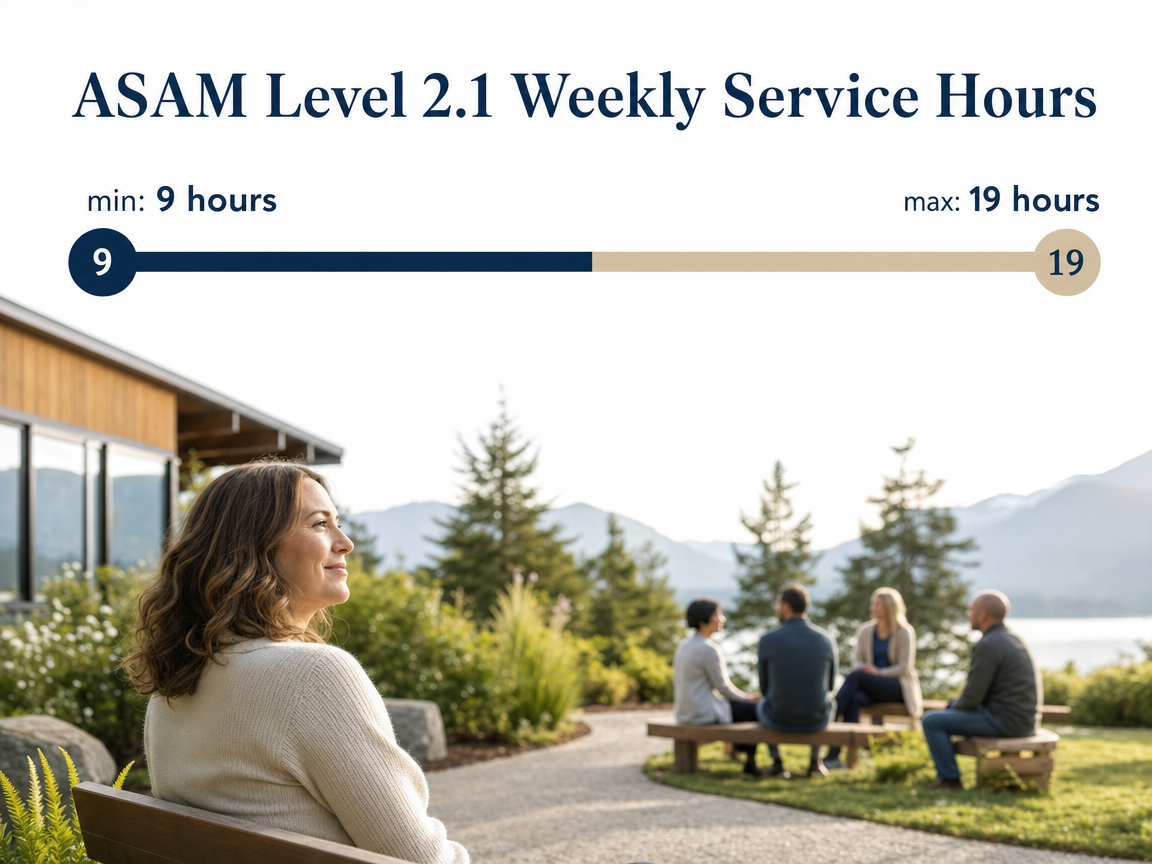
- Portland outpatient rehab spans traditional weekly therapy through ASAM Level 2.1 intensive outpatient, which delivers 9 to 19 structured hours per week under Oregon Health Authority oversight 3, 1.
- Research shows intensive outpatient produces reductions in problem severity and gains in abstinent days comparable to inpatient care, provided you engage consistently with groups and individual work 8.
- Evening cohorts, transit access from Beaverton or Gresham, co-occurring mental health scope, and state certification for outpatient SUD services are the local factors worth weighing before enrolling 10, 5.
- Before choosing a program, compare weekly hours, therapy formats, co-occurring scope, step-down coordination from detox or residential, and coverage under OHP or commercial insurance 9, 11.
Recovery That Keeps Your Paycheck and Your Progress
You already know what your week looks like. Standups on Monday, deliverables by Thursday, a kid's soccer game somewhere in there, and a commute that eats whatever's left. The question you're really asking when you search for outpatient rehab near me isn't whether treatment exists in Portland. It's whether treatment exists that won't cost you your job, your housing, or the quiet dignity of keeping your life mostly intact while you do this hard thing.
Here's what's worth knowing up front: outpatient care in Oregon isn't a discount version of "real" rehab. Under state rules, intensive outpatient substance use disorder treatment is defined as structured, nonresidential care for people who need more clinical contact than traditional outpatient offers, with staffing and service standards regulated by the Oregon Health Authority 1. That means the program you attend after work on a Tuesday night is held to real requirements, not a lighter set.
This guide walks you through what outpatient rehab actually looks like in the Portland metro, how many hours per week you should plan for, what co-occurring mental health support does and doesn't include, and how Oregon Health Plan and commercial coverage change what's accessible. You're carrying a lot already. The goal here is to help you carry it with better information.
Understanding Outpatient Rehab in Oregon
Traditional Outpatient vs. Intensive Outpatient (ASAM Level 2.1)
The word "outpatient" hides a big range. On one end, you might see a therapist for an hour a week and call it outpatient care. On the other end, you might be in a group room from 6 to 9 p.m. three nights a week, plus an individual session on Saturday morning. Same word. Very different demand on your calendar.
The clinical shorthand for the more structured end is ASAM Level 2.1, or intensive outpatient. Under the American Society of Addiction Medicine's service characteristics, adult IOPs generally provide 9 to 19 hours of structured, professionally directed programming per week, made up mostly of counseling and education about substance use and mental health concerns 3. A peer-reviewed synthesis of IOP research puts the floor even more plainly: these programs offer a minimum of 9 hours of service per week 8. Traditional outpatient typically sits below that threshold, often just a session or two.
That gap matters when you're deciding what level of care to enter. Nine hours a week is the difference between having recovery as a weekly appointment and having recovery as a scaffolding around your evenings. For someone coming out of detox or residential treatment, or trying to interrupt a serious pattern without leaving work, the scaffolding is usually the point.
Here's the honest read: if your use has been heavy, daily, or dangerous, a single therapy hour a week is rarely enough to hold new ground. IOP gives you group accountability, clinical monitoring, and skills practice at a dose that can actually shift the week. Traditional outpatient works better once you've built stability and want continued support without the intensity. Both are real treatment. They're just tuned for different points in the same journey.
How Oregon Licenses and Regulates These Programs
Here's something that should help you sleep a little easier when you're comparing programs: outpatient rehab in Oregon isn't a free-for-all. The Oregon Health Authority licenses and certifies behavioral health providers, and outpatient programs for mental health, substance use disorders, and problem gambling treatment fall inside that regulated category 10. If a program is operating legitimately in Portland, it's answering to state oversight.
The substantive rulebook lives in Oregon Administrative Rules Chapter 309, which spells out how intensive outpatient substance use disorder services are defined and how programs must be staffed, documented, and delivered. State rules describe intensive outpatient SUD treatment as"structured, nonresidential evaluation, treatment, and continued care services for individuals with substance use disorders who need a greater number of therapeutic contacts per week than are provided by traditional outpatient services"1. Translation: the state has already drawn a line between "an hour with a counselor" and "a structured program," and it holds the structured programs to a different standard.
OHA's outpatient services framework also includes DUII treatment and problem gambling services under the same licensing umbrella, which is why one clinic in Southeast Portland might handle several kinds of behavioral health care under a single certification 2. When you're calling around, you don't need to interrogate every program about its credentials. You do want to confirm the program is state-certified for outpatient SUD services and, if it applies to you, for DUII or co-occurring support. That single question filters out a lot of noise.
Does Outpatient Care Actually Work for Serious Substance Use?
This is the question that keeps people stuck in the parking lot before their first call. If you're serious about stopping, does going home each night undercut the whole thing?
"equivalent reductions in problem severity and increases in days abstinent" when IOP is compared with inpatient care8outpatient is magic
Nationally, most people with substance use disorders who get care receive it in outpatient settings rather than inpatient or residential programs 7. That's not because outpatient is a compromise. It's because for a large share of adults, community-based treatment is both effective and possible without pulling the rest of life apart. The question isn't whether outpatient can work. It's whether you're ready to let it.
Fitting 9 to 19 Clinical Hours Around a 40-Hour Job
A Realistic Weekly Schedule
Nine to nineteen hours a week sounds like a second job when you read it cold. Sketched onto an actual calendar, it looks smaller than you'd think. ASAM Level 2.1 programming is designed to be delivered in blocks of counseling, education, and skills work, not spread thin across every day 3. That gives you room to build a schedule that leaves your workday mostly untouched.
Picture a typical week at the lower end of the range. Three evening group sessions, say Monday, Wednesday, and Thursday from 6 to 9 p.m., add up to nine hours on their own. That's the floor. If your program runs closer to twelve or fifteen hours, you might add a Saturday morning skills group and a weekly individual therapy session slotted into a long lunch or a late afternoon. At the top of the range, you're looking at four evenings plus a weekend block, which is real weight but still leaves your 9-to-5 intact.
Portland commutes shape this more than people admit. If your program is in the Central Eastside and you work downtown, you can walk or take the streetcar and be in your seat by 6. If you're coming in from Beaverton or Gresham, build in a buffer or ask about programs closer to home. Many Portland IOPs run parallel evening cohorts specifically so working adults can pick a schedule that survives contact with rush hour.
One quiet truth: the hours you're not in group still belong to recovery. Sleep, meals, a walk after the session lets out. Treat those as part of the plan, not the leftovers.
Talking to Your Employer (or Not)
You don't owe your manager a diagnosis. That's worth saying plainly, because a lot of the fear that keeps people out of treatment lives in the imagined version of that conversation.
Most working professionals in IOP never disclose the specifics. Evening groups don't touch your work hours. An individual session at 4:30 p.m. looks like any other standing appointment on your calendar. If your program runs a midday skills group, a recurring block labeled "appointment" is usually enough. You're a professional managing your calendar, which is what you already do.
There are situations where disclosure helps. If you're stepping down from residential care, you may need a week or two of adjusted hours while your schedule settles. If your role requires drug testing or fitness-for-duty standards, an early, careful conversation with HR (not your direct manager) protects you better than silence. The Family and Medical Leave Act and the Americans with Disabilities Act both offer real protections for treatment, and HR is the department trained to apply them.
If you do disclose, keep it small. "I'm working with a healthcare provider on an ongoing condition and need consistent evening availability" is a complete sentence. You are not required to elaborate.
The bigger risk isn't your employer finding out. It's you skipping group because a 5 p.m. meeting ran long and no one knew to protect the boundary. Decide in advance which meetings can slip and which cannot.
Co-Occurring Mental Health Support: What's Included and What Isn't
Substance use rarely travels alone. Depression, anxiety, PTSD, and the aftershocks of trauma often ride shotgun, and any honest conversation about outpatient rehab has to name that. The good news for Portland readers: outpatient SUD programs in Oregon are, on the whole, more likely than residential programs to say they can hold co-occurring work. In the state's 2022 inventory of co-occurring disorder services, 42% of outpatient substance use programs reported treating co-occurring disorders, compared with 33% of residential substance use programs 5. One scope note before that number does any heavy lifting: those are self-reported program capacities from a state inventory, not patient outcome data. A program saying "yes, we treat co-occurring" tells you something real about how it's staffed and organized. It doesn't tell you how well any specific person will do inside it.
Still, the direction of the finding matters when you're choosing where to spend your evenings. Outpatient settings in Oregon are built to sit closer to your regular life, which means they tend to weave mental health support into weekly group and individual work rather than treating it as a separate silo. SAMHSA's guidance on co-occurring care emphasizes exactly this kind of integration: coordinated treatment planning, medication continuity, and discharge planning that keeps mental health and substance use supports connected instead of handing you off between disconnected systems 9.
The practical ask when you're comparing programs: "How do you treat co-occurring conditions, and what falls outside your scope?" A program that answers that clearly is one you can plan a real recovery around.
What Happens Inside the Room: Therapies You'll Actually Do
Group room, folding chairs in a loose circle, a whiteboard someone forgot to erase. That's the physical shape of most of your treatment hours. What happens inside that room is more structured than it looks.
The National Institute on Drug Abuse describes behavioral therapies as the most commonly used forms of drug addiction treatment, and they're the backbone of what you'll do in a Portland IOP 6. Cognitive behavioral therapy is where you learn to catch the thought that shows up ten minutes before the craving and do something with it besides ride it. Motivational interviewing is the one-on-one conversation style your counselor uses when your commitment wobbles, which it will. Contingency management, when a program offers it, rewards concrete recovery behaviors like attendance and negative screens. None of this is mysterious. It's skill-building for the parts of your life that used to run on autopilot.
Expect a mix of formats across your week. Process groups where people talk about what actually happened between sessions. Psychoeducation groups on topics like sleep, craving cycles, and rebuilding trust. Individual therapy for the material that doesn't belong in a group. If co-occurring mental health work is part of your plan, expect discharge planning to include medication continuity and coordinated handoffs so nothing drops when the program ends 9.
The work is repetitive on purpose. Recovery is a practiced thing.
Real Recovery Starts in Portland, Oregon
Call now or verify insurance to take the first step toward lasting recovery in Portland.
Paying for Outpatient Rehab in Portland
OHP, Commercial Insurance, and Access Rules
Money is often the reason people delay the call, and it shouldn't be. If you're covered by the Oregon Health Plan, the access story is more open than you might expect. OHP behavioral health coverage includes screening, assessment, medication-assisted treatment, detoxification, and individual, group, and family counseling for substance use concerns, and you don't need a primary care referral to get started 11. You can call an outpatient program directly, ask about intake, and start the process on your own timeline.
That matters more than it sounds like it does. A referral requirement is a bureaucratic checkpoint that stops a lot of adults who were already halfway to picking up the phone. Removing it means you can decide on a Sunday night and act on it Monday morning.
If you have commercial insurance through your employer, the mechanics are different but the category is familiar. Behavioral health is a covered benefit under most plans, and outpatient SUD treatment is one of the more consistently covered levels of care. Call the member services number on your card and ask two questions: is intensive outpatient at the ASAM Level 2.1 level covered, and which Portland-area programs are in-network? Most programs will also run a benefits check for you before intake.
Cash-pay and sliding-scale options exist for people between coverage. Ask directly. Programs would rather quote you a number than lose you to silence.
Weekly Hours and Coverage Snapshot
A quick reference for the numbers that shape access, drawn only from the sources cited above.
| What you're checking | What the rules or research say | Source |
|---|---|---|
| Weekly hours at ASAM Level 2.1 (IOP) | 9 to 19 hours of structured programming per week, with a 9-hour minimum | 3, 8 |
| OHP behavioral health referral | No primary care referral required for SUD treatment | 11 |
| OHP covered outpatient services | Screening, assessment, MAT, counseling (individual, group, family) | 11 |
Use this as a phone-call cheat sheet. If a program can't map its schedule and coverage to these categories in plain language, keep calling.
Stepping Down From Detox or Residential Into Outpatient
If you're reading this a week out from residential discharge, or a few days past finishing detox, the transition is where a lot of hard-won progress either takes root or quietly slips. Outpatient care is where that root system gets built. The clinical structure is designed for exactly this handoff: continued treatment at a lower intensity, delivered while you sleep in your own bed and start reclaiming the ordinary parts of your day.
SAMHSA's guidance on co-occurring care is direct about what makes this transition hold. Discharge planning must ensure continuity of services, medication management, and support to prevent a return to use, with outpatient programs picking up several hours per day, several days per week 9. That's the mechanical shape of a good step-down. Your intake at the outpatient program should happen while you're still in the higher level of care, not after. Your medications should be prescribed or coordinated without a gap. Your first group should be on the calendar before you walk out the residential door.
For detox specifically, Oregon Trail Recovery partners with Pacific Crest Trail Detox for the medical stabilization piece, then continues the work in outpatient. The bridge matters more than either endpoint on its own. Ask any program you're considering how they handle warm handoffs, medication continuity, and the first two weeks after discharge. Those weeks carry the most weight.
Choosing a Portland Program Without Getting Overwhelmed
You do not need to interview twelve programs. You need three to five real conversations with programs that answer their phones and treat you like an adult. Here's a short list of what to actually ask.
Start with schedule. Which evening cohorts are running right now, and when does the next one start? A program that can't tell you the start date is not ready for you this month. Ask about location and parking, or transit access if you're coming from Beaverton, Gresham, or the west side. Ask whether the group meets in person, hybrid, or by telehealth, and whether that flexes if a work trip comes up.
Then ask the clinical questions:
- Is the program state-certified for outpatient SUD services under Oregon Health Authority licensing 10?
- What behavioral therapies form the backbone of group and individual work 6?
- How do they handle co-occurring depression, anxiety, or trauma, and what falls outside their scope 5?
- If you're stepping down from detox or residential, how do they coordinate the handoff and medication continuity 9?
Finally, ask about money. Do they take your insurance, and can they run a benefits check before intake?
Pick the program whose answers were clearest. Clarity now predicts clarity later.
Frequently Asked Questions
How many hours per week will I actually spend in outpatient rehab?
It depends on the level of care. Intensive outpatient at ASAM Level 2.1 runs 9 to 19 structured hours per week, with 9 as the floor 3, 8. Traditional outpatient sits below that, often one to a few hours weekly. Most Portland IOPs cluster around three evening groups plus an individual session, so plan for roughly 10 to 12 hours to start.
Is intensive outpatient as effective as going to residential treatment?
For many adults, yes. A peer-reviewed synthesis of IOP research found randomized trials show "equivalent reductions in problem severity and increases in days abstinent" when IOP is compared with inpatient care 8. The setting matters less than your engagement. Residential still makes sense when your home environment isn't safe or stable, but outpatient is not a lesser tier of treatment.
Does the Oregon Health Plan cover outpatient rehab in Portland?
Yes. OHP behavioral health coverage includes screening, assessment, medication-assisted treatment, detoxification, and individual, group, and family counseling for substance use concerns 11. You don't need a primary care referral to start 11. Call an outpatient program directly, ask for intake, and they'll verify your OHP benefits before your first appointment. Access is more open than most people expect.
Can outpatient programs treat depression or anxiety alongside substance use?
Many can, within scope. Outpatient SUD programs commonly offer co-occurring support, meaning therapy that addresses depression, anxiety, or trauma as it shows up alongside substance use, plus coordination with a prescriber 9. What they generally don't do is act as your primary psychiatric clinic. If your mental health needs are complex, ask specifically how the program coordinates with outside providers before you commit.
Do I have to tell my employer I'm in outpatient treatment?
No. Evening groups don't touch your workday, and an individual session looks like any standing appointment on your calendar. If your role requires drug testing or fitness-for-duty standards, talk with HR (not your manager) about protections under the ADA and FMLA. When disclosure is needed, keep it brief: "I'm working with a healthcare provider on an ongoing condition" is complete. You aren't required to elaborate.
Can I start outpatient rehab without going through detox or residential first?
Often yes. Outpatient care is where most people with substance use disorders receive treatment nationally, not just as a step-down 7. Your intake assessment determines the right starting level. If you're using substances where medical withdrawal is risky (alcohol, benzodiazepines, opioids), a program will typically route you through detox first, then bring you back for outpatient. Call, ask, and let the assessment decide.
References
- Behavioral Health Services – Chapter 309. https://www.oregon.gov/oha/HSD/RAC/309-019.pdf
- Behavioral Health Outpatient Treatment Programs. https://www.oregon.gov/oha/hsd/amh-lc/pages/op.aspx
- LEVEL 2.1 INTENSIVE OUTPATIENT SERVICES BY SERVICE CHARACTERISTICS. https://www.pa.gov/content/dam/copapwp-pagov/en/ddap/documents/documents/asam/level%202.1%20by%20service%20characteristics.pdf
- Substance Use Disorder Financial Analysis Report (Oregon Health Authority, May 13, 2024). https://www.oregonlegislature.gov/citizen_engagement/Reports/Substance%20Use%20Disorder%20Financial%20Analysis%20Report%205.13.2024.pdf
- Oregon Inventory of Services for Co-Occurring Substance Use and Mental Health Disorders, 2022. https://www.oregon.gov/oha/HSD/AMH/DataReports/COD-Service-Inventory-2022.pdf
- Behavioral Therapies | Principles of Drug Addiction Treatment. https://www.nida.nih.gov/publications/principles-drug-addiction-treatment-research-based-guide-third-edition/evidence-based-approaches-to-drug-addiction-treatment/behavioral-therapies
- Substance Use Disorder Treatment Utilization in the United States. https://effectivehealthcare.ahrq.gov/products/substance-use-disorder-hospital/utilization-2021
- Substance Abuse Intensive Outpatient Programs. https://pmc.ncbi.nlm.nih.gov/articles/PMC4152944/
- Chapter 7—Treatment Models and Settings for People With Co-Occurring Disorders. https://www.ncbi.nlm.nih.gov/sites/books/NBK571024/?report=reader
- Oregon Health Authority : Licensing and Certification. https://www.oregon.gov/oha/hsd/amh-lc/pages/index.aspx
- Oregon Health Plan (OHP) Behavioral Health Coverage. https://www.oregon.gov/oha/hsd/ohp/pages/behavioral-health.aspx
- Multnomah County 2024 Student Health Survey data tables. https://www.oregon.gov/oha/PH/BIRTHDEATHCERTIFICATES/SURVEYS/Documents/SHS/2024/Reports/County/Multnomah%20County%202024.pdf
Relapse Doesn't Mean the End Of Your Journey
Reach out today to explore programs that support real, long-term sobriety.