




What Is Considered Alcohol Addiction?

Defining What Is Considered Alcohol Addiction
Clinical Criteria and Diagnostic Framework
When exploring what is considered alcohol addiction, professionals often turn to the clinical standards outlined in the DSM-5 (Diagnostic and Statistical Manual of Mental Disorders, Fifth Edition). Instead of focusing solely on the volume or frequency of a person's drinking, the DSM-5 evaluates the broader pattern of behavior and its impact on daily life. Think of it like diagnosing a complex engine problem: it’s not just about how many miles the car has driven, but how reliably it can start, steer, and stop safely.
For alcohol use disorder (AUD), the "engine trouble" manifests as a cluster of symptoms. These include failing to meet work or family obligations, continuing to use alcohol even when it causes interpersonal problems, or finding it incredibly difficult to stop once started. The DSM-5 lists 11 specific criteria, such as drinking more or longer than intended, experiencing intense cravings, giving up important activities, and developing a physical tolerance (needing more alcohol to achieve the same effect).
"The shift from focusing on the volume of alcohol consumed to the behavioral and functional impact has revolutionized how industry leaders approach treatment and reduce stigma."
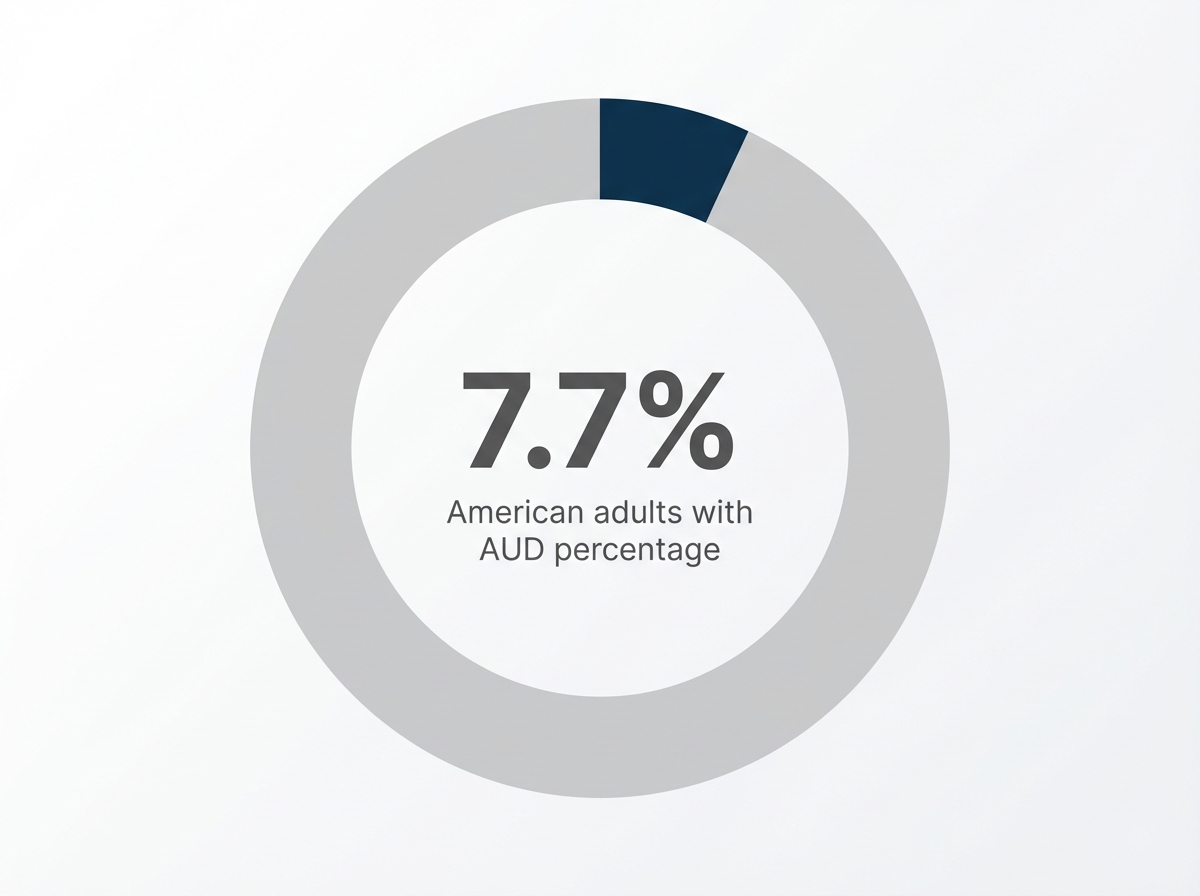
Meeting at least two of these criteria within a 12-month period supports a formal diagnosis of AUD. This comprehensive approach helps clinicians see the full picture, taking into account how alcohol use disrupts relationships, responsibilities, and overall health. Research shows that around 7.7% of American adults meet these clinical criteria for AUD each year. As the field shifts toward person-centered, evidence-based care, this framework guides early identification and precise treatment planning.2
Severity Spectrum: Mild to Severe
Alcohol use disorder isn’t a one-size-fits-all diagnosis; it is measured along a spectrum from mild to severe. This spectrum is determined by how many symptoms an individual exhibits from the clinical criteria list. Think of it like a dimmer switch for a light: some individuals experience mild disruptions, while others are completely overwhelmed by the disorder’s effects.
Understanding what is considered alcohol addiction through this spectrum model helps professionals match support to each person’s unique needs, rather than applying a uniform treatment to every case. Industry leaders find that this nuanced approach significantly improves the accuracy of diagnosis and the efficacy of subsequent care. Readers might be wondering how these behavioral patterns actually alter the way the brain functions—this neurobiological shift will be covered in the next section.3
Neurobiological Changes in What Is Considered Alcohol Addiction
Brain Reward Systems and Executive Function
When examining the roots of alcohol use disorder, it helps to visualize the brain as a bustling city where traffic lights and roads guide the flow of information. In a healthy brain, the reward system acts as green lights for positive, life-sustaining actions, such as eating a good meal or socializing with loved ones. Alcohol hijacks this delicate system by flooding it with artificial signals that make drinking feel overwhelmingly rewarding—almost as if every traffic light in the city turns green at once.
Figure 1: The three-stage neurobiological cycle of alcohol use disorder, highlighting the affected brain regions.
Over time, the brain attempts to restore balance by dialing down its own natural reward signals. This leads to a diminished sense of pleasure from everyday activities and an increased, compulsive drive to seek alcohol instead. Simultaneously, the prefrontal cortex—the area responsible for executive functions like planning, decision-making, and self-control—begins to lose its regulatory influence. This is akin to the city's traffic controllers falling asleep on the job, making impulsive behavior highly likely. These neurobiological changes can persist long after drinking stops, making recovery incredibly challenging even when an individual desperately wants to quit.6

Genetic and Environmental Contributors
Two major influences heavily dictate a person's vulnerability to alcohol use disorder: genetics and environment. Genetics serve as the foundational blueprint a person inherits, shaping their baseline risk. Studies estimate that the heritability of alcohol use disorder is between 50% and 60%. Just as families pass down physical traits like height or eye color, the predisposition for addiction can also run in families. However, genetics alone do not determine destiny.7
Environmental factors act as the soil and weather conditions that determine how that genetic seed grows. Key environmental contributors include:
- Growing up in a household where heavy alcohol use is normalized.
- Experiencing high levels of chronic stress without adequate coping mechanisms.
- Early exposure to trauma or adverse childhood experiences.
Click to learn more about Adverse Childhood Experiences (ACEs)
ACEs include physical or emotional abuse, neglect, and household dysfunction. Individuals with four or more ACEs are 4 to 5 times more likely to develop alcohol use disorder later in life9. This highlights the critical need for trauma-informed care in any recovery program.
Understanding these intertwined contributors helps professionals in Oregon, Wyoming, and the broader Pacific Northwest recognize that addiction is shaped by both inherited risk and lived experience. This comprehensive view is vital for developing empathetic, effective intervention strategies.
Recognizing Functional Impairment
Loss of Control and Continued Use Patterns
One of the most definitive signs of alcohol use disorder is the profound loss of control over drinking, coupled with a pattern of continued use despite mounting negative consequences. Imagine trying to put down a gripping book that is keeping you up late, but each night you read "just one more page"—except with alcohol, the stakes involve a person's health, livelihood, and family. Individuals experiencing AUD frequently find themselves drinking larger amounts than intended, being unable to cut back despite genuine desires to do so, and spending excessive time obtaining, using, or recovering from alcohol.
It is crucial to understand that this loss of control is not a moral failing or a lack of willpower. As previously noted, structural changes in brain chemistry make stopping alcohol use extremely difficult after repeated exposure. Professionals working with families across the Pacific Northwest frequently observe these patterns, where an individual continues to drink despite acute awareness of the harm it is causing to themselves and those around them. Identifying these patterns early is a critical step toward effective intervention.6,8

Impact on Relationships and Responsibilities
When evaluating functional impairment, professionals look closely at how drinking disrupts an individual’s relationships and daily responsibilities. Think of someone juggling multiple glass balls—family, career, friendships, and physical health. Alcohol addiction often causes these balls to drop one by one. Individuals may begin missing important family milestones, forgetting commitments, or breaking promises. In the household, this inevitably leads to rising ension, conflict, and the erosion of trust as alcohol use takes precedence over connection.
In the workplace, this impairment may manifest as repeated absences, declining performance, or an inability to meet basic professional expectations. Sometimes, these responsibilities slip away so gradually that families and colleagues don’t fully recognize the severity until a crisis occurs. For families seeking Wyoming mental health resources or support in Central Oregon, recognizing these disruptions is essential. Early signs—such as a parent neglecting childcare duties or a partner withdrawing from shared activities—must be addressed promptly to prevent further functional decline. Professionals frequently bookmark (using Ctrl + D) essential regional directories to ensure families have immediate access to help when these signs become undeniable.8
Real Recovery Starts in Portland, Oregon
Call now or verify insurance to take the first step toward lasting recovery in Portland.
Evidence-Based Treatment Approaches
Integrated Clinical and Behavioral Therapies
For professionals guiding families toward Oregon addiction treatment or a Wyoming drug rehab, effective support means blending medical and behavioral approaches. Relying on just one method is rarely sufficient. Think of this integrated approach like fixing both the hardware and the software of a computer: medication helps stabilize the physical system, while behavioral therapy rewrites the cognitive patterns that perpetuate the disorder.
Clinically, FDA-approved medications such as naltrexone, acamprosate, and disulfiram can significantly reduce cravings and support early recovery. These medications do not replace counseling; rather, they level the playing field so individuals can fully engage in therapy. Combining medication with behavioral therapies consistently leads to better long-term outcomes than using either approach in isolation. Behavioral therapies, including Cognitive Behavioral Therapy (CBT) and Motivational Interviewing, equip individuals with practical tools to cope with stress, navigate triggers, and rebuild healthy daily routines.10
It is important to note that while Oregon Trail Recovery provides robust co-occurring mental health treatment alongside substance use disorder support, they do not offer primary mental healthcare. For individuals requiring medical stabilization, residential, or inpatient detox treatment, Oregon Trail Recovery proudly partners with Pacific Crest Trail Detox to ensure a safe, seamless continuum of care.8
Family Intervention and Support Systems
Family involvement profoundly shapes both the trajectory of alcohol use disorder and the success of recovery. Imagine a safety net stretched beneath a tightrope walker—strong family and community ties can catch a person before a catastrophic fall, while absent connections increase the risk of severe harm. Early, structured intervention by families has been shown to significantly boost the likelihood of an individual accepting and sustaining treatment.5
Effective intervention is never about confrontation, shame, or blame. Instead, it focuses on open communication, establishing firm but loving boundaries, and providing encouragement while holding the individual accountable to a healthier future. Structured intervention models—such as the ARISE or Johnson models—provide families with a clear roadmap. These models make it easier to approach loved ones who may be highly resistant to help. By engaging extended family, peer mentors, and community resources, the entire household builds resilience, breaking the cycles of secrecy and isolation that allow addiction to thrive.
Conclusion
When a loved one isn't ready for treatment, families and referring professionals face a complex challenge that requires both clinical precision and strategic partnership. We understand this isn't about forcing change—it's about creating the optimal conditions where meaningful conversations can happen and evidence-based support becomes accessible at the exact right moment.
The intervention models we utilize at Oregon Trail Recovery—including the ARISE and Johnson Model approaches—provide structured frameworks that integrate directly into our continuum of care. These methods are highly effective because they reduce confrontation while significantly increasing treatment acceptance. They work best when families understand how to maintain clear, loving boundaries while we provide the necessary clinical structure. Our Oregon addiction treatment programs are meticulously designed to support both the individual and the family system throughout this transformative process.
For families and professionals across the Pacific Northwest seeking intervention services that connect seamlessly with comprehensive treatment options, we've built our approach around accessibility and continuity. Our services include admission within 24 hours when an individual is ready, vital partnerships with Pacific Crest Trail Detox for medical stabilization, and a full spectrum of care from intensive outpatient through upscale residential living in the Portland area. Recovery becomes a reality when we combine clinical expertise with family commitment, holding everyone accountable to the work ahead. Lasting change takes time, partnership, and the willingness to see it through together. We are here to walk that path with you.
Your recovery journey is unique, but you don’t have to walk it alone. Oregon Trail Recovery is here to provide the support, guidance, and evidence-based treatment you need to succeed. Take that first step today—your future self will thank you.
Frequently Asked Questions
Is alcohol use disorder the same as alcoholism?
Is Alcohol Use Disorder the Same as Alcoholism? The terms "alcoholism" and "alcohol use disorder" (AUD) are often used interchangeably, but there are important differences. "Alcoholism" is an older, informal term that describes a pattern of problematic drinking. Today, professionals use "alcohol use disorder" as the medical diagnosis based on specific criteria outlined in the DSM-5. This newer term better captures the range of severity and focuses on patterns like loss of control, cravings, and negative impact on daily life—central to what is considered alcohol addiction. The move to the AUD diagnosis helps reduce stigma and guide more accurate treatment planning.3
Can someone have alcohol addiction without drinking every day?
Can Someone Have Alcohol Addiction Without Drinking Every Day? Yes, a person can meet clinical standards for what is considered alcohol addiction without drinking daily. The diagnosis focuses on patterns like loss of control, cravings, and continued use despite harm—not just frequency. Imagine a person who binge drinks heavily on weekends but manages to avoid alcohol during the week. If these episodes lead to missed work, strained relationships, or health problems, the person may still have alcohol use disorder. Research confirms that what is considered alcohol addiction is defined by the impact on daily life and functioning, not just the number of drinking days.8
How does family history influence the risk of developing alcohol addiction?
How Does Family History Influence the Risk of Developing Alcohol Addiction? Family history has a strong influence on the risk of developing what is considered alcohol addiction. Imagine inheriting a set of blueprints—just as certain traits like eye color run in families, so can the risk for alcohol use disorder (AUD). Research estimates that genetics account for about 50–60% of a person’s risk, meaning that someone with close relatives affected by AUD is more likely to face similar challenges. However, having a family history does not guarantee a person will develop AUD; environment and personal choices matter too. Professionals in Oregon and Wyoming often use this knowledge to identify higher-risk individuals early and encourage preventive support.7
What role do trauma and adverse childhood experiences play in alcohol addiction?
Trauma and adverse childhood experiences (ACEs) play a significant role in what is considered alcohol addiction. When a person goes through repeated stress or harm as a child—such as abuse, neglect, or household instability—it’s like carrying a heavy backpack into adulthood. This weight can make someone more likely to use alcohol as a way to cope with pain or memories. Research shows that individuals with four or more ACEs are four to five times more likely to develop alcohol use disorder later in life. For professionals in Oregon, Wyoming, and the Pacific Northwest, recognizing trauma’s impact helps guide effective, person-centered intervention and support.9
Why do so few people with alcohol use disorder receive treatment?
Why Do So Few People With Alcohol Use Disorder Receive Treatment? Although millions in the U.S. meet the criteria for what is considered alcohol addiction, only a small fraction actually receive specialty care. Studies show that just 7.2% of people with alcohol use disorder get professional treatment each year. Several barriers play a role: lack of access in rural areas like Wyoming or Central Oregon, stigma and fear of judgment, not recognizing the problem, or believing they can handle it alone. Systemic issues—like limited insurance coverage and few local resources—also keep many from getting help. For professionals, understanding these barriers is key to improving outreach and intervention.2
Can alcohol addiction be treated with medication alone?
Medication can play a key role in treating what is considered alcohol addiction, but it isn’t usually effective as the only approach. FDA-approved medications such as naltrexone, acamprosate, and disulfiram can help reduce cravings and support recovery, but research consistently shows that combining medication with counseling or behavioral therapies leads to better outcomes than using medication alone. Think of medication as stabilizing the foundation of a house, while therapy helps rebuild the structure and daily routines. For most people, a team approach—including medical, behavioral, and family support—is needed for lasting change.10
References
- What Is Alcohol Use Disorder? - National Institute on Alcohol Abuse and Alcoholism. https://www.niaaa.nih.gov/alcohols-effects-health/alcohol-use-disorder/what-alcohol-use-disorder
- 2022 National Survey on Drug Use and Health: Key Substance Use and Mental Health Indicators in the United States - SAMHSA. https://www.samhsa.gov/data/sites/default/files/reports/rpt39443/2022nsduhsummary.pdf
- Diagnostic and Statistical Manual of Mental Disorders (DSM-5): Substance-Related and Addictive Disorders. https://dsm.psychiatryonline.org/doi/full/10.1176/appi.books.9780890425787.dsm05
- Alcohol Use and Your Health - Centers for Disease Control and Prevention. https://www.cdc.gov/alcohol/fact-sheets/alcohol-use.html
- Alcohol Use Disorders - World Health Organization. https://www.who.int/teams/mental-health-and-substance-use/alcohol-drugs-and-addictive-behaviours/alcohol-use-disorders
- Alcohol Use Disorder - Nature Neuroscience Review. https://www.ncbi.nlm.nih.gov/pmc/articles/PMC6826214/
- Genetics of Alcohol Use Disorder: A Review - Journal of Addiction Medicine. https://pubmed.ncbi.nlm.nih.gov/28159087/
- Understanding Alcohol Use Disorder - NIAAA Brochure. https://www.niaaa.nih.gov/publications/brochures-and-fact-sheets/understanding-alcohol-use-disorder
- Adverse Childhood Experiences and Alcohol Use Disorder - JAMA Psychiatry. https://www.ncbi.nlm.nih.gov/pmc/articles/PMC5330355/
- Medications for Alcohol Use Disorder - SAMHSA. https://www.samhsa.gov/medications-substance-use-disorders/medications-counseling-related-conditions/medications-alcohol-use-disorder
Relapse Doesn't Mean the End Of Your Journey
Reach out today to explore programs that support real, long-term sobriety.