




How Do the Spiritual Principles of AA Work?

Key Takeaways
- The twelve principles function as daily behaviors tied to each Step, not abstract virtues—honesty is a sentence spoken aloud, service is a ride given, willingness is a phone call made.
- AA's drinking outcomes are carried by three mechanisms: social network change, cognitive and affective shifts, and spiritual practice, with private religious practice showing the clearest mediation signal 2, 3.
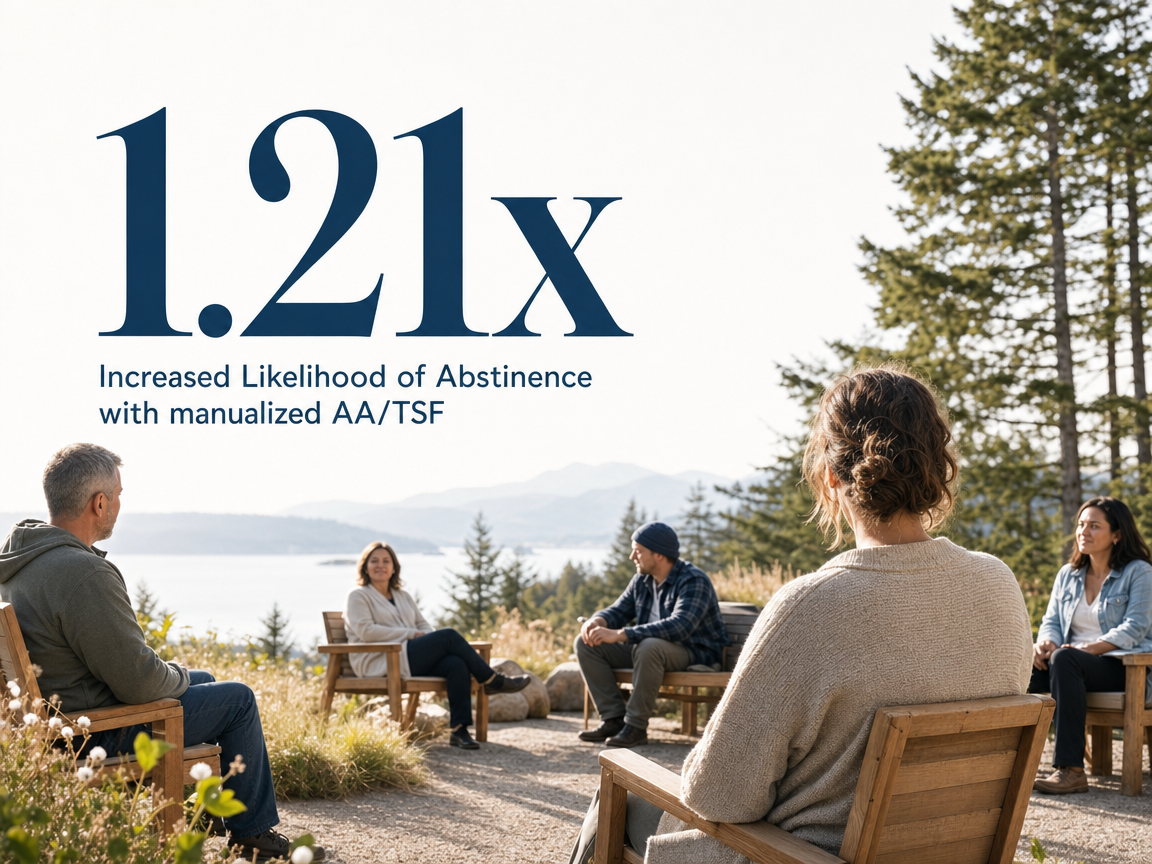
- Manualized AA and Twelve-Step Facilitation produced roughly 21% higher continuous abstinence at 12 months versus other clinical interventions, meaning structured Step work outperforms informal meeting attendance 4.
- Integration matters most during IOP transitions—treat Steps as clinical homework, protect meeting cadence, and insist on concurrent care when a co-occurring mental health condition is present 6, 9.
The principles are behaviors, not beliefs
You've probably heard the spiritual principles of AA described as virtues to aspire to—honesty, hope, faith, courage, humility, and the rest of the list. That framing isn't wrong, but it can quietly turn the Steps into a meditation exercise instead of a recovery program. The principles were never meant to sit on a shelf. They were meant to be done.
Think of it this way: honesty isn't a feeling you generate before a meeting. It's the sentence you say out loud to your sponsor at 7 a.m. when you'd rather not. Willingness isn't a mood. It's picking up the phone. Humility isn't self-criticism. It's letting someone else's experience count as much as yours today. Service isn't a title. It's setting up chairs, giving someone a ride to a Portland meeting, or answering a text from a newcomer at 11 p.m.
Research on how AA actually changes drinking outcomes backs this up. When investigators look at what carries the effect, they find behavior on the ground—social connection, coping shifts, and specific spiritual practices—rather than abstract belief change 3. One long-running mediation analysis found that AA involvement predicts increases in daily spiritual experiences and forgiveness, but it was private religious practices—a repeated behavior—that actually mediated better drinking outcomes 2.
So when this article talks about a principle, it means the action attached to it. That's the version that holds up when the day gets hard.
Where the twelve principles actually come from
The twelve spiritual principles aren't printed as a numbered list in the Big Book. AA members and later writers pulled them out of the Steps themselves, one principle per Step, as a shorthand for what each Step is asking you to do. That's why the list you've seen at meetings—honesty, hope, faith, courage, integrity, willingness, humility, brotherly love, justice, perseverance, spiritual awareness, service—reads like a walk through the Steps in a different vocabulary.
The roots go back to the 1930s, when AA's early members drew from the Oxford Group, William James's writing on religious experience, and their own sponsor-to-sponsee handoffs. Historical reviews of AA trace the program's spiritual background to that mix of Protestant lay practice, medical framing of alcoholism as a disease, and the lived experience of the first hundred people who got sober together 11. The principles weren't invented as theology. They were named as the qualities that seemed to show up in people who stayed sober and disappear in people who didn't.
By the 1990s, that history moved into clinical settings. Project MATCH, the large NIAAA-funded trial, formalized Twelve-Step Facilitation as a manualized therapy grounded in AA's Steps and principles 5. That's the bridge you're standing on when your IOP therapist in Portland talks about honesty and willingness in a treatment room instead of a church basement.
Mapping each Step to a principle and a daily behavior
Here's the version of the principles that holds up in a Portland IOP room, a Central Oregon coffee shop before a 7 a.m. meeting, or a phone call with a sponsee who's white-knuckling a Tuesday. Each Step carries a principle, and each principle collapses into one behavior you can actually do today. The Twelve-Step Facilitation manual used in Project MATCH built its clinical structure around exactly this move—treating the Steps as a sequence of concrete tasks, not a philosophy 6.
Step 1 — Honesty. Say the true sentence out loud. "I can't drink safely." "I used again on Thursday." The behavior is naming what's real to another human, usually your sponsor, before you edit it.
Step 2 — Hope. Borrow it. You don't manufacture hope on demand; you sit in a meeting and let someone else's five years become evidence that Tuesday is survivable.
Step 3 — Faith. Make a decision and act on it before you feel ready. Faith here is a verb: showing up when you'd rather isolate.
Step 4 — Courage. Write the inventory. Pen to paper. Resentments, fears, harms. The behavior is finishing the page, not perfecting it.
Step 5 — Integrity. Read the inventory out loud to one other person. Integrity is the alignment between what you know about yourself and what someone else now knows.
Step 6 — Willingness. Name the character defect you're least willing to release and say it anyway. Willingness is the yes you give before you fully mean it.
Step 7 — Humility. Ask for help with something small today. Humility isn't shrinking—it's letting the size of your problem match the size of the room you're asking for support in.
Step 8 — Brotherly love. Write the list. Every name. The behavior is not deciding yet who "deserves" an amend—just naming them.
Step 9 — Justice. Make the amend, in person when it's safe, with changed behavior when it isn't. Justice is repair, not apology.
Step 10 — Perseverance. Take a nightly inventory. Two minutes. Where were you selfish, dishonest, afraid? Where did you show up well? Perseverance is the daily repeat, not a grand gesture.
Step 11 — Spiritual awareness. Ten minutes of prayer or meditation in the morning. The mediation research is specific here: private spiritual practice is the dimension that actually tracks with better drinking outcomes over time 2.
Step 12 — Service. Do something for another person in recovery today that has no benefit to you. Chair the meeting. Pick up the phone. Take the newcomer to coffee.
Notice the pattern. Every principle resolves into a verb you can do before noon. That's the point. When your sponsor asks how the Steps are going, they're not asking about your theology—they're asking whether you did the behavior. Keep this mapping close; it's the difference between admiring the principles and working them.
Why the principles actually change drinking outcomes
You've probably worked the Steps long enough to know they do something. The harder question is what, exactly, is doing the work. If your sponsor asked you to explain the mechanism in plain language, could you? The research over the past twenty-five years has actually gotten pretty specific, and the answer is more useful than "it just works." It matters because the parts that carry the effect are the parts worth doubling down on when you're tired, when a sponsee is struggling, or when you're helping someone move from residential care into an intensive outpatient rhythm.
Three mechanisms carry most of the effect
For years, AA's own explanation was that spiritual awakening drives recovery. The mechanistic research tells a more layered story. When investigators trace what actually moves drinking outcomes for people involved in AA, three pathways keep showing up—and spirituality is one of them, not the only one.
The first is social network change. When you swap Friday nights at a bar for a home group in Southeast Portland, you're not just changing your calendar. You're changing who counts as your people, whose calls you answer, and whose approval you're chasing. That shift in the social lineup is one of the strongest predictors of who stays sober.
The second is cognitive and affective change—the way you think about drinking, cope with stress, and manage the emotional weather of a Tuesday. Meetings teach coping skills by osmosis. You hear how someone handled a resentment without picking up. You watch someone sit through grief sober. Your own beliefs about whether you can do this quietly reorganize.
The third is spiritual practice—the prayer, meditation, and self-reflection Steps 10 and 11 ask for. This one matters for some participants more than others, and it's most powerful when it's a repeated behavior rather than a general worldview.

Which spiritual practices actually mediate outcomes
Here's where the research gets useful in a way that changes what you do tomorrow morning. Not every spiritual dimension moves drinking outcomes the same amount, and knowing which ones carry weight helps you spend your energy wisely.
A lagged mediational analysis followed people over time and separated spirituality into components: private religious practices (prayer, reading, meditation on your own), daily spiritual experiences (a felt sense of connection or gratitude in ordinary moments), and forgiveness of others. AA involvement predicted increases in all three. But when researchers tested which of those increases actually explained better drinking outcomes down the road, only private religious practices mediated the relationship 2.
Read that carefully, because it's easy to misread. It doesn't say daily spiritual experiences or forgiveness don't matter. They clearly matter for how you feel and how you treat people. It says the repeated, private, on-your-own behavior—the ten minutes with a meditation app before the kids are up, the reading, the pen-to-paper journaling in a Central Oregon kitchen at 6 a.m.—is the piece with the clearest signal for staying sober.
A parallel analysis reached the same core conclusion: AA leads to better alcohol outcomes partly by increasing spiritual practices, offering empirical support for AA's own theory of change 1. The takeaway isn't complicated. If you're going to prioritize one Step-based behavior on a hard week, prioritize the Step 11 one. Show up at meetings. Talk to your sponsor. And do the ten minutes alone. That combination is where the research keeps pointing.
What the outcome research shows on abstinence
You've probably had this conversation with someone who's skeptical of AA—maybe a family member, maybe a newcomer in a Portland IOP room who's not sure the meetings are "real" treatment. It helps to know what the strongest evidence actually says, in specific numbers, so you can answer honestly without overselling.
The Cochrane Review is the load-bearing source here. Cochrane reviews are the gold standard in medicine for synthesizing what works, and their 2020 review looked at Alcoholics Anonymous and Twelve-Step Facilitation for alcohol use disorder across a large body of trials. The headline finding: participants in manualized AA/TSF interventions were about 1.21 times more likely—roughly 21% more likely—to maintain continuous abstinence at 12 months compared with participants in other clinical interventions like cognitive behavioral therapy or motivational enhancement 4.
Scope matters, so hold this carefully. The 1.21x figure comes from manualized AA/TSF—structured, therapist-guided delivery of 12-Step principles, the kind of protocol built out of Project MATCH. It's not a comparison of "going to a meeting sometimes" versus therapy. It's a comparison of a delivered, protocolized 12-Step intervention against other delivered, protocolized clinical interventions. The review also found similar or better outcomes on most other drinking measures.
That's meaningful for two reasons. First, continuous abstinence at a year is a hard outcome. It's not "reduced drinking days." It's zero. Second, it means the structure your IOP is putting around 12-Step work—assigned Step tasks, sponsor contact between sessions, meeting cadence—isn't ornamental. It's the version of AA that shows the clearest outcome signal in the trial data. When you're helping a sponsee take the program seriously, you can say that plainly: the evidence is real, the effect is measurable, and the version that works best is the one where the Steps actually get done.
Real Recovery Starts in Portland, Oregon
Call now or verify insurance to take the first step toward lasting recovery in Portland.
Reading the spiritual language without religious baggage
If the word "spiritual" still catches in your throat at meetings, you're not alone, and you're not doing recovery wrong. Plenty of people who've stayed sober for decades started out reading the Third Step with their arms crossed. The program was built on Protestant lay practice and the Oxford Group, and that lineage still shows up in the vocabulary 11. Naming that honestly is part of the work.
Here's what the research lets you say without flinching: spiritual and religious aren't the same thing, and AA's effect doesn't depend on you settling a metaphysical question. The twenty-five-year mechanisms review is clear that AA works predominantly through social, cognitive, and affective pathways, with spirituality important for some participants but not the only lever 3. Translation: if the God language is hard, the meetings are still doing something. The sober friendships, the new ways of thinking about a Tuesday craving, the coping skills you're absorbing—those are all working while you figure out what "higher power" means to you.
The mediation research also narrows what "spiritual practice" actually has to look like to move the needle. It's the repeated private behavior—ten quiet minutes, a page of journaling, a walk in a Central Oregon forest without headphones—that showed the clearest link to drinking outcomes 2. That behavior doesn't require belief. It requires the ten minutes.
Cross-cultural reviews of AA and NA point out the same thing from another angle: the communal and spiritual elements work differently across settings and personal beliefs, and that's not a bug in the program—it's why sponsors keep saying take what you need and leave the rest
13. You get to translate.
Putting the principles to work inside intensive outpatient care
If you're moving out of residential treatment or detox and stepping into an intensive outpatient rhythm, this is where the principles get tested. Meetings alone won't hold the weight of a full week back in your life. Neither will therapy sessions alone. What holds is the two working together, with the Steps translated into behaviors that fit around a job, a family, and the actual traffic on I-84.
An IOP built with 12-Step integration in mind treats the Steps as clinical homework, not extracurriculars. The Twelve-Step Facilitation manual from Project MATCH frames alcohol use disorder as both a spiritual and medical condition and walks a therapist through assigning Step tasks, checking on meeting attendance, and processing what came up in the room 6. In a Portland IOP, that might look like a Monday group where you report on your Step 4 progress, a Wednesday individual session where your clinician helps you draft a Step 9 amend, and a Thursday check-in on whether you actually did the ten morning minutes seven days in a row.
The cadence matters because it protects the mechanisms that carry the effect. Group therapy reinforces the sober social network. Cognitive and behavioral work sharpens the coping skills you're picking up at meetings. Assigned Step 11 practice keeps the private spiritual behavior—the one that mediated better drinking outcomes in the longitudinal research—on your calendar even when motivation dips 2. NIAAA's guidance on mutual-help integration says the same thing from the clinical side: AA and similar groups extend the benefits of formal treatment when they run alongside it, not instead of it 15.
For sponsors, peers, and clinicians routing people into IOP
Scope shift here: this section is for the people doing the routing—sponsors picking up a call from a sponsee's family, peers walking someone out of a residential program, and 12-step-committed clinicians deciding what to write on a referral. You already know the principles work. The question is how to hand someone off without dropping the thread.
Three practical moves matter.
Protect the meeting cadence during the transition. NIAAA's handbook chapter on mutual-help groups is direct: AA extends the benefits of formal treatment when it runs alongside clinical care, and clinicians can shape whether that participation actually happens by making it part of the plan on day one 15. Ask the receiving IOP how they track meeting attendance and Step work, not just group hours.
Insist on integrated care when a co-occurring condition is in the picture. SAMHSA's guidance is clear that there is no "wrong door" for someone with both a substance use and a mental health condition, and concurrent treatment is the standard 9. If you're a sponsor watching a sponsee try to white-knuckle depression alongside the Steps, that's the moment to push for a program treating both, not either-or.
Look for programs that treat the Steps as clinical homework, using a Twelve-Step Facilitation frame 6. In the Pacific Northwest, that means asking Portland IOPs whether they assign Step tasks between sessions and whether they welcome sponsor contact. Access varies—Central Oregon and Wyoming still have real gaps—so the referral you make matters more, not less.
Frequently Asked Questions
Do I have to believe in God to work the spiritual principles of AA?
No. The twenty-five-year review of how AA actually changes drinking outcomes found that most of its effect runs through social, cognitive, and affective pathways, with spirituality important for some participants but not all 3. You can work the principles as daily behaviors—honesty with your sponsor, willingness to show up, service to a newcomer—while you sit with the God question. Plenty of people stay sober doing exactly that.
What are the 12 spiritual principles of AA and how do they line up with the Steps?
The commonly named principles are honesty, hope, faith, courage, integrity, willingness, humility, brotherly love, justice, perseverance, spiritual awareness, and service—one paired with each of the twelve Steps in order. They aren't printed as a numbered list in the Big Book; members pulled them out of the Steps as shorthand for what each Step asks you to do. Historical reviews trace them to AA's early Protestant lay-practice and Oxford Group roots 11.
Is there real evidence that AA and its principles help people stay sober?
Yes. The 2020 Cochrane Review—the medical field's gold standard for synthesis—found that manualized AA and Twelve-Step Facilitation interventions produced similar or better outcomes than other treatments on most drinking measures, with higher continuous abstinence in some comparisons 4. Longitudinal mediation studies also show that AA involvement predicts increases in private spiritual practice, which in turn predicts better drinking outcomes over time 1.
Can the spiritual principles work if I have a co-occurring mental health condition?
They can, but not on their own. SAMHSA is direct: substance use and mental health conditions should be treated concurrently, with no "wrong door" to care 9. The Steps belong inside that plan, not instead of it. NIAAA frames mutual-help groups as ongoing support that extends the benefits of formal treatment 15. If you're carrying depression, trauma, or anxiety, keep the meetings and get clinical care for the mental health piece too.
How do sponsors and clinicians turn these principles into daily practice inside an IOP?
By treating Step work as clinical homework. The Twelve-Step Facilitation manual from Project MATCH walks therapists through assigning specific Step tasks, tracking meeting attendance, and processing what surfaces in session 6. In practice, that looks like a Monday group reviewing Step 4 progress, a Wednesday individual session drafting a Step 9 amend, and a Thursday check on whether the morning ten minutes of Step 11 practice actually happened seven days running.
What if the spiritual language still feels like a barrier after I've tried?
You get to translate. Cross-cultural reviews of AA and NA note that the communal and spiritual elements work differently depending on personal beliefs and local norms, which is why sponsors say "take what you need and leave the rest" 13. The behavior that mediated better drinking outcomes in the research was private practice—ten quiet minutes, journaling, a walk without headphones 2. That doesn't require belief. It requires the ten minutes.
References
- Spirituality in recovery: a lagged mediational analysis of alcoholics anonymous' principal theoretical mechanism of behavior change. https://pubmed.ncbi.nlm.nih.gov/21158876/
- Multiple dimensions of spirituality in recovery: a lagged mediational analysis of Alcoholics Anonymous' principal theoretical mechanism of behavior change. https://pubmed.ncbi.nlm.nih.gov/23327501/
- Is Alcoholics Anonymous religious, spiritual, neither? Findings from 25 years of mechanisms of behavior change research. https://pubmed.ncbi.nlm.nih.gov/27718303/
- Alcoholics Anonymous and 12-Step Facilitation Treatments for Alcohol Use Disorder: A Cochrane Review. https://pubmed.ncbi.nlm.nih.gov/32628263/
- Project MATCH Monograph Series. https://www.niaaa.nih.gov/publications/project-match-monograph-series
- Project MATCH Volume 1: Twelve Step Facilitation Therapy Manual. https://www.niaaa.nih.gov/sites/default/files/match01.pdf
- Understanding Alcohol Use Disorder. https://www.niaaa.nih.gov/publications/brochures-and-fact-sheets/understanding-alcohol-use-disorder
- Co‑Occurring Disorders and Other Health Conditions. https://www.samhsa.gov/substance-use/treatment/co-occurring-disorders
- Substance Use Disorder Treatment for People With Co-Occurring Disorders. https://library.samhsa.gov/sites/default/files/pep20-06-04-006.pdf
- Treatment for Alcohol Problems: Finding and Getting Help. https://www.niaaa.nih.gov/publications/brochures-and-fact-sheets/treatment-alcohol-problems-finding-and-getting-help
- Spiritual Principles of Alcoholics Anonymous. https://pubmed.ncbi.nlm.nih.gov/35026830/
- Spirituality in Recovery: A Lagged Mediational Analysis of Alcoholics Anonymous’ Principal Theoretical Mechanism of Behavior Change. https://pmc.ncbi.nlm.nih.gov/articles/PMC3117904/
- How Alcoholics Anonymous (AA) and Narcotics Anonymous (NA) Work: Cross‑Cultural Perspectives. https://pmc.ncbi.nlm.nih.gov/articles/PMC3140338/
- Alcoholics Anonymous most effective path to alcohol abstinence. https://med.stanford.edu/news/all-news/2020/03/alcoholics-anonymous-most-effective-path-to-alcohol-abstinence.html
- Mutual Help Groups for Alcohol and Drug Use Disorders (Chapter from NIAAA Treatment Handbook). https://www.ncbi.nlm.nih.gov/books/NBK64947/
Relapse Doesn't Mean the End Of Your Journey
Reach out today to explore programs that support real, long-term sobriety.