



Treating Depression and Addiction in Oregon

Key Takeaways
- Integrated care for depression and substance use disorder is the established clinical standard, but Oregon's 49% service capacity gap means most individuals still receive fragmented or parallel treatment 3.
- Fully integrated care—one team, one plan, one record—produces stronger outcomes than coordinated or co-located models, while sequenced 'sobriety first' approaches ignore the bidirectional pull between mood and substance use 26.
- Pharmacotherapy decisions should center on retention and timing: SSRIs need roughly six weeks paired with CBT to show meaningful change, and only buprenorphine or methadone reduce overdose risk in OUD 15.
- Referral coordinators should focus on universal screening at every entry point, warm handoffs between detox, residential, and IOP, and honest classification of programs as coordinated, co-located, or fully integrated 2.
The Integration Gap, Not the Integration Debate
The clinical consensus is clear: treating depression and substance use disorder within the same care plan, by a cohesive team, yields superior outcomes compared to separate treatment tracks 2. This understanding is reflected in intake assessments and treatment plans, signifying that the debate over the necessity of integrated care is largely settled.
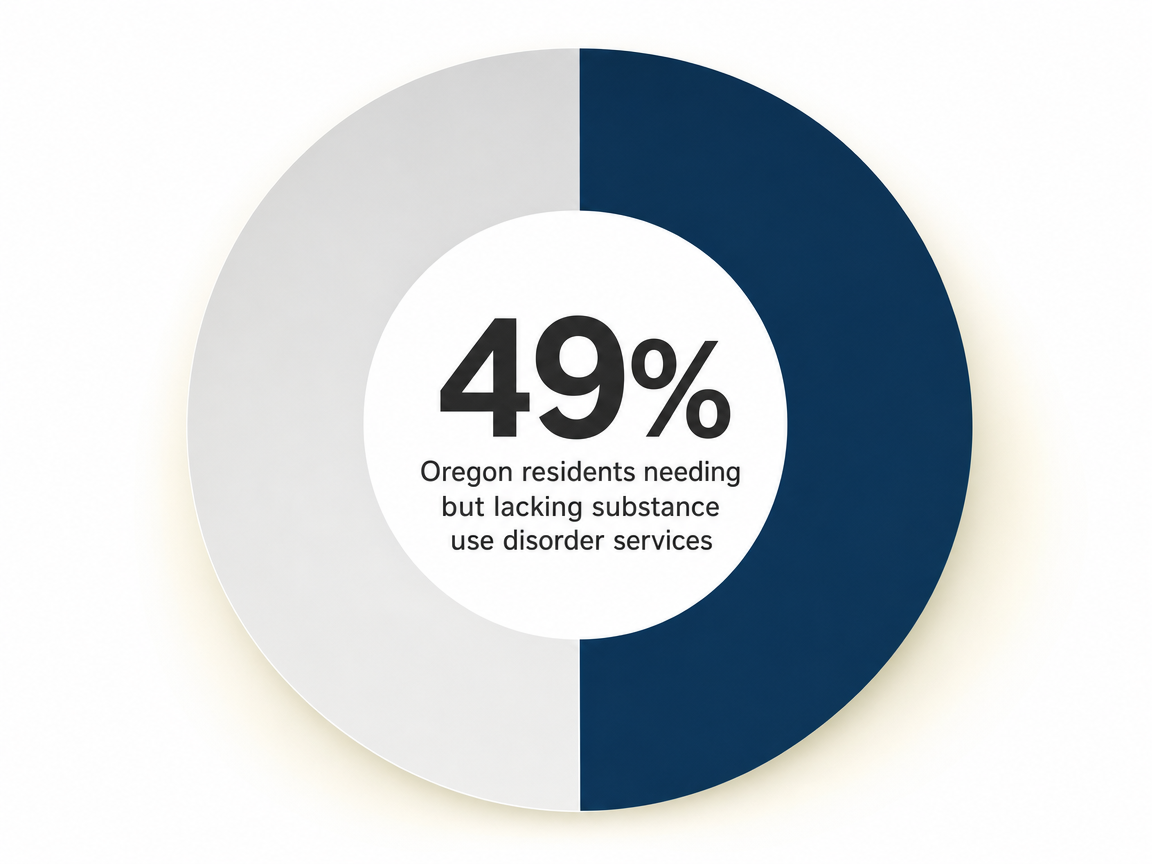
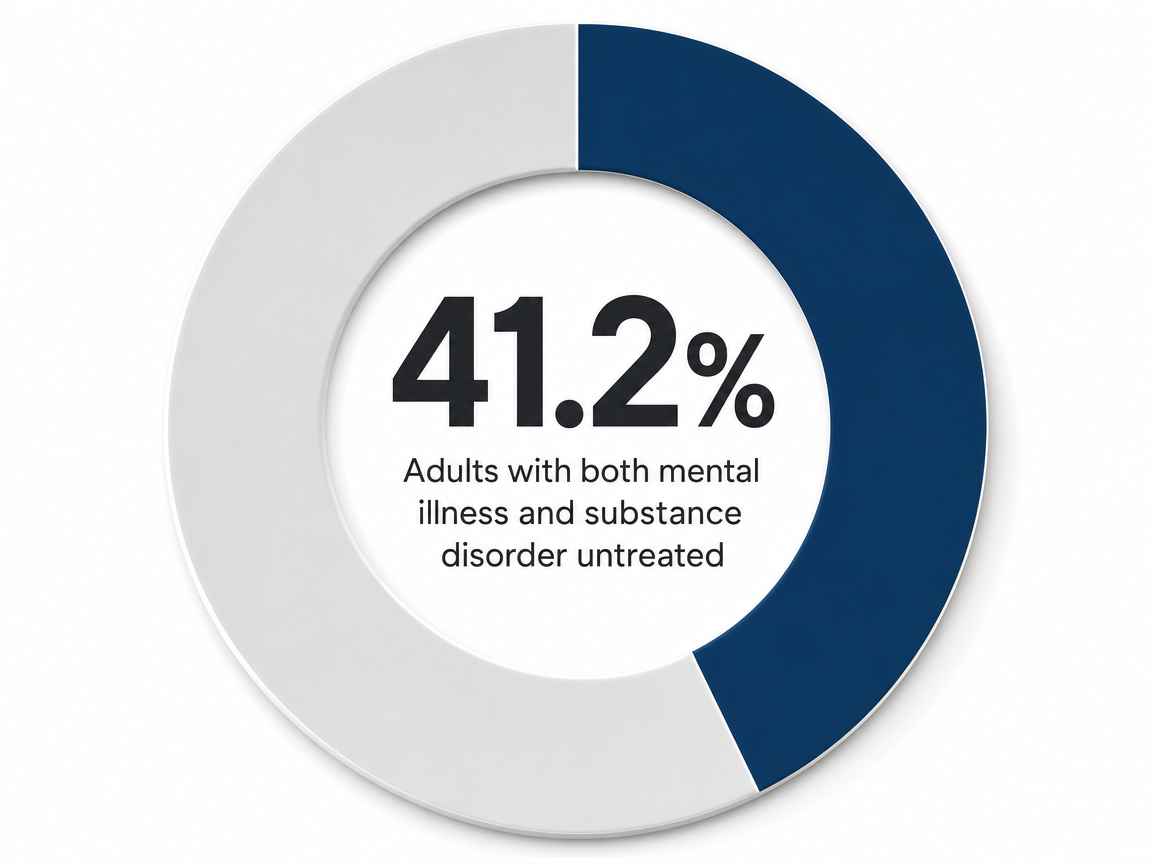
However, a significant gap persists between this established standard and the care individuals actually receive. Oregon's substance use disorder service capacity is approximately 49% below what residents require, with over half of providers unable to meet demand 3. Nationally, of the 21.2 million U.S. adults experiencing co-occurring mental illness and substance use disorder in 2024, 41.2% receive no treatment for either condition 4. These figures highlight a critical operational reality: while integrated care is the recognized standard, it remains largely theoretical for many who need it.
This discussion will therefore move beyond advocating for integrated care and instead focus on the practical challenges of implementing it. The goal is to explore how to build effective screening processes, pharmacotherapy protocols, IOP structures, and referral pipelines to ensure that the integrated care principles clinicians believe in become a tangible reality for individuals seeking help in places like Portland, Bend, or Medford.
Why Parallel Treatment Fails Individuals with Co-Occurring Conditions
A common scenario involves an individual completing detox, receiving a depression diagnosis, and being referred to a community mental health clinic with a lengthy waitlist, all while simultaneously starting an Intensive Outpatient Program (IOP). This parallel care approach involves two separate providers, records, and treatment plans, forcing the individual to navigate these systems while their nervous system is still recovering.
This model often fails not due to clinician incompetence, but because depression and substance use disorder are deeply interconnected. Substance use disorder is consistently associated with the severity of depression, both at a given moment and over time; as one condition intensifies, the other tends to follow 6. Treating one condition while the other escalates often undermines progress.
The notion of sequenced treatment—addressing sobriety first, then mental health—lacks evidence and is contradicted by the bidirectional relationship between these conditions. Effective stabilization requires addressing both simultaneously within the same treatment plan.
Understanding Integration Models in Treatment Programs
The term "integrated treatment" can encompass various approaches. SAMHSA identifies three distinct models: coordinated, co-located, and fully integrated 2. Recognizing which model a program genuinely operates, rather than what its marketing materials suggest, is crucial for effective staffing, scheduling, and screening.
Coordinated, Co-located, and Fully Integrated Care Explained
Coordinated care is the most prevalent model and is often mistaken for true integration. In this arrangement, an IOP team and a separate mental health provider exchange information, align on treatment goals, and communicate during clinical handoffs. Treatment occurs in different locations, often with separate electronic health records, requiring the individual to move between services. While effective when executed well, capacity limitations and long waitlists can lead to the failures seen in parallel care, such as missed handoffs and conflicting medication advice.
Co-located care brings providers together under one roof. A licensed mental health clinician sees individuals in the same facility as SUD counselors, often on the same day. This significantly reduces the burden of handoffs, as direct communication is readily available. Although records and treatment plans may still be independent, access friction is much lower. For an individual experiencing a spike in depressive symptoms, the ability to access an appointment within the same program versus a six-week external referral can be critical for retention.
Fully integrated care is the model SAMHSA identifies as yielding the most robust outcomes, including reduced substance use, improved psychiatric symptoms, better quality of life, fewer hospitalizations, and increased housing stability 2. This model features a single team, one treatment plan, and a unified record. The same clinician or a closely connected team addresses both depression and substance use within the same session, week, and chart note, eliminating the need for handoffs.
Many Oregon IOPs that claim to be integrated actually operate as co-located care with strong coordination. This is often a pragmatic approach given licensure structures and staffing realities. The challenge arises when programs market themselves as "fully integrated" but function as coordinated care under pressure. Transparency with referring detox centers, stating "We are co-located with embedded mental health support, and our treatment planning is shared," is a more accurate and ultimately stronger representation of services.
The "No Wrong Door" Principle in Intake Screening
The "no wrong door" principle, as outlined by SAMHSA, mandates that regardless of the entry point—be it detox, IOP, primary care, or peer support—individuals should be screened for both substance use and mental health conditions and connected to integrated care 2. This is not merely a welcoming slogan but a directive for screening protocols.
For intake teams, this means depression screening is a universal component of SUD intake, not an optional add-on based on presenting complaints. Similarly, substance use screening should be universal at any mental health entry point. A PHQ-9 should be administered at every SUD admission, and a substance use screen at every mental health intake, consistently. This eliminates subjective clinical judgment about whether an individual "seems depressed enough" or is "only here for substance use."
Operationally, this approach allows for the early identification of co-occurring presentations, often in the first week, preventing destabilization later in the cohort. Culturally, universal screening communicates to every individual that both conditions are valid reasons for seeking help, reducing the shame associated with discussing depressive symptoms in group settings. Individuals who feel their depression was acknowledged at intake are more likely to address it proactively.
Pharmacotherapy for Sustained Recovery
Medication management is a critical component of integrated treatment, with its effectiveness often determined by sustained engagement. The true benefits for individuals are realized not in the initial prescription, but in the weeks that follow, when antidepressants have taken effect, buprenorphine doses are stable, and depressive symptoms that previously fueled substance use begin to subside, allowing other therapeutic interventions like CBT to be more impactful. The following sections explore factors that contribute to long-term pharmacotherapy success.
Antidepressants and CBT: The Power of Combination Therapy
In a busy IOP setting, it's easy to overlook that antidepressant treatment for individuals with co-occurring substance use disorder typically requires at least six weeks to show significant improvement in depressive symptoms. Even then, these gains are often modest unless combined with structured psychotherapy 1. This timeline has operational implications: if an IOP cohort runs for eight to twelve weeks, an individual starting an SSRI in week one may not experience mood improvement until the latter half of the program, coinciding with discharge planning.
The synergy between modalities is where the most significant progress occurs. Combining SSRIs with cognitive behavioral therapy (CBT) leads to greater reductions in both drinking and depressive symptoms than CBT alone 1. Neither modality functions optimally in isolation. Medication creates the neurochemical environment for CBT to be effective, while CBT provides individuals with the skills to recognize and respond to the changes facilitated by medication.
Practically, this means that an antidepressant's effectiveness should not be solely evaluated at week three. Maintaining the dosage and CBT cadence, then reassessing at week six with both interventions active, is crucial for optimal outcomes.
Medication-Assisted Treatment (MAT) and Retention as a Clinical Outcome
For individuals with opioid use disorder, retention in medication-assisted treatment (MAT) is a primary predictor of positive outcomes. A comparative effectiveness study involving 40,885 adults with OUD found that only buprenorphine and methadone—not counseling alone, inpatient detox, or naltrexone—were associated with reduced overdose risk and decreased serious opioid-related acute care utilization at three and twelve months 5. This underscores a clear clinical message: individuals who remain on buprenorphine or methadone experience longer, healthier lives and fewer emergency department visits. Discontinuation of MAT removes these protective benefits.
This places MAT retention at the core of IOP design, rather than solely focusing on abstinence counts. While MAT retention is linked to improved outcomes across various measures, engagement and retention rates remain consistently low despite extensive evidence of its effectiveness 12. The role of a co-occurring program extends beyond correct prescribing to establishing support systems that encourage continued engagement with MAT.
For individuals whose depression contributes to disengagement, integration is vital. An individual missing a buprenorphine appointment due to a mood collapse indicates a disconnect between their MAT and depression treatment. Ensuring the same prescriber visit, within the same week, and integrated into the same care plan—or at minimum, a warm handoff within the same facility—is essential to bridge this gap. Tracking MAT cohort retention, similar to tracking relapse in abstinence-based programs, serves as a leading indicator of success.
Medication Safety: Benzodiazepines and Opioids
It is well-established that combining medications for substance use disorder treatment with benzodiazepines can lead to serious adverse effects. The interaction with opioid medications, including buprenorphine and methadone, specifically increases the risk of respiratory depression and overdose 7.
For individuals with co-occurring depression, anxiety, and OUD, a benzodiazepine prescription from a primary care provider prior to SUD intake becomes a critical clinical safety concern, not a minor detail in medication reconciliation. Intake screening should thoroughly identify all active prescriptions, and the treatment team must be prepared to coordinate a taper with the prescribing provider, preventing individuals from managing conflicting medication plans.
A more challenging conversation arises when an individual with severe anxiety alongside depression questions why benzodiazepines are not an option. The honest explanation—abuse liability and documented interaction risks with MAT—is better received when coupled with viable alternatives: SSRI titration, CBT for anxiety, and skill-building in group therapy. Denying a medication without offering a clear alternative plan can lead to disengagement.
Navigating Oregon's Access Pipeline for Integrated Care
Clinical integration is only effective if individuals can access the necessary programs. In Oregon, the pipeline from detox to residential to IOP and step-down care presents significant challenges, particularly for individuals with co-occurring conditions who often disengage at these transition points. The following sections examine state capacity, regulatory frameworks, and strategies for building resilient referral pathways.
The 49% Service Gap and Its Impact on Intake
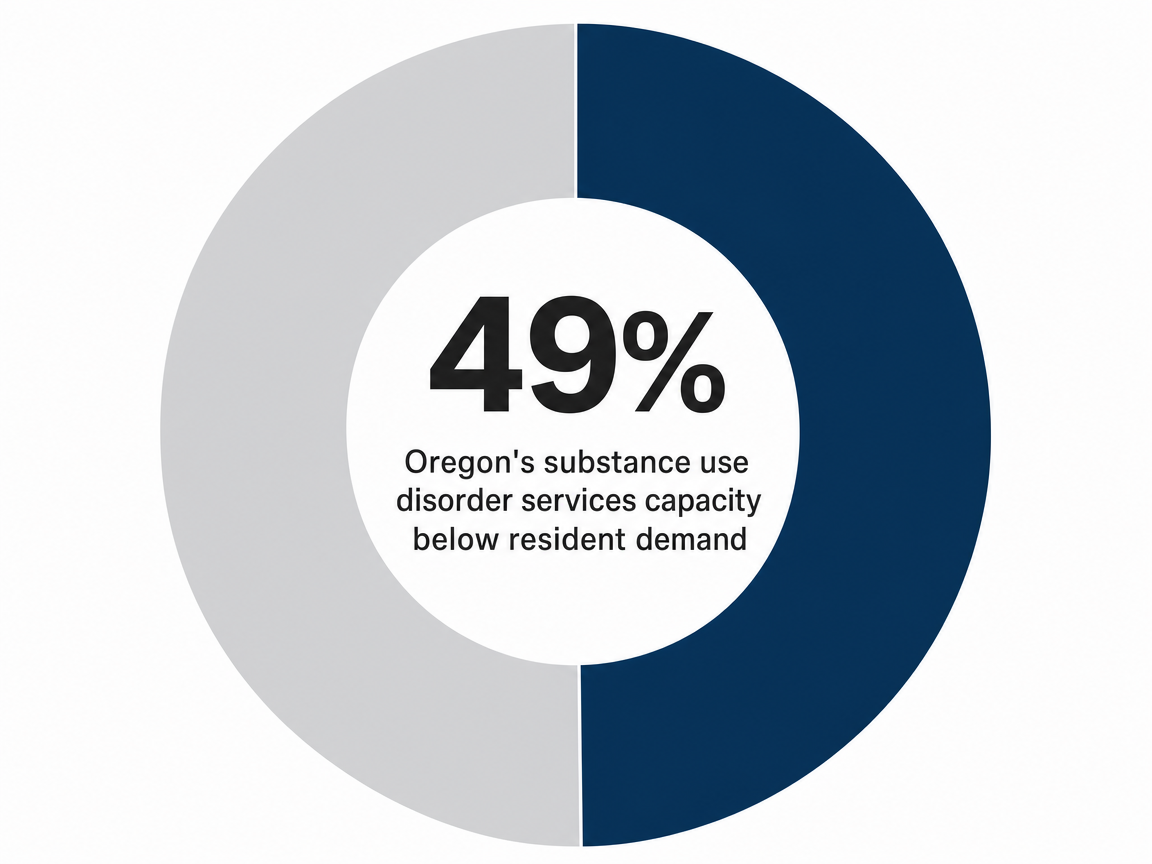
Oregon's substance use disorder service capacity is approximately 49% below what residents need, with over half of providers reporting an inability to meet current demand 3. This deficit is not uniformly distributed; the Portland metro area offers more options than Central Oregon or the southern coast, and detox beds typically turn over faster than residential slots. This overall capacity shortage significantly impacts intake processes, indicating a constrained market for placement.
Given this reality, intake screening must go beyond identifying co-occurring conditions and making referrals. Intake teams require an up-to-date understanding of which programs in the region are actively accepting new individuals, current waitlist durations, and which levels of care are immediately accessible versus those with longer delays. A clinically sound recommendation that places an individual on a waitlist they cannot endure is not a successful outcome.
This state-level capacity issue is part of a broader national problem: 41.2% of the 21.2 million U.S. adults with co-occurring mental illness and substance use disorder in 2024 receive no treatment 4. Understanding both the local and national scope of this gap is essential for intake teams addressing these challenges daily.
OHA Chapter 415, Licensure, and Reimbursement
Oregon's regulatory framework significantly influences the structure and capabilities of treatment pipelines. The Oregon Health Authority's (OHA) Behavioral Health Division oversees residential and outpatient behavioral health facilities. Licensure by OHA is mandatory for residential programs and detox centers providing SUD treatment 108. This licensure operates on a two-year cycle, with certification for insurance reimbursement contingent upon demonstrating compliance with relevant regulations 8.
These regulations are detailed in Chapter 415 of the Oregon Administrative Rules, which OHA regularly updates through permanent, temporary, and proposed rulemaking 9. For program directors, this means staffing ratios, documentation standards, screening protocols, and the scope of certified services are all subject to a dynamic regulatory environment. Therefore, a one-time review of Chapter 415 during licensure is insufficient; a team member should continuously monitor proposed rule revisions, as future reimbursement depends on current adoptions.
For co-occurring care, this implies that while an IOP can provide integrated mental health support alongside SUD treatment, accurate documentation and adherence to certification scope are crucial for proper claims processing.
Establishing Effective Referral Pathways Between Levels of Care
Transitions between detox, residential, and IOP are common points where individuals with co-occurring conditions disengage. After medical stabilization over five to seven days, an individual may receive a depression screen and then face the challenge of securing a residential bed or IOP intake while experiencing acute mood symptoms and minimal tolerance for logistical hurdles. Each additional phone call, faxed release, or delayed response increases the likelihood of dropout.
SAMHSA's "no wrong door" principle emphasizes that any entry point should screen for both conditions and connect individuals to integrated care 2. Operationally, this necessitates pre-established referral pathways. An IOP should have clear knowledge of which regional detox programs (including partners like Pacific Crest Trail Detox) facilitate warm handoffs, which residential programs accept co-occurring individuals without a separate mental health intake, and which step-down or sober living options are available upon IOP completion.
Consistent screening at each transition point is vital for maintaining the pipeline. This includes a PHQ-9 at detox discharge that informs residential intake, medication reconciliation transferring from residential to IOP, and a relapse-prevention plan moving from IOP to sober living. These practices, while not complex, represent the documentation discipline required to transform a fragmented system into a navigable continuum of care.
Retention-Focused IOP Design for Co-Occurring Clients
If retention is considered the primary clinical indicator, then IOP scheduling, group composition, and contact frequency must be re-evaluated. The focus shifts from merely tracking hours of programming completed to understanding the barriers an individual faces in attending group after a challenging night.
Minimizing friction is key. This includes:
- Offering same-day mood check-ins via phone or secure message, rather than waiting for the next scheduled session
- Providing a standing 15-minute slot with the prescribing clinician weekly to ensure medication adjustments don't require a new appointment weeks away
- Ensuring group composition normalizes co-occurring presentations, so no individual feels isolated due to their depressive symptoms
The evidence supporting MAT retention is also relevant here. Despite decades of research on effective strategies, engagement and retention rates remain persistently low across the field 12. This gap is often less about clinical quality and more about the subtle operational moments that influence an individual's decision to continue engaging. A peer support specialist reaching out within 24 hours of a missed group can be more effective for retention than a stricter attendance policy.
IOP design should anticipate and address the challenges individuals face, particularly during moments of vulnerability. This proactive approach determines whether treatment holds or falters.
Coordinating Referrals Across Multiple Programs
For case managers and referral coordinators working across different facilities, the complexities of integration increase due to varied EHRs, billing structures, and clinical philosophies. In such scenarios, the warm handoff and comprehensive screening documentation are crucial tools.
Develop a curated list of programs trusted to accept co-occurring referrals without causing re-traumatization through redundant intake processes. For each program, inquire about their depression screening protocols at SUD admission and the availability of an embedded or on-call mental health clinician within the same week. A "no" to either question indicates the program belongs in the coordinated-care tier, not the integrated tier 2, guiding appropriate routing.
Track the success rates of referral pathways. If a handoff consistently fails between the initial call and the first appointment, it signals a leak in the pipeline. Such relationships should be re-evaluated and replaced to prevent further client disengagement.
Integrated IOP's Role in the Continuum of Care
Integrated IOP is a vital, but not exhaustive, component of the continuum of care. For individuals in active withdrawal, medical detox, often through a partner like Pacific Crest Trail Detox in the Pacific Northwest, is the initial step. When mood and substance use are too acute for outpatient management, residential treatment is appropriate. IOP serves a critical role in the middle and later stages of recovery: maintaining stabilization, providing depression treatment with a six-week pharmacotherapy timeline alongside CBT 1, ensuring weekly MAT retention, and facilitating step-down into sober living post-cohort completion.
For referral partners placing individuals with co-occurring conditions in Oregon addiction treatment, the effectiveness of integrated IOP is well-supported by evidence, particularly regarding combined SSRI and CBT outcomes. The key consideration is whether the referred IOP genuinely screens, prescribes, and maintains integrated care within the same setting. Programs like Oregon Trail Recovery's intensive outpatient track exemplify this approach, offering co-occurring depression support alongside SUD treatment. Matching the level of care to the individual's current needs allows the continuum to function effectively.
Frequently Asked Questions
What does 'integrated treatment' actually mean for co-occurring depression and substance use disorder?
It means one team, one treatment plan, and one record addressing both conditions in the same care episode. SAMHSA describes three delivery models—coordinated, co-located, and fully integrated—with the strongest outcomes tied to fully integrated care: reduced substance use, improved psychiatric symptoms, fewer hospitalizations, and better housing stability 2.
How is integrated care different from running parallel mental health and SUD treatment tracks?
Parallel tracks make the client the bridge between two providers, two records, and two treatment plans. That bridge fails because depression and substance use drive each other—SUD is associated with depression severity both cross-sectionally and over time 6. Integrated care treats both conditions in the same room, on the same week, by clinicians who actually talk to each other.
When should antidepressants be introduced for a client in early recovery, and how long until they work?
Antidepressant treatment in clients with co-occurring SUD typically requires at least six weeks before producing meaningful change in depressive symptoms, and outcomes are modest unless paired with structured psychotherapy. Pairing SSRIs with CBT produces greater reductions in both drinking and depressive symptoms than CBT alone 1. Don't call non-response at week three—hold the dose and reassess at six.
How do we handle medication safety when a client is on opioids or being considered for benzodiazepines?
Combining benzodiazepines with SUD medications—including buprenorphine and methadone—can produce serious adverse effects, with respiratory depression and overdose risk concentrated in that interaction 7. Surface every active prescription at intake, coordinate tapers with the original prescriber, and offer a real alternative when declining benzodiazepines: SSRI titration, CBT for anxiety, and skills work in group.
What does Oregon's 49% SUD service gap mean for intake and referral planning?
Oregon's SUD service capacity falls roughly 49% short of resident need, with more than half of providers reporting they cannot meet demand 3. Your intake team needs a working map of which programs are accepting this week versus six weeks out. A perfect clinical recommendation that lands a client on a waitlist they won't survive is not a clinical win.
Where does integrated IOP fits between detox, residential, and step-down care in Oregon?
Medical detox comes first for active withdrawal, often through a partner like Pacific Crest Trail Detox. Residential follows when mood and substance use are too acute for outpatient management. Integrated IOP holds the middle and back half: stabilization carrying forward, six-week pharmacotherapy alongside CBT 1, MAT retention tracked weekly, and step-down into sober living when cohort work concludes.
References
- Treatment for Substance Use Disorder With Co-Occurring Mental Illness. https://pmc.ncbi.nlm.nih.gov/articles/PMC6526999/
- Managing Life with Co-Occurring Disorders - SAMHSA. https://www.samhsa.gov/mental-health/serious-mental-illness/co-occurring-disorders
- Oregon Substance Use Disorder Services Inventory and Gap Analysis. https://www.oregon.gov/oha/HSD/AMH/DataReports/SUD-Gap-Analysis-Inventory-Report.pdf
- Release of the 2024 National Survey on Drug Use and Health. https://www.samhsa.gov/blog/release-2024-nsduh-leveraging-latest-substance-use-mental-health-data-make-america-healthy-again
- Medication-Assisted Treatment for Opioid Use Disorder in a Rural Family Medicine Practice. https://pmc.ncbi.nlm.nih.gov/articles/PMC7278292/
- The Association Between Depression and Substance Use Among Adults. https://pmc.ncbi.nlm.nih.gov/articles/PMC10515515/
- Co-Occurring Disorders and Other Health Conditions | SAMHSA. https://www.samhsa.gov/substance-use/treatment/co-occurring-disorders
- Oregon Summary -- State Residential Treatment for Behavioral Health Conditions. https://aspe.hhs.gov/sites/default/files/2021-08/StateBHCond-Oregon.pdf
- Addiction Services (Chapter 415) Rules - Oregon Health Authority. https://www.oregon.gov/oha/hsd/pages/addiction-services-rules.aspx
- Residential and Outpatient Behavioral Health Programs - Licensing and Certification. https://www.oregon.gov/oha/hsd/amh-lc/pages/index.aspx
- OREGON - National Survey on Drug Use and Health - SAMHSA. https://www.samhsa.gov/data/sites/default/files/reports/rpt56188/2023-nsduh-sae-state-tables_0/2023-nsduh-sae-state-tabs-oregon.pdf
- Models for Medication-Assisted Treatment for Opioid Use Disorder: Retention and Continuity of Care. https://aspe.hhs.gov/reports/models-medication-assisted-treatment-opioid-use-disorder-retention-continuity-care-0

