




Causes of Substance Abuse: What Families Should Know

Why Substance Use Disorders Develop: Causes of Substance Abuse
The Biopsychosocial Model Explained
When evaluating the causes of substance abuse, professionals and families alike need a structured approach to untangle complex behaviors. A practical tool to begin this process is the Biopsychosocial Risk Assessment Checklist. Industry leaders find that using a standardized framework helps isolate specific vulnerabilities before initiating an intervention.
Biopsychosocial Risk Assessment Checklist
- Biological: Family history of substance use, chronic medical conditions, or genetic predispositions.
- Psychological: Undiagnosed mental health conditions, trauma history, or poor stress tolerance.
- Social: High-risk peer environments, lack of community support, or normalized substance use in the home.
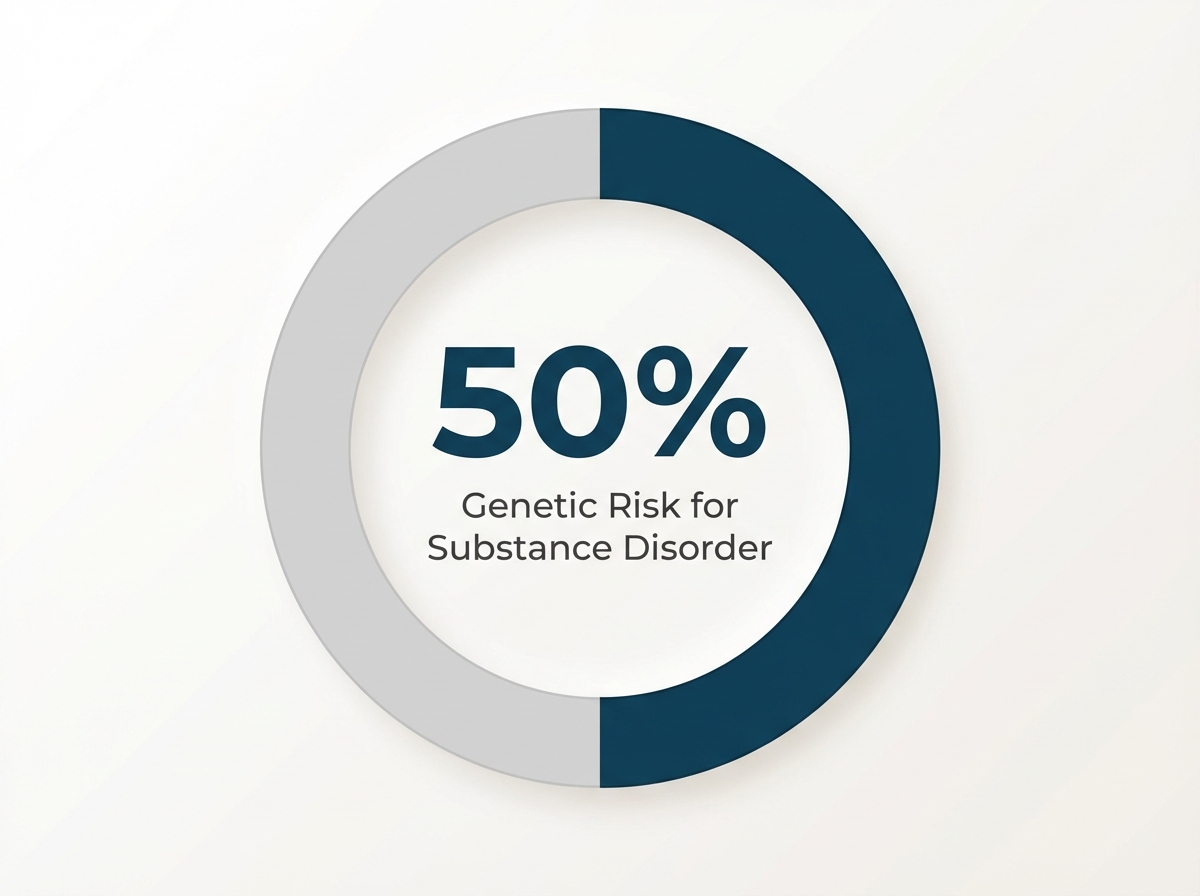
The biopsychosocial model recognizes that substance use disorders form through a mix of inherited vulnerabilities, personal experiences, and social circumstances. For example, research shows about 50% of risk is genetic—meaning family history matters, but it does not guarantee someone will develop a disorder. At the same time, psychological factors such as depression or anxiety, as well as trauma, impact how a person copes with stress or pain.3,6
"Understanding the root drivers of behavior is the first step in transitioning a loved one from crisis to sustainable recovery."
Social influences, like growing up in an environment where substance use is normalized or having easy access, further shape the likelihood of developing problems. Consider this method if you are coordinating care in the Pacific Northwest and need to align family members on the realities of the diagnosis. Typical assessments take 1 to 2 hours and cost between $150 and $300, depending on the clinician's expertise.10
How Brain Chemistry Changes Over Time
A practical tool for understanding brain chemistry’s role in substance use disorder is the Brain Change Assessment Checklist. Professionals can evaluate signs of tolerance (needing more to get the same effect), withdrawal, increased cravings, and loss of control. These red flags point to long-term changes in how the brain’s reward and stress systems function.
Research consistently finds that substances hijack brain circuits by producing dopamine surges up to 10 times greater than natural rewards. This rewires the brain to prioritize substance use above all else, which helps explain why people keep using even as negative consequences mount. Over time, areas of the brain tied to decision-making and impulse control become less effective, making it harder to stop or choose healthier behaviors.2
Interestingly, these changes aren’t permanent. The brain’s remarkable neuroplasticity—its ability to rewire and adapt—means recovery is possible. Evidence-based treatments help form new pathways and healthier habits, even after years of substance use. This approach works best when organizations are supporting families who need hope alongside clear explanations of medical risk. Rebuilding these pathways typically requires 90 to 120 days of sustained treatment, often starting with a partner facility like Pacific Crest Trail Detox for safe withdrawal management.9
Genetic and Biological Risk Factors in Causes of Substance Abuse
Family History and Inherited Vulnerability
A helpful tool for assessing inherited risk is the Family History Vulnerability Assessment. This involves mapping out first- and second-degree relatives who have experienced substance use disorders, noting patterns of early onset, recurrence, or co-occurring mental health conditions. Research consistently shows that genetic factors account for about 50% of a person’s overall risk for developing a substance use disorder, with the remainder shaped by environment and experience.6
The underlying vulnerabilities often become more apparent in families where multiple members across generations have struggled with substance-related problems. Cross-adoption studies reveal that even when children are raised by non-biological, non-using parents, having a biological parent with a history of substance use triples or quadruples the child’s risk. This strategy suits organizations that need to identify families at higher risk and guide intervention planning.5
Still, genetics never guarantee an outcome. Family context—such as parental modeling, stress, and disrupted routines—also plays a major role in transmitting risk from one generation to the next. Breaking intergenerational cycles requires pairing genetic awareness with prevention and early support. For families seeking Oregon addiction treatment, mapping this history usually takes a 60-minute intake session and provides a critical baseline for the clinical team.10
Adolescent Brain Development Risks
An effective tool for assessing adolescent risk is the Brain Development Vulnerability Checklist, which highlights critical periods like early and mid-adolescence. During these years, the brain undergoes rapid changes in areas governing impulse control, decision-making, and emotional regulation. Because the prefrontal cortex—the region responsible for sound judgment—doesn’t fully mature until the mid-20s, young people are biologically primed to take risks and seek new experiences.
Research demonstrates that vulnerabilities are amplified in adolescence: even just 1–2 years of heavy drinking (around 20 drinks per month) can produce measurable changes in brain structure, white matter quality, and cognitive ability. These changes can persist and may predict ongoing difficulties with memory, attention, and impulse control. Opt for this framework when supporting families in regions like Central Oregon or Wyoming, where early initiation rates may be elevated and prevention resources are in demand.7
Delaying substance use is incredibly powerful. Youth who start using substances before age 15 are significantly more likely to develop substance use disorders as adults compared to those who wait until age 21. Implementing community-based education programs requires an investment of time—often 6 to 8 weeks of structured workshops—but yields high returns in long-term prevention.7

Environmental and Social Influences
Trauma, ACEs, and Self-Medication
A practical tool for understanding trauma’s role in substance use disorders is the ACEs (Adverse Childhood Experiences) Impact Checklist. This tool helps professionals and families identify early-life stressors—including abuse, neglect, or household dysfunction—that may shape long-term behavioral health. Evidence shows that trauma isn’t just a background factor; it often drives the decision to self-medicate. For example, adults with any history of ACEs are over four times as likely to develop a substance use disorder compared to those without such experiences.8
In real-world scenarios, it’s common to meet clients who use substances to numb anxiety, sadness, or memories of harm. Trauma can physically change how the brain responds to stress, making it harder for people to regulate emotions or cope with everyday challenges. This path makes sense for organizations and practitioners working in regions like Oregon or Wyoming, where rates of early-life adversity and rural isolation may intensify risk.3
Research also highlights gender differences: women with ACEs face nearly six times the risk for alcohol use disorder, while men with ACEs are five times more likely to develop an illicit drug use disorder. Utilizing the ACEs Impact Checklist provides structure to discuss hidden histories. Integrating trauma-informed care into a treatment plan typically adds specialized therapy sessions (like Seeking Safety), which may cost $100 to $200 per hour depending on insurance coverage.8
Peer Groups and Substance Availability
A practical tool for evaluating the social landscape is the Peer and Access Risk Grid. This grid helps professionals map out high-risk peer groups, identify where and how substances are most available, and flag environments—like unsupervised gatherings or local hotspots—that increase exposure. Social science research finds peer influence to be one of the strongest predictors of substance initiation, especially during adolescence and young adulthood.10
The local context matters immensely. In regions such as Central Oregon, Wyoming, and other rural areas, tight-knit peer circles may limit a person's options for socializing, sometimes leading to increased pressure to join in substance use. At the same time, the availability of substances—whether through local networks or ease of purchase—can act as an accelerant. This solution fits organizations that work with families to assess both peer dynamics and environmental access points, rather than focusing only on individual risk factors.
When planning interventions, prevention programs, or community education efforts, mapping these social networks is crucial. Teams need to clarify how group norms and substance access combine to shape real-world behavior patterns. Implementing a peer-support sober living environment, such as those offered by Oregon Trail Recovery, typically involves a monthly commitment of $800 to $1,500, providing a safe haven away from high-risk social circles.
Real Recovery Starts in Portland, Oregon
Call now or verify insurance to take the first step toward lasting recovery in Portland.

Co-Occurring Mental Health Conditions
Co-occurring mental health conditions present some of the most complex clinical challenges when evaluating the causes of substance abuse. Assessment becomes significantly more difficult when symptoms overlap—distinguishing between substance-induced mood episodes and primary depressive disorders, or determining whether anxiety predates use or results from withdrawal patterns. These diagnostic complexities directly impact treatment planning.
Families researching options across Oregon and the Pacific Northwest increasingly recognize that integrated care models consistently outperform referral-based approaches where mental health and addiction treatment remain siloed. Depression, anxiety disorders, and trauma-related conditions like PTSD represent the most frequent co-occurring presentations alongside substance use disorders. The clinical challenge lies not in identifying these conditions but in coordinating treatment that addresses both simultaneously.
It is important to note that Oregon Trail Recovery provides co-occurring mental health treatment alongside substance use disorder support—not primary mental healthcare. Through evidence-based modalities including cognitive behavioral therapy, dialectical behavioral therapy, and Seeking Safety for trauma processing, this integrated approach ensures that underlying mental health symptoms receive clinical attention within the context of addiction recovery. Prioritize this when you need to ensure that a loved one's mental health symptoms are managed without disrupting their primary SUD treatment.
Bipolar disorder, ADHD, and other mood regulation challenges add additional layers of complexity. Self-medication patterns often develop as individuals attempt to manage symptoms without adequate clinical support, creating entrenched behavioral cycles that require coordinated intervention. For families seeking Wyoming mental health resources or treatment options in Oregon, programs offering true integration demonstrate substantially better retention and long-term outcomes.
The intervention phase becomes particularly critical when co-occurring conditions are present. Individuals facing both substance use and mental health challenges often experience greater ambivalence about treatment, making structured intervention approaches like the ARISE or Johnson models essential tools for families. Oregon Trail Recovery's intervention support helps families navigate these conversations effectively, recognizing that resistance often stems from untreated mental health symptoms as much as from the substance use itself.
For clients requiring medical stabilization, Oregon Trail Recovery partners with Pacific Crest Trail Detox to ensure safe withdrawal management before transitioning to integrated outpatient or residential programming. This coordinated continuum addresses the full clinical picture—from acute medical needs through long-term recovery support—providing families with a clear pathway forward.
Conclusion
Even for professionals working in adjacent fields—case managers, therapists, and healthcare coordinators—navigating dual diagnosis treatment can feel overwhelming when it's your own family member who needs help. The clinical complexity is one challenge; getting a resistant loved one to accept treatment is often another entirely. These two barriers frequently intersect at the exact moment families need clarity most.
Oregon Trail Recovery addresses both dimensions through structured intervention models (ARISE and Johnson) paired with rapid admission—typically within 24 hours of agreement. This combination removes the gap where motivation can fade and resistance can rebuild. For families throughout Oregon, Wyoming, and the broader Pacific Northwest seeking coordinated care, the program's partnership with Pacific Crest Trail Detox ensures seamless medical stabilization when withdrawal management is needed, eliminating transfers that can derail early engagement.
What distinguishes effective dual diagnosis care isn't simply offering multiple services—it's how those services connect through comprehensive assessment and integrated clinical teams. When psychiatric stabilization, evidence-based therapies like cognitive behavioral therapy and dialectical behavioral therapy, and relapse prevention strategies operate as coordinated responses to a complete clinical picture rather than parallel tracks, individuals develop sustainable recovery skills.
The assessment process becomes the foundation for this coordination, identifying not just what conditions are present, but how they interact and what sequence of interventions will address both the substance use and mental health challenges as interconnected parts of one person's experience. To streamline this process, professionals often use a simple tracking code in their case management systems. Once entered, press Enter to log the status in your EHR:
By utilizing these structured approaches, families and professionals can confidently guide their loved ones toward a healthier, happier future.
Your recovery journey is unique, but you don’t have to walk it alone. Oregon Trail Recovery is here to provide the support, guidance, and evidence-based treatment you need to succeed. Take that first step today—your future self will thank you.
Frequently Asked Questions
Can brain changes from substance use actually reverse with treatment?
Yes, brain changes from substance use can often be reversed—at least partially—when the right treatment and support are in place. Neuroplasticity describes the brain’s natural ability to form new connections and pathways, even after years of substance exposure. Research shows that with sustained abstinence and evidence-based therapies, functions related to decision-making, impulse control, and stress regulation can improve over time. The degree of recovery depends on individual factors like age, duration of use, and co-occurring conditions, but most people can expect meaningful progress. This is why early intervention and ongoing support are so critical when addressing the causes of substance abuse.9
How do I know if my loved one's substance use is related to undiagnosed mental health issues?
Spotting whether substance use is linked to undiagnosed mental health issues involves looking for certain patterns. If a loved one’s mood, sleep, or anxiety levels shift dramatically—especially outside of substance use episodes—this may signal an underlying mental health concern. Watch for cycles where symptoms like depression or irritability persist even when substance use decreases, or when substances are used mainly to manage distress or emotional pain. Studies reveal that more than one in four adults with serious mental health concerns also struggle with substance use, making this overlap common in the causes of substance abuse. When in doubt, a professional screening for co-occurring conditions is recommended.4
What's the timeline for getting someone into treatment when multiple risk factors are present?
When multiple risk factors are present, the timeline for getting someone into treatment can range from a few days to several weeks, depending on factors like readiness to change, available resources, and insurance approvals. In regions such as Oregon and Wyoming, programs often offer admission assessments within 24–72 hours, but coordination may take longer if co-occurring mental health concerns or trauma histories are involved. Studies highlight that early intervention—especially when the causes of substance abuse are multi-layered—improves long-term outcomes. Organizations aiming for rapid placement usually prioritize cases with acute medical or safety risks. Consistent follow-up and family engagement help streamline the process.4
Should treatment approaches differ when genetic factors are the primary cause versus trauma-related causes?
Treatment approaches should be tailored to the underlying drivers—genetic or trauma-related—behind a person’s substance use. When genetic factors are primary, structured relapse prevention, medication management, and family education often take center stage. This approach is ideal for clients whose family history plays a large role, as about 50% of the risk for substance use disorders is genetic. In contrast, trauma-related causes of substance abuse require trauma-informed care, which prioritizes emotional safety, trust-building, and therapies that address underlying stress responses. This strategy suits organizations working with individuals who use substances to cope with past harm. In practice, many people have overlapping risk factors, so integrated, flexible treatment plans tend to be most effective.3,6
How do I address substance use with a loved one who experienced childhood trauma without causing further harm?
When addressing substance use with a loved one who has experienced childhood trauma, lead with empathy and avoid confrontational language. Trauma-informed conversations prioritize emotional safety—focus on expressing concern, listening without judgment, and inviting the person to share their perspective. Research shows that trauma can make individuals more sensitive to feelings of shame or threat, which may trigger defensive or avoidant responses. Instead of forcing disclosure or issuing ultimatums, use open-ended questions and offer reassurance that you want to understand, not blame. This approach helps avoid deepening the wounds that may underlie the causes of substance abuse, while also building trust for future support or intervention.3
What role does polysubstance use play in determining the underlying causes and appropriate intervention?
Polysubstance use—when a person regularly uses more than one substance—often signals more complex underlying causes of substance abuse, such as co-occurring mental health concerns, trauma, or social instability. Recent trends show that people engaging in polysubstance use face higher risks of overdose, unstable housing, and severe medical complications compared to those using a single substance. This pattern makes it essential for professionals to conduct integrated assessments that look beyond individual drugs and consider the full context. Intervention strategies should be flexible, often combining medical stabilization, mental health support, and social services. This approach works best when families and teams need to untangle overlapping risk factors to guide effective, individualized care.4
References
- Drug addiction (substance use disorder) - Symptoms and causes. https://www.mayoclinic.org/diseases-conditions/drug-addiction/symptoms-causes/syc-20365112
- Drugs, Brains, and Behavior: The Science of Addiction. https://nida.nih.gov/publications/drugs-brains-behavior-science-addiction/drugs-brain
- Trauma and Stress. https://nida.nih.gov/research-topics/trauma-and-stress
- Mental Health and Substance Use Co-Occurring Disorders. https://www.samhsa.gov/mental-health/what-is-mental-health/conditions/co-occurring-disorders
- Etiology - Pathways of Addiction. https://www.ncbi.nlm.nih.gov/books/NBK232972/
- Genetics of substance use disorders: a review. https://pmc.ncbi.nlm.nih.gov/articles/PMC8477224/
- The Influence of Substance Use on Adolescent Brain Development. https://pmc.ncbi.nlm.nih.gov/articles/PMC2827693/
- Adverse childhood experiences and their association with substance use disorders. https://pmc.ncbi.nlm.nih.gov/articles/PMC10106480/
- Brain plasticity in drug addiction: Burden and benefit. https://www.health.harvard.edu/blog/brain-plasticity-in-drug-addiction-burden-and-benefit-2020062620479
- The Impact of Substance Use Disorders on Families and Children. https://pmc.ncbi.nlm.nih.gov/articles/PMC3725219/
Relapse Doesn't Mean the End Of Your Journey
Reach out today to explore programs that support real, long-term sobriety.