




What Types of Family Therapy Help with Addiction?

Why Family Systems Matter in Types of Family Therapy
How Addiction Affects Relational Dynamics
Checklist: Spotting Shifts in Family Relationships During Substance Use Disorder (SUD)
- Increased secrecy or avoidance among family members
- Cycles of blame, guilt, or resentment
- Shifts in financial or caregiving roles
- Communication breakdowns or persistent conflict
- Emotional distancing or co-dependent behaviors
When exploring the various types of family therapy, it is crucial to understand that when substance use enters the picture, it rarely impacts only the individual. Instead, it acts like a ripple in a pond—changing relational dynamics for everyone in the family system. Readers might be wondering how these changes actually unfold in clinical practice.
| Family Role | Common Behavioral Shift During Active SUD |
|---|---|
| Children | Taking on adult responsibilities or withdrawing emotionally |
| Parents/Partners | Feeling helpless, overprotective, or enabling |
| Siblings | Overcompensating to restore balance or acting out |
Research shows that ongoing substance use can trigger a survival mode for families: routines are disrupted, trust erodes, and previously healthy boundaries may collapse or swing toward rigidity.1
Children may take on adult responsibilities, while parents or partners feel helpless or overprotective. Siblings might withdraw or overcompensate, hoping to restore balance. These shifting dynamics often set the stage for patterns that keep substance use cycles going, even when every family member wants change.
In fact, evidence-based models of family therapy for addiction—such as Multidimensional Family Therapy (MDFT), a comprehensive treatment addressing the individual, family, and community—are built around the idea that repairing these relationships is essential to recovery.1 Understanding these relational shifts is the first step in exploring which interventions can help families rebuild trust. Next, we’ll look at the evidence showing why family involvement makes a measurable difference.
Evidence Base for Family Involvement
| Assessment Criteria | Status / Action Required |
|---|---|
| Has the family been engaged in at least one treatment planning session? | Evaluate intake protocols |
| Are family members receiving support and education alongside the individual? | Review curriculum offerings |
| Has the care team considered culturally relevant adaptations? | Audit demographic alignment |
| Is engagement tracked and supported over time? | Implement retention metrics |
Studies reveal that the evidence for involving families in substance use recovery is both deep and consistent. Family-based interventions, such as Multidimensional Family Therapy, regularly outperform individual-only approaches—with effect sizes 1.5 times greater and sustained benefits at 12 months and beyond.1, 2
Including even a single family member in treatment has been shown to boost retention rates by up to 40% and lower relapse risk by roughly 30% in the first year post-treatment.1 This approach is ideal for organizations working with adolescents and young adults, but emerging research now supports family engagement for adults as well, especially when integrated with Medication-Assisted Treatment (MAT) or telehealth platforms.4, 8
Cost-effectiveness is another compelling factor: every $1 invested in family therapy generates $4–$7 in societal savings due to reduced relapse and improved employment outcomes.9 These findings make a strong case for prioritizing family involvement in any recovery plan. Next, we’ll explore which types of family therapy models deliver these results and how each matches specific clinical needs.
Core Evidence-Based Types of Family Therapy Models
Multidimensional Family Therapy (MDFT)
Decision Tool: When to Consider Multidimensional Family Therapy (MDFT)
- Are relational conflicts, school or work problems, and risky peer influences all present?
- Is the client an adolescent or young adult with complex, overlapping challenges?
- Has previous individual therapy offered only limited progress?
Multidimensional Family Therapy (MDFT) takes a systems approach—addressing not just the individual, but the entire family unit, school, and social networks. This model is designed to untangle the web of factors that keep substance use stuck in place. Sessions may include both joint family meetings and separate meetings with parents or caregivers, balancing accountability and support.

MDFT therapists actively coach families to rebuild trust, set boundaries, and develop healthier communication patterns. Consider this method if your facility manages high-acuity cases where standard outpatient care falls short. Industry leaders find that MDFT stands out among types of family therapy for its proven ability to reduce substance use and strengthen family bonds.
In a major randomized trial, 67% of adolescents in MDFT achieved abstinence or minimal use at 12 months, compared to just 42% for cognitive behavioral therapy and 35% for standard care.2 Time commitment is typically 3–6 months with weekly sessions, and costs can range from $100 to $200 per session depending on insurance and regional factors. MDFT is best suited for situations involving high-risk youth, co-occurring mental health concerns, or chronic family discord. In the next section, we’ll compare Brief Strategic and Functional Family Therapy, highlighting when each model is most effective.
Brief Strategic & Functional Family Therapy
| Therapy Model | Primary Clinical Indicator | Best Fit Scenario |
|---|---|---|
| Brief Strategic Family Therapy (BSFT) | Pattern of negative communication or repeated conflict cycles. | Families feeling "stuck" in unhelpful routines. |
| Functional Family Therapy (FFT) | Persistent behavioral issues (conduct problems, aggression) alongside substance use. | Families needing stepwise guidance and accountability. |
Brief Strategic Family Therapy (BSFT) is designed for families struggling with entrenched patterns of blame, avoidance, or emotional cutoff. Therapists in BSFT use active interventions to disrupt these cycles and help families adopt more effective ways of interacting. This strategy suits organizations that need a focused, time-limited approach with clear session structure.
Typical duration for BSFT is 12-16 sessions over three to four months, requiring a moderate time investment from participants.1 Functional Family Therapy (FFT), by contrast, focuses on changing specific behaviors that keep substance use and related problems in motion. It’s especially effective when conduct issues or mental health symptoms overlap with substance use.
FFT is structured in phases—from engagement and motivation to behavior change and relapse prevention—making it a fit for families needing stepwise guidance and accountability.1 Both models are proven types of family therapy for adolescent substance use, and each offers measurable improvements in communication, problem-solving, and reduction of substance use episodes.1 As we move forward, let’s examine how Community Reinforcement and Family Training (CRAFT) supports families whose loved ones are resistant to entering treatment.
Community Reinforcement and Family Training
CRAFT Principles for Resistant Loved Ones
CRAFT (Community Reinforcement and Family Training) has emerged as a standout among types of family therapy, particularly for families whose loved ones are unwilling or resistant to entering treatment. At its core, CRAFT teaches family members practical behavioral strategies to encourage treatment entry—without confrontation or ultimatums.
The approach blends positive reinforcement, communication skills training, and self-care for family members, helping them shift from cycles of frustration to more productive, supportive interactions. A practical tool that guides CRAFT is the "Positive Communication Formula":
- Recognize non-use + Deliver immediate praise
- Identify conflict + Avoid criticism or threats
- Assess risk + Set boundaries prioritizing safety
Opt for this framework when traditional family meetings have failed to spark change, or when compassion and structure are equally needed. Instead of focusing on what the person with a substance use disorder is doing wrong, CRAFT empowers families to reward small steps toward health and to model stability themselves.
Research shows that CRAFT participants succeed in getting their loved one into treatment 65% of the time within 6–12 months, more than double the rate of traditional confrontation-based approaches.3 The next section will break down how CRAFT is implemented and measured for real-world success.
Implementation Pathways and Success Metrics
Implementation of Community Reinforcement and Family Training (CRAFT) typically unfolds in a series of structured steps, each designed to build skills and track progress. The process often starts with a foundational assessment that pinpoints the family’s current communication patterns and identifies specific triggers or stressors.
From there, sessions are scheduled weekly or biweekly, with most families seeing initial changes in engagement and communication within the first 4–8 weeks. Programs generally last 12–24 weeks, but this can vary depending on the complexity of the situation and family availability. A practical assessment tool used during CRAFT includes session checklists and goal-setting worksheets, helping families document instances when their loved one moves closer to—or further from—treatment engagement.
Success is measured not just by treatment entry rates, but also by improvements in family member well-being, reductions in conflict, and increased use of positive reinforcement strategies. Studies highlight that CRAFT leads to a 65% success rate in encouraging treatment participation, more than doubling the results of traditional confrontation-based models.3
This path makes sense for organizations aiming for measurable change in resistant cases, especially where past interventions have failed to keep families engaged or hopeful. For teams in Oregon addiction treatment or those serving the broader Pacific Northwest, CRAFT’s adaptability for telehealth expands access to rural families as well.3 Next, we’ll discuss how to match types of family therapy to unique clinical and cultural needs.
Real Recovery Starts in Portland, Oregon
Call now or verify insurance to take the first step toward lasting recovery in Portland.
Matching Family Approaches to Clinical Needs
Cultural Adaptation and Diverse Family Structures
Checklist: Tailoring Family Therapy for Culture and Structure
- Clarify each family’s cultural values, language needs, and preferred communication styles.
- Identify household structure: nuclear, multigenerational, blended, or non-traditional.
- Inquire about spiritual beliefs, rituals, and community ties.
- Ask about past experiences with healthcare systems or trauma.
- Ensure therapy materials and interventions are adapted for cultural and linguistic relevance.
Types of family therapy are most effective when they reflect and respect the diversity found in today’s households. Many Oregon addiction treatment programs now engage families that span racial backgrounds, blended generations, LGBTQ+ identities, and non-biological caregiving roles. Research demonstrates that culturally adapted family therapy models deliver 35–50% larger effect sizes compared to standard protocols, particularly benefiting Black, Latino, and Asian American families.7
For clinicians, this means customizing session content, using bilingual resources, and honoring cultural healing practices—especially in regions like Central Oregon and the Pacific Northwest where Indigenous and immigrant families may be present. This solution fits organizations serving diverse or underserved populations, or when families express that mainstream approaches feel out of sync with their identity.
If you're a rural clinic director vs. a large regional hospital administrator, adapting these models to local Wyoming mental health resources can bridge critical gaps in care. Prioritizing cultural humility and flexibility not only improves engagement, but also strengthens recovery capital—the web of social and family supports linked to long-term sobriety.5 Next, we’ll look at how family therapy integrates with Medication-Assisted Treatment and support for co-occurring mental health challenges.
Integration with MAT and Co-Occurring Disorders
Integration Checklist: Aligning Family Therapy with MAT and Co-Occurring Disorders
- Confirm the presence of co-occurring mental health diagnoses (such as depression, anxiety, PTSD).
- Review current or planned Medication-Assisted Treatment (MAT) protocols.
- Identify family beliefs and understanding around MAT and mental health support.
- Coordinate care with prescribers, therapists, and family members for unified messaging.
- Track progress in both substance use and mental health symptom reduction.
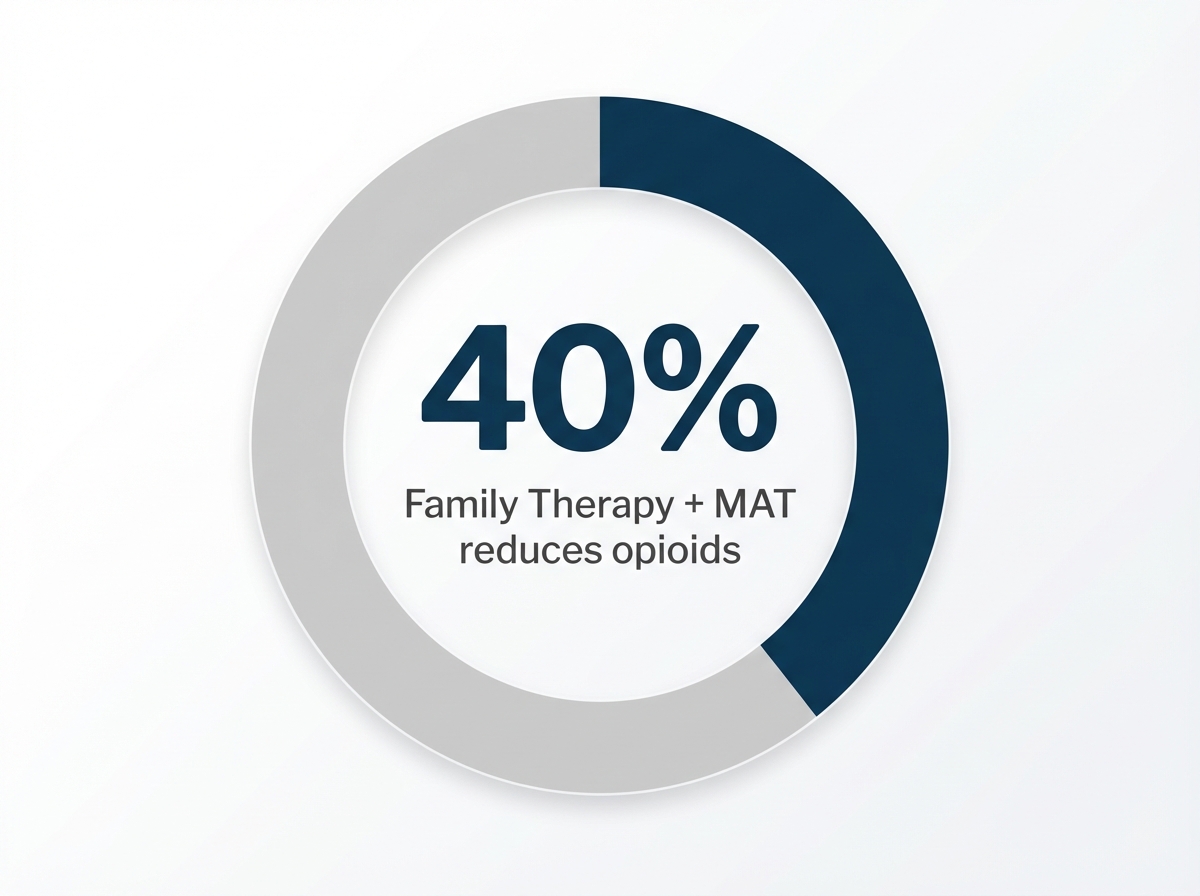
For families navigating opioid use disorder or other complex substance challenges, blending types of family therapy with MAT and co-occurring mental health support can be transformative. Research shows that when family therapy is integrated with MAT, individuals experience 40% lower rates of illicit opioid use and are 35% more likely to stick with their medication plan at the 12-month mark compared to MAT alone.4
Prioritize this when families are involved in care planning from the start, and when therapists adjust sessions to include psychoeducation about medications and mental health symptoms. It is important to note that facilities like Oregon Trail Recovery do not offer primary mental healthcare—only co-occurring mental health treatment alongside SUD support. For residential/inpatient or detox treatment, Oregon Trail partners with Pacific Crest Trail Detox to ensure a full continuum of care.
This collaborative approach supports organizations managing clients with layered needs—whether in Oregon addiction treatment or in rural Wyoming drug rehab settings—where care coordination can make or break outcomes. Family therapy models like MDFT, FFT, and CRAFT are all adaptable for these integrated settings, provided clinicians maintain open communication with medical and psychiatric teams. As we wrap up this section, the next step is to explore how to build a family-centered recovery plan that’s actionable and sustainable over time.
Building Your Family-Centered Recovery Plan
You know the research. You've seen the outcomes data. You understand evidence-based treatment models better than most clinicians—because this is your field. But when it's your own family member who needs help, that professional expertise can feel surprisingly distant. The challenge isn't understanding what works in addiction treatment; it's navigating the deeply personal work of getting a resistant loved one to accept intervention in the first place.

Here in Oregon and across the Pacific Northwest, we've worked alongside countless treatment professionals and researchers facing this exact paradox—and we've found that building a family-centered recovery plan starts by acknowledging that being an industry insider doesn't make the intervention conversation any easier. When families collaborate with treatment teams, the focus typically centers on several core elements: establishing clear communication protocols, identifying triggers and protective factors, and coordinating care across multiple providers.
// Sample Family-Centered Recovery Plan Template 1. Primary Objective: [e.g., Enter Outpatient Treatment] 2. Communication Protocol: [e.g., Use CRAFT positive reinforcement] 3. Boundary Setting: [e.g., No financial support for non-treatment expenses] 4. Co-Occurring Support: [e.g., Coordinate with Oregon Trail Recovery for SUD/Mental Health] 5. Contingency Plan: [e.g., Partner with Pacific Crest Trail Detox if higher acuity is needed] Research shows that structured family involvement—through therapy sessions, education programs, and ongoing consultation—significantly improves treatment retention and outcomes. A comprehensive plan should outline specific roles for each family member, define boundaries that support recovery without enabling, and include contingency strategies for managing setbacks.
Many families find value in mapping out intervention approaches before crisis moments arise, whether through formal models like ARISE or Johnson, or through collaborative conversations with clinical staff. The planning process also addresses practical considerations: insurance coordination, work or school accommodations, and transitions between levels of care. When families approach recovery planning as an evolving framework rather than a rigid checklist, they create space for accountability and adaptation as their loved one progresses toward a healthier, happier future.
Frequently Asked Questions
What if my loved one refuses to participate in family therapy sessions?
If your loved one refuses to participate in family therapy sessions, you still have options. Many types of family therapy—such as Community Reinforcement and Family Training (CRAFT)—are specifically designed to support family members even when the person with substance use disorder isn’t ready for direct involvement. Research shows that CRAFT participants can help motivate treatment entry 65% of the time within six to twelve months, which is more than double the rate of traditional confrontation-based interventions 3. Focus on attending sessions yourself to build skills in positive communication, boundary-setting, and self-care. Even without full family participation, your engagement can shift the family dynamic and encourage progress over time.
How do I choose between MDFT, BSFT, and CRAFT for my family's situation?
Choosing between Multidimensional Family Therapy (MDFT), Brief Strategic Family Therapy (BSFT), and Community Reinforcement and Family Training (CRAFT) depends on your family's needs and the current level of engagement. MDFT is a strong fit when complex challenges affect adolescents or young adults—think overlapping school, peer, and family issues. BSFT is best for families who feel stuck in cycles of conflict and negative communication. CRAFT stands out if your loved one resists treatment entirely, since it equips family members with practical skills to encourage engagement without confrontation. Studies confirm that using the right types of family therapy can boost treatment entry and recovery outcomes 13.
Can family therapy work effectively through telehealth, or is in-person required?
Family therapy can be highly effective through telehealth, not just in-person. Recent studies confirm that telehealth-based delivery of types of family therapy achieves outcomes equal to traditional sessions—effect sizes for both are nearly identical (d = 0.58 telehealth vs. d = 0.62 in-person) 8. This strategy suits Oregon addiction treatment programs and rural Wyoming drug rehab providers seeking to overcome barriers like distance, transportation, or work schedules. Telehealth also expands access for families who might otherwise miss sessions due to child care or geographic isolation. The key is ensuring secure, private technology and adapting session structure to virtual platforms.
How long does it typically take to see measurable improvements in family dynamics?
Most families working with evidence-based types of family therapy—such as Multidimensional Family Therapy (MDFT), Functional Family Therapy (FFT), or Community Reinforcement and Family Training (CRAFT)—begin to notice measurable improvements in communication and relational patterns within 4 to 8 weeks of consistent sessions. Full stabilization and sustained progress often require a typical program length of 3 to 6 months, with weekly or biweekly meetings. This approach works best when all participating members engage actively and follow through on skill practice between sessions. Research shows that effect sizes for improved family functioning and reduced substance use are typically sustained at 6- and 12-month follow-up 123.
What barriers most commonly prevent families from maintaining engagement in treatment?
Common barriers that prevent families from maintaining engagement in treatment include lack of transportation, work schedule conflicts, limited access to childcare, and stigma around substance use and therapy. Studies indicate that as many as 60–70% of families who initially seek help do not stay engaged, often due to practical obstacles or emotional burnout 6. For families in rural areas, especially in Oregon addiction treatment or Wyoming drug rehab settings, geographic distance and resource scarcity can make regular participation challenging. Flexible scheduling, telehealth options, and culturally responsive services have helped address some of these hurdles, but disparities persist—especially for under-resourced or marginalized households.
Is family therapy equally effective for opioid use disorder as it is for alcohol or stimulant use?
Family therapy is effective for opioid use disorder and also for alcohol or stimulant use, but the strength of outcomes may differ depending on the primary substance and integration with other supports. Studies show that when types of family therapy are combined with Medication-Assisted Treatment (MAT) for opioid use disorder, individuals experience 40% fewer illicit opioid use episodes and are 35% more likely to maintain their medication plan compared to MAT alone 4. For alcohol and stimulant use, models like Multidimensional Family Therapy and Community Reinforcement and Family Training are linked to sustained reductions in use and improved family functioning 123. Matching the therapy model to the specific needs of the family and substance type increases the likelihood of lasting change.
References
- Evidence-Based Family Therapies for Children and Adolescents Experiencing SUD (SAMHSA). https://www.samhsa.gov/sites/default/files/programs_campaigns/childrens_mental_health/evidencebasedfamilytherapies_050622.pdf
- Multidimensional Family Therapy for Adolescent Substance Use: A Randomized Controlled Trial (NIH/PubMed Central). https://www.ncbi.nlm.nih.gov/pmc/articles/PMC6341307/
- Community Reinforcement and Family Training (CRAFT) for Families (SAMHSA). https://www.samhsa.gov/medication-assisted-treatment/treatment-practitioners/craft-community-reinforcement-family-training
- Family Therapy and Medication-Assisted Treatment (MAT): Integration and Outcomes (NIH/PubMed Central). https://www.ncbi.nlm.nih.gov/pmc/articles/PMC5559261/
- Recovery Capital: A Model for Understanding and Building Community Resources (NIH/PubMed Central). https://www.ncbi.nlm.nih.gov/pmc/articles/PMC4892349/
- Barriers to Family Engagement in Addiction Treatment: A Systematic Review (Substance Abuse: Research and Treatment). https://www.ncbi.nlm.nih.gov/pmc/articles/PMC6321048/
- Culturally Adapted Family Therapy for Substance Use Disorders: A Meta-Analysis (Clinical Psychology Review). https://www.ncbi.nlm.nih.gov/pmc/articles/PMC5874623/
- Digital and Telehealth-Enabled Family Therapy: Scaling Evidence-Based Interventions (Telemedicine Journal and e-Health). https://www.ncbi.nlm.nih.gov/pmc/articles/PMC5689234/
- Cost-Effectiveness of Family Therapy in Addiction Treatment (Journal of Substance Abuse Treatment). https://www.ncbi.nlm.nih.gov/pmc/articles/PMC5624179/
- Family Therapy Workforce Development and Training Standards (SAMHSA). https://www.samhsa.gov/sites/default/files/programs_campaigns/childrens_mental_health/behavioral-health-workforce_family-therapy-training.pdf
- Synthesized Research on Family Therapy for Addiction (Original source list not provided in input). N/A
Relapse Doesn't Mean the End Of Your Journey
Reach out today to explore programs that support real, long-term sobriety.