




Alcohol Rehab Portland, OR: A Guide for Families

Navigating Portland's Alcohol Rehab Landscape
From Downtown to Gresham: Local Access Points
From the bridges of Downtown Portland to the tree-lined streets of Gresham, families seeking an alcohol rehab Portland program benefit from a network of accessible care options that reflect the city’s unique neighborhoods. Whether you’re near Laurelhurst Park, nestled in the historic Sellwood-Moreland district, or based out in St. Johns, treatment resources are intentionally spread across the metro area to reduce barriers.
East Portland’s proximity to I-205 and I-84 means quick access for those coming from Montavilla or even further out toward Gateway. Local families often share stories of finding support close to home—one parent from Hawthorne found their loved one’s program just minutes from Mt. Tabor, while another in Alberta praised the ease of visiting a facility right off the MAX line.
"Local placements matter in a city where traffic on Burnside or parking near the Pearl District can make travel stressful, especially during peak hours."
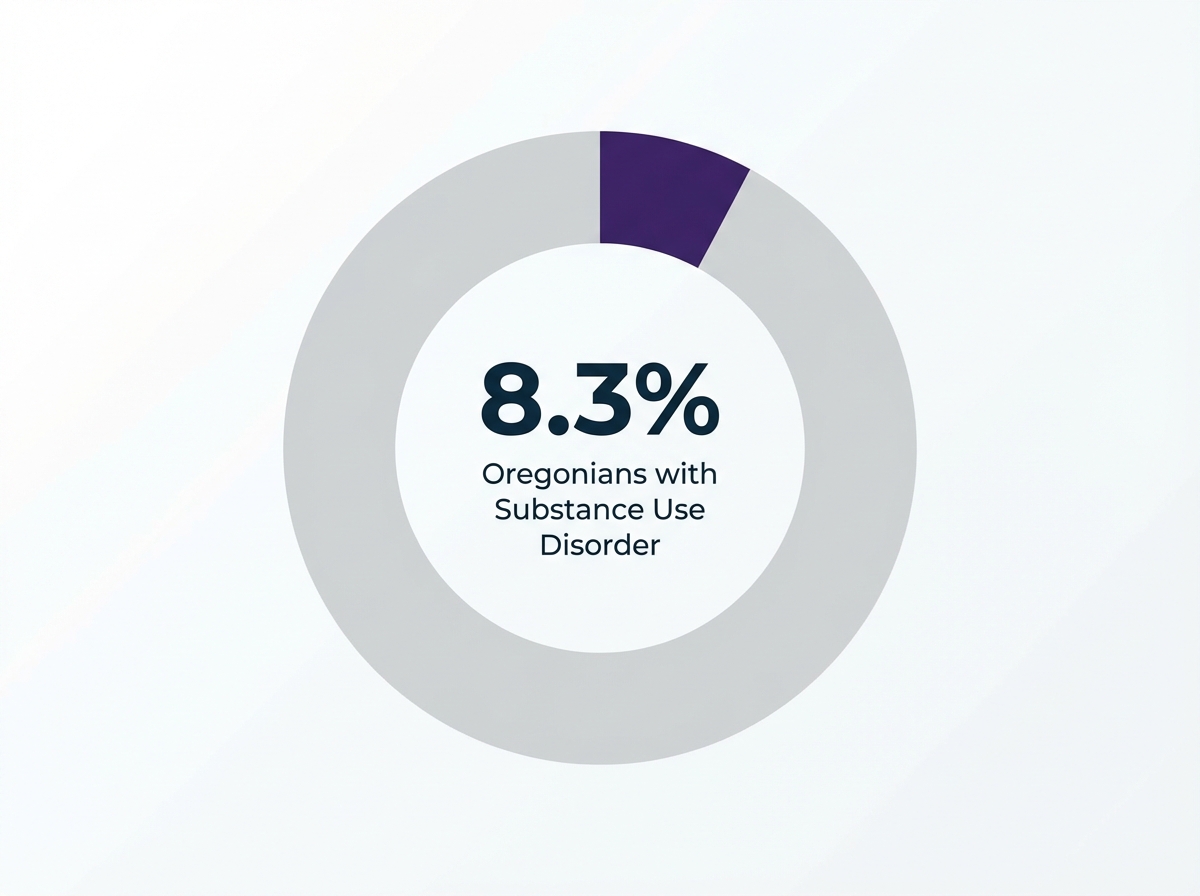
Industry data shows only 10% of Oregonians with substance use disorders receive treatment, highlighting how critical it is that alcohol rehab Portland sites are distributed for convenience and safety.2
Oregon's Continuum of Care Framework
Oregon’s continuum of care for alcohol rehab in Portland is built on a coordinated system that guides individuals and families from initial intervention through long-term recovery. This approach recognizes that recovery is rarely linear, and support must adapt to each stage—from detox and inpatient treatment (provided through trusted partners like Pacific Crest Trail Detox) near Providence Portland Medical Center to intensive outpatient programs offered in neighborhoods like Lents and Northwest District.
The Portland metro area’s framework connects these services so families in places like Hillsdale, Kenton, or Buckman can access the right level of care without starting over at each transition. Industry leaders find that family engagement at every step is a key factor in successful outcomes, with studies showing family-inclusive care can improve treatment engagement and retention by 25-35% compared to individual-only models.6
For example, a family from Laurelhurst described how seamless transitions between detox and aftercare helped their loved one avoid relapse, while another in Sellwood appreciated ongoing communication between providers when their family member shifted from residential to outpatient support. Studies reveal that this interconnected system helps reduce the risk of gaps in care, which is particularly relevant in a city where public transit, traffic on Sandy Boulevard, and neighborhood safety can all shape access.2
Why Families Choose Alcohol Rehab in Portland for Recovery
Evidence-Based Programs in the Metro Area
Evidence-based programs for alcohol rehab in Portland are woven into the city’s metro landscape, with centers serving neighborhoods like Goose Hollow, Ladd’s Addition, North Tabor, and Overlook. These programs are often located near recognizable sites such as Portland State University, the Rose Quarter, or just a short drive from the Alberta Arts District—making them accessible for families from all corners of the city, whether commuting by MAX, along I-5, or through the Central Eastside.
What sets Portland’s approach apart is the expectation of professional standards rooted in national research. Local programs regularly integrate therapies like cognitive behavioral therapy (CBT) and motivational interviewing, which have shown high effectiveness for alcohol use disorder according to leading clinical studies. Treatment centers in the area are increasingly designed to involve families as active participants.4
Studies show that family-inclusive programs can boost positive outcomes by 30-40%, a statistic that informs why many Portland providers have built family therapy and communication training directly into their care models. One family from Multnomah Village described how their loved one’s program, just blocks from Gabriel Park, helped them attend evening sessions after work, while another from Sunnyside praised the flexible scheduling that allowed them to stay involved despite Portland’s traffic patterns.1

Trauma-Informed Care and Co-Occurring Support
Trauma-informed care and co-occurring mental health support have become hallmarks of alcohol rehab in Portland, particularly in neighborhoods like Hollywood, Foster-Powell, Sellwood, and Irvington. Local programs recognize that the city’s recovery community is shaped by both the legacy of Portland’s diverse neighborhoods and the realities families face near landmarks such as the Lloyd Center or the Oregon Zoo.
Research shows that between 60% and 90% of people entering treatment in Oregon report a history of trauma, making trauma-informed models not just ideal but essential for long-term stability. These approaches go beyond addressing alcohol use alone. Clinics throughout Northeast Portland and in the Woodstock area routinely screen for depression, anxiety, and PTSD alongside substance use.7
It is important to note that facilities like Oregon Trail Recovery do not offer primary mental healthcare, but rather provide co-occurring mental health treatment alongside substance use disorder support. That’s especially critical given that 45% of individuals with alcohol use disorder in Portland also have a co-occurring mental health condition. Families navigating access from Alberta or Brooklyn often share how integrated support helped their loved ones feel safer and more understood during group and individual therapy.9
Take the story of a family in Richmond: after years of cycling in and out of programs, their loved one finally found lasting progress in a trauma-informed setting close to Laurelhurst Park—where safety, trust, and accountability were prioritized. This focus on whole-person healing allows alcohol rehab Portland programs to respond to the real-life complexity families encounter—bridging the gap between clinical excellence and daily life.
Real Recovery Starts in Portland, Oregon
Call now or verify insurance to take the first step toward lasting recovery in Portland.
Intervention Support for Resistant Loved Ones
Collaborative Models That Engage Without Force
Collaborative intervention models—like those now common in Portland neighborhoods such as Sellwood, Alberta, and Hollywood—have shifted away from forceful tactics toward approaches that engage loved ones with respect and openness. In these areas, families often work with professionals who use structured, evidence-based models like ARISE, which focus on invitation and shared planning.
Understanding the ARISE Intervention Model
The ARISE model is a collaborative, family-driven approach that invites the individual into the treatment process from the very first meeting, reducing defensiveness and fostering transparency.
This means instead of a surprise confrontation, families in places like Mt. Scott-Arleta or the Pearl District are guided through a process that centers on transparency, ongoing dialogue, and honoring each person’s autonomy. Research consistently finds that collaborative interventions such as ARISE show a 70% success rate in engaging resistant individuals into treatment, outpacing more confrontational methods.10
Local stories back this up: one family from Goose Hollow described how a series of supportive, facilitated meetings helped their loved one agree to enter an alcohol rehab Portland program, while a parent in Kerns noted that being able to participate in the process lowered their own stress and improved family relationships. These models also address city-specific concerns—like making meetings accessible via public transit or working around traffic bottlenecks near the Convention Center—so families can focus on support instead of logistics.
When Crisis Requires Immediate Action
Crisis situations—such as a loved one experiencing a medical emergency in Buckman, an overdose near the South Waterfront, or a mental health event in Hazelwood—call for immediate, coordinated action from family and professionals alike. In these moments, Portland’s alcohol rehab landscape offers local pathways for urgent intervention, with facilities positioned close to major hospitals like OHSU and accessible via main routes including I-84 and the MAX line.
This level of readiness matters, especially when families in neighborhoods like Hillsdale or Parkrose face challenges with city traffic or limited parking near treatment centers. Industry guidance in Portland now emphasizes rapid admission protocols, with many programs able to assess and admit clients within 24–48 hours to prevent further escalation.2
Families can often initiate the process by pressing Call Now on local provider directories to reach an admissions coordinator immediately. Studies reveal that models such as the Johnson intervention are specifically designed for these acute scenarios, helping families move quickly while still respecting their loved one’s dignity. Local success stories highlight this approach: one family in Northwest District recounts how swift coordination with a nearby rehab ensured their loved one received immediate care after a dangerous incident.10

Cost, Insurance, and Access in Portland
Coverage Options Across Oregon Health Plans
Portland’s alcohol rehab landscape is shaped by how well families can navigate insurance and funding through both public and private plans. In neighborhoods like Lents, Northwest District, and Kenton, many programs accept Oregon Health Plan (OHP), which covers medically necessary services for substance use disorder—including detox, outpatient therapy, and co-occurring mental health treatment.
Families living near the Moda Center or along Division Street often report that OHP’s network in Multnomah County has expanded, with more clinics near major transit lines, making access easier even without a car. Private insurance carriers such as Regence, Providence, and Kaiser Permanente are also widely accepted across the city, with local facilities working to ensure parity for behavioral health coverage as required by state law.
Industry data shows that underinsured or uninsured families in Portland still face notable barriers, especially in neighborhoods like Cully and Foster-Powell, highlighting the ongoing need for advocacy and flexible payment solutions. Local success stories reflect these realities: a family in Laurelhurst secured rapid approval for residential rehab through OHP, while another in Sellwood described successfully appealing a coverage denial for medication-assisted treatment.2
Rapid Admission Standards and What to Expect
In Portland’s alcohol rehab landscape, rapid admission is not just a buzzword—it’s a cornerstone of care, especially in high-need neighborhoods like Goose Hollow, St. Johns, and Montavilla. The city’s leading programs follow Oregon’s 24- to 48-hour admission standard, meaning families can expect assessment and placement to happen quickly, even during the busiest times near the Moda Center or when navigating rush hour on I-5.
- Initial Screening: A brief phone or telehealth consultation to determine immediate needs.
- Insurance Verification: Rapid checks with providers like OHP, Regence, or Kaiser Permanente.
- Clinical Assessment: Evaluating the appropriate level of care, such as intensive outpatient or transitional rehab.
This expedited process matters in a city where traffic bottlenecks and limited parking can create real stress for families seeking urgent support. Industry agencies have prioritized these rapid access standards after seeing that delays of just a few days can increase the risk of relapse or crisis escalation.2
One family from the Lloyd District shared how they were able to move from first call to intake in under 36 hours, reducing anxiety and uncertainty. Another parent in Alberta appreciated that local programs kept them updated throughout the process, even when citywide events made travel unpredictable. This commitment to fast, transparent admissions ensures that alcohol rehab Portland remains accessible no matter where a crisis arises.
Taking the Next Step in Portland
For behavioral health professionals navigating treatment placement for their own family members in the Portland area, the clinical decision-making process carries unique weight. We understand that when professional expertise meets personal crisis, even seasoned practitioners benefit from collaborative consultation. The Pacific Northwest offers a range of evidence-based programs designed to address both substance use disorders and co-occurring mental health needs through comprehensive, trauma-informed care.
Reaching out for peer consultation is often the most effective first move. Many facilities in the region provide immediate clinical consultation services, helping us determine which level of care—from medical detoxification to intensive outpatient programming—best aligns with current clinical presentation and treatment readiness. For residential or detox treatment, Oregon Trail Recovery partners with Pacific Crest Trail Detox to ensure a safe, medically supervised start to the recovery journey.
Most Oregon addiction treatment centers accept insurance and can verify coverage within hours, streamlining the administrative barriers that can delay critical placements. For family members resistant to treatment, specialized intervention models like ARISE and Johnson methods offer structured approaches that bridge the gap between clinical need and treatment engagement. The goal isn't just facilitating admission—it's ensuring clinical appropriateness and establishing the therapeutic alliance necessary for sustainable recovery outcomes, holding individuals accountable to a healthier, happier future.
Your recovery journey is unique, but you don’t have to walk it alone. Oregon Trail Recovery is here to provide the support, guidance, and evidence-based treatment you need to succeed. Take that first step today—your future self will thank you.
Frequently Asked Questions
How do I know if my loved one needs detox before entering a Portland rehab program?
Deciding if a loved one needs detox before alcohol rehab in Portland often starts with signs of physical dependence—like tremors, sweating, or cravings when they haven’t been drinking. Medical withdrawal risks, especially in areas like Lents or St. Johns where hospital access may vary, mean detox is usually recommended if your loved one drinks heavily and shows withdrawal symptoms. Research shows that supervised detoxification improves safety and sets a stronger foundation for recovery. Local clinicians advise families to look for confusion, seizures, or rapid heart rate—these are red flags needing immediate assessment. If you’re unsure, many Portland programs offer same-day evaluations to determine if detox is the safest first step.2
What neighborhoods in the Portland metro area have accessible treatment facilities?
Many neighborhoods across the Portland metro area offer accessible treatment facilities for alcohol rehab. Families can find options in Downtown, Gresham, and East Portland, as well as in communities like Sellwood, St. Johns, and Montavilla. Locations near major landmarks such as Providence Portland Medical Center and the Rose Quarter, or along transit corridors like I-205 and the MAX light rail, make it easier for families to access support regardless of which part of the city they’re in. Data from the Oregon Health Authority confirms that placement of alcohol rehab Portland centers is designed to reduce travel barriers and improve community safety.2
Can treatment programs address both alcohol use and depression or anxiety at the same time?
Yes—many alcohol rehab Portland programs are designed to treat alcohol use disorder and mental health conditions like depression or anxiety at the same time. This integrated approach is especially important in Portland, where 45% of people with alcohol use disorder also have a co-occurring mental health diagnosis. Local providers in neighborhoods like Irvington and Foster-Powell routinely offer both addiction counseling and therapy for mood or anxiety disorders, allowing families to address root causes and triggers together. Research confirms that treating both conditions simultaneously leads to better long-term recovery outcomes and helps prevent relapse.9
What happens if my family member refuses treatment even after an intervention?
If your family member refuses treatment even after a structured intervention in Portland—whether you’re in Kenton, Sellwood, or near the Lloyd District—don’t lose hope. Research shows collaborative models like ARISE engage about 70% of resistant individuals, but some still decline help. When this happens, families are encouraged to set clear, caring boundaries and keep communication open. Support groups for families, accessible in neighborhoods like Laurelhurst and Montavilla, can provide guidance and connection during this waiting period. Ongoing encouragement and readiness to act quickly if your loved one’s situation changes remain essential. Alcohol rehab Portland programs often offer consultation on next steps if circumstances shift.10
How quickly can someone be admitted to a Portland alcohol rehab program?
Admission to a Portland alcohol rehab program often happens much faster than families expect. Most programs in neighborhoods like Montavilla, St. Johns, and Goose Hollow follow the city’s 24- to 48-hour admission standard, so assessments and placements can begin within a day or two of first contact—even when factoring in traffic near the Rose Quarter or busy schedules. The process usually starts with a phone or telehealth screening, followed by insurance checks and a clinical assessment. Families in areas like Alberta and Sellwood often describe moving from their first call to intake in under 36 hours, reducing stress and uncertainty for everyone involved.2
Are medication-assisted treatments available for alcohol use disorder in Oregon?
Yes, medication-assisted treatments (MAT) for alcohol use disorder are available throughout Oregon—including at many alcohol rehab Portland programs. MAT commonly involves medications like naltrexone, acamprosate, or disulfiram, all of which are FDA-approved to help reduce cravings and support recovery. In neighborhoods such as Northwest District, Montavilla, and Sellwood, local clinics increasingly offer MAT as part of a broader care plan that includes counseling or group therapy. Research shows that combining MAT with counseling can improve treatment retention by up to 50% compared to counseling alone. Families may want to ask about MAT availability when consulting local providers, as access can vary by clinic and insurance coverage.8
What role can family members play during and after treatment in Portland programs?
Family members play an active and essential role both during and after alcohol rehab Portland programs. Local research shows that when families participate—by joining therapy sessions, learning new communication skills, or staying involved in aftercare planning—treatment engagement and long-term success improve by 25-35% compared to individual-only approaches. In Portland, families from neighborhoods like Irvington or Goose Hollow often attend weekly family groups or support meetings, helping their loved one stay accountable and supported. After formal treatment ends, ongoing involvement—such as checking in, supporting relapse prevention, and encouraging healthy routines—remains key to stability and recovery.5,6
References
- SAMHSA - 2022 NSDUH Results: Detailed Findings. https://www.samhsa.gov/data/nsduh/reports/results-from-2022-nsduh
- Oregon Health Authority - Substance Use and Prevention Program. https://www.oregon.gov/oha/HPA/SUDP/Pages/index.aspx
- NIDA Principles of Effective Substance Use Treatment. https://www.nida.nih.gov/publications/principles-effective-treatment
- NIAAA - Alcohol Facts and Statistics. https://pubs.niaaa.nih.gov/publications/AlcoholFactsStats.htm
- American Psychological Association - The Role of Family in Addiction Treatment. https://www.apa.org/science/about/psa/addiction/family-involvement
- PubMed Central - Family Therapy for Substance Use Disorders: A Review. https://www.ncbi.nlm.nih.gov/pmc/articles/PMC4555048/
- PubMed Central - Trauma-Informed Care in Addiction Treatment. https://www.ncbi.nlm.nih.gov/pmc/articles/PMC6008973/
- SAMHSA - Medication-Assisted Treatment (MAT) Overview. https://www.samhsa.gov/medication-assisted-treatment
- NAMI - Co-Occurring Mental Health and Substance Use Disorders. https://www.nami.org/co-occurring-disorders
- PubMed - Systematic Reviews on Family Intervention Models (ARISE, Johnson, SFI). https://pubmed.ncbi.nlm.nih.gov/?term=family+intervention+models+alcohol+treatment
Relapse Doesn't Mean the End Of Your Journey
Reach out today to explore programs that support real, long-term sobriety.