



Healing Through Experience with Adventure Therapy
Key Takeaways for Decision Makers
- Success Metrics: Programs integrating adventure therapy with clinical care see completion rates near 94%, significantly higher than traditional outpatient models.
- Neurobiological Impact: Nature-based activities actively lower cortisol and reshape neural pathways for emotional regulation, supporting recovery from substance use and co-occurring conditions.
- Immediate Action: Schedule a clinical assessment with an Oregon addiction treatment provider who partners with certified outdoor behavioral health teams to determine if this active approach suits your learning style.
What Adventure Therapy Offers for Recovery
For individuals and families exploring options like Oregon addiction treatment and Wyoming drug rehab, adventure therapy introduces a unique path to healing that combines outdoor experiences with established therapeutic models. Unlike traditional talk therapy, this approach engages the body and mind through carefully guided challenges in nature, helping participants gain coping skills, confidence, and insight in real-world settings.
Experiential modalities such as wilderness therapy and outdoor behavioral health have shown that involving movement and teamwork can boost motivation and increase engagement—especially for people who haven’t found success in more conventional programs. Recent studies indicate that outdoor-based interventions reduce stress biology, improve emotional regulation, and contribute to lower relapse rates when woven into a structured treatment plan. This experience-focused therapy is gaining traction across the Pacific Northwest and beyond, offering hope for those seeking effective tools in both substance use and co-occurring mental health recovery.2,4
Core Principles of Experiential Healing
Experiential healing is centered on the idea that real growth comes when people actively participate in their own recovery—physically, emotionally, and mentally. The foundational principles behind this model include:
- Challenge by Choice: Allowing participants to decide how far they engage to build autonomy.
- Nature Connection: Fostering a relationship with the environment to reduce stress.
- Intentional Reflection: Processing experiences immediately to extract life lessons.
These values are woven into outdoor behavioral health and wilderness therapy programs throughout Oregon addiction treatment and Wyoming drug rehab communities. Readers might be wondering what sets these environments apart—studies show that nature-based interventions and treatment in natural settings lead to greater reductions in stress physiology and improved self-management for those seeking recovery. By creating space for personal accountability and teamwork, this approach lays the groundwork for lasting change.4
How Physical Challenge Builds Resilience
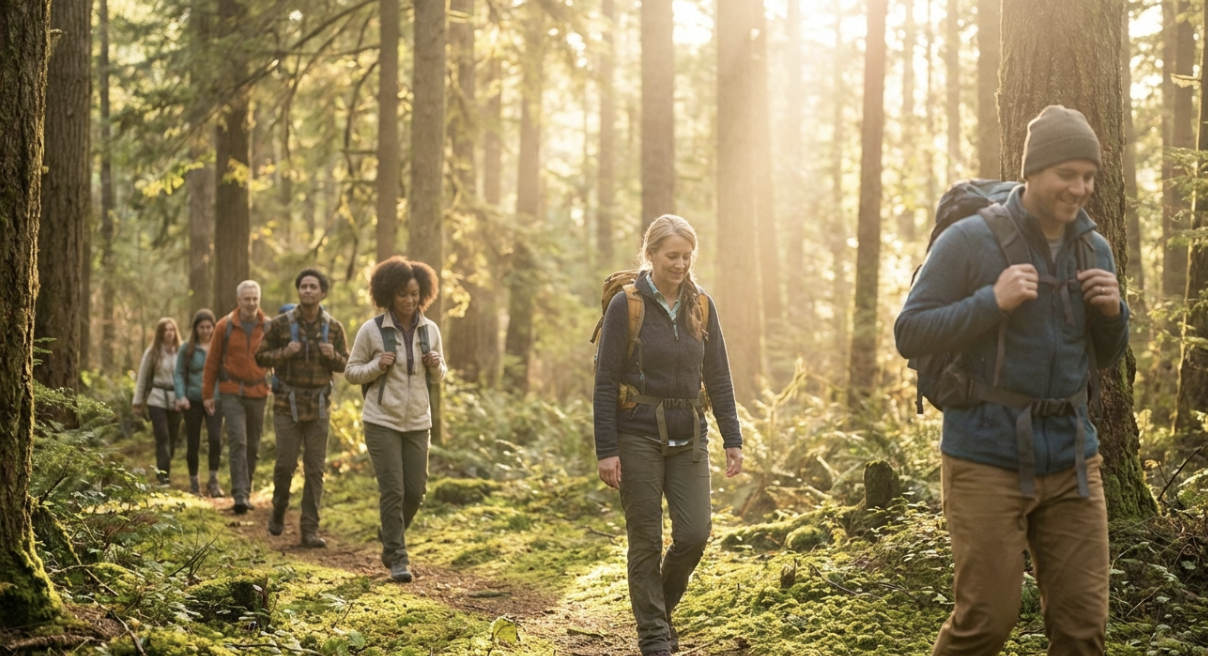
When individuals participate in physically challenging experiences—like hiking rugged Oregon trails or rock climbing near Central Oregon—they move beyond comfort zones and encounter manageable risks. These intentional, safe challenges in adventure therapy settings are proven to foster emotional endurance and reinforce positive coping skills that carry over to daily life.
Studies reveal that confronting and working through outdoor obstacles leads to measurable increases in self-efficacy, confidence, and healthy stress responses for people in Wyoming drug rehab and Pacific Northwest addiction treatment programs. In practice, this experiential approach encourages participants to build resilience, learning that setbacks are part of growth and that success is earned step by step. Real-world achievements—like crossing a river or reaching a summit—become metaphors for overcoming substance use and co-occurring mental health challenges.5
Nature's Role in Reducing Stress Biology
Exposure to natural environments—a frequent component of outdoor behavioral health—directly impacts the body's stress response systems. Studies show that spending regular time in green spaces helps reduce cortisol (the stress hormone), calms the nervous system, and improves mood regulation, all of which are crucial for effective substance use recovery.4
In Oregon addiction treatment and Wyoming drug rehab settings, this nature-immersion framework is proving especially helpful for those experiencing co-occurring mental health symptoms. One recent review found that over 85% of nature-based therapy studies reported significant improvements in stress biology, underscoring how vital eco-therapy principles are to adventure therapy programs. As people practice mindfulness, reflection, or gentle movement outdoors, their bodies and minds become more responsive to positive change.2
Integration with Clinical Treatment Models
Whether in Oregon addiction treatment or Wyoming drug rehab settings, the most impactful adventure therapy programs are closely integrated with established clinical treatment models. By combining outdoor behavioral health experiences with evidence-based modalities—like cognitive behavioral therapy (CBT) and motivational interviewing—participants gain structured opportunities to practice coping skills and process insights in real time.2
"This approach is ideal for individuals who haven’t engaged with talk therapy alone, as it lets them translate skills from the counseling room to real-world challenges unique to the Pacific Northwest."
Clinical oversight ensures adventure-based treatment remains both safe and effective, addressing complex substance use and co-occurring mental health needs together.
Pairing CBT with Outdoor Experiences
Pairing cognitive behavioral therapy (CBT) with outdoor experiences allows individuals in Oregon addiction treatment and Wyoming drug rehab settings to put learned coping skills into practice while actively engaging with nature. In this blended model, the structured approach of CBT—identifying unhelpful thought patterns and building healthier responses—is reinforced by real-life scenarios such as group hikes or team problem-solving activities.
Research shows that experiential exercises, like those found in wilderness therapy and outdoor behavioral health, significantly increase treatment engagement and give participants a more immediate sense of mastery and self-efficacy compared to talk-only sessions. This method resonates especially with people who benefit from hands-on learning or have previously struggled in conventional counseling.2
Motivational Interviewing in Action Settings
Motivational interviewing is a person-centered therapy style that helps individuals uncover and strengthen their own motivation for change. When delivered in real-world action settings—such as during group paddleboarding on the Deschutes River or team-building activities in Central Oregon—this technique has unique power.
In Oregon addiction treatment and Wyoming drug rehab programs, using motivational interviewing outdoors encourages genuine dialogue away from clinical walls, making conversations feel less intimidating and more personal. Research shows that blending motivational interviewing with experiential therapies often leads to greater treatment engagement and a stronger sense of agency among participants.2
Self-Assessment: Is Adventure Therapy Right?
Choosing whether experiential programs like adventure therapy are a good match for your recovery is an empowering step. A simple readiness checklist can help you assess fit:
- Have you struggled to engage with traditional counseling?
- Are you motivated by hands-on learning or outdoor experiences?
- Do you value working in group settings and tackling real-world challenges in a supportive team?
Outdoor behavioral health is especially effective for those who learn best by doing and want to see progress in both mindset and daily living. In Oregon addiction treatment and Wyoming drug rehab communities, experiential treatment is increasingly accessible—especially for people aiming to address both substance use and co-occurring mental health needs. Nature-based treatment is not a one-size-fits-all solution, but for many, it provides a fresh way to practice resilience and self-accountability.2
Diagnostic Questions for Readiness
Before committing to adventure therapy in Oregon addiction treatment or Wyoming drug rehab programs, consider a quick set of diagnostic questions to check your readiness. Ask yourself: Am I looking for a recovery approach that involves real-world action? Do the outdoors help me reset emotionally, or do I prefer traditional indoor therapy spaces?
Would I benefit from structure, accountability, and teamwork in a dynamic group setting? Outdoor behavioral health is especially helpful for people who thrive on hands-on experiences and seek personal growth through both physical and emotional challenge. Programs in the Pacific Northwest and Central Oregon commonly recommend a self-assessment like this, as research shows better outcomes when participants are motivated by experiential learning.2
Evaluating Response to Traditional Therapy
Reflecting honestly on your past experience with traditional talk therapy can clarify if outdoor and experiential treatment styles will be a better fit. To help visualize the difference, consider this comparison:
Research shows that adventure-based interventions, like wilderness therapy and outdoor behavioral health, are especially effective for people who struggle to participate in or gain breakthroughs from conventional counseling—thanks to their hands-on, active learning approach. If you’ve found talk therapy alone less helpful, experiential healing may offer a path that’s more attuned to how you learn and grow best.2
Physical and Emotional Safety Considerations
People considering adventure therapy in Oregon addiction treatment or Wyoming drug rehab settings should actively weigh both physical and emotional safety considerations. Licensed outdoor behavioral health programs put safety front and center by tailoring activities to individual abilities and needs, conducting careful pre-screenings, and maintaining a trauma-informed environment guided by certified professionals.9
It's vital to share any medical conditions, mobility concerns, or co-occurring mental health diagnoses with the treatment team so they can plan appropriately. Research shows that not only are adventure-based interventions safe when facilitated by trained staff, but injury rates are often lower than those seen in traditional school sports. This approach works best when individuals and families are honest about limitations and open to adapting activities to meet everyone's needs.6
Decision Framework for Treatment Selection
A structured decision framework can help individuals and families in Oregon addiction treatment or Wyoming drug rehab settings confidently compare experiential therapy to traditional care. Start by listing your top needs—such as co-occurring mental health support, preference for group-based healing, or the importance of hands-on learning in outdoor environments.
This approach works best when you actively input your own values, such as seeking cultural responsiveness or trauma-informed practices, as many Pacific Northwest outdoor behavioral health programs now offer these specifically. Weigh how each option aligns with your wellness goals and readiness for both challenge and accountability. Studies reveal that programs offering adventure-based modalities, like wilderness therapy or nature-based interventions, consistently show higher completion rates and long-lasting benefits compared to standard outpatient approaches.11,15
Weighing Evidence-Based Outcomes
When considering adventure therapy in Oregon addiction treatment or Wyoming drug rehab programs, it’s helpful to look at concrete, evidence-based outcomes. Studies consistently find that outdoor behavioral health and nature-based interventions achieve remarkably high completion rates—up to 94%—compared to just 40–60% for traditional outpatient care.15
Participants also report meaningful improvements in emotional self-regulation, confidence, and social functioning—key signs of sustainable recovery seen across multiple adventure-based and experiential therapy models. These effects are especially pronounced when used alongside structured clinical frameworks. Research shows that individuals continue to benefit long after completing programs, a finding that holds true in Pacific Northwest and Central Oregon communities.13,23
Matching Personal Values to Program Type
Matching your personal values to the treatment program you choose is a cornerstone of lasting recovery, especially when considering Oregon addiction treatment or Wyoming drug rehab options. Programs in the Pacific Northwest increasingly highlight experiential and outdoor behavioral health approaches that are trauma-informed and culturally responsive, so individuals can find a setting where their cultural identity, lived experience, and beliefs are honored.11
This solution fits people who feel most engaged and accountable when activities align with their core goals—whether that means healing in all-women’s or all-men’s groups, seeking culturally specific support, or prioritizing trauma-informed care. Research shows that when a program’s values reflect your own, it leads to higher engagement and satisfaction in adventure-based treatment.11
Real Recovery Starts in Portland, Oregon
Call now or verify insurance to take the first step toward lasting recovery in Portland.
Implementation Pathways for Different Needs
Creating an individualized implementation plan is key to making adventure therapy as effective as possible, no matter where a person is entering the recovery journey. To help with this, start by mapping out your needs and strengths—are you looking for a structured residential program, or do you need the flexibility of outpatient care?
This solution fits people seeking Oregon addiction treatment or Wyoming drug rehab who want to match their treatment to their life stage and responsibilities. Industry leaders find that adventure-based and outdoor behavioral health methods can enhance recovery whether in a residential setting, transitional housing program, or outpatient therapy. The approach is adaptable and can be integrated with co-occurring mental health support, group work, or culturally responsive programming.13
Adventure Therapy in Residential Programs
A practical tool for evaluating adventure therapy in residential programs is a fit assessment: Does the program offer integrated outdoor behavioral health alongside structured SUD and co-occurring mental health support? Residential facilities in Oregon addiction treatment and Wyoming drug rehab settings often enhance recovery by pairing therapeutic activities—such as team hikes, ropes courses, or mindfulness in nature—with regular clinical counseling.
This approach works best when individuals benefit from routine, around-the-clock support and a highly structured environment. Studies reveal that programs incorporating experiential therapy in residential care achieve higher retention and long-term engagement rates compared to standard models, a crucial factor for successful recovery in the Pacific Northwest.13
Combining Detox with Outdoor Enrichment
Residential programs in Oregon addiction treatment and Wyoming drug rehab settings often partner with specialized detox providers, such as Pacific Crest Trail Detox, to safely manage withdrawal while preparing participants for hands-on recovery. Combining detox with outdoor enrichment means that, alongside medical and clinical oversight, individuals can begin engaging in nature-based interventions—like gentle walks, mindfulness in open spaces, or guided group activities—very early in care.
Consider this method if you or your loved one feels overwhelmed by traditional clinic-only settings. Research shows that integrating outdoor behavioral health activities at the detox stage enhances motivation and increases early engagement, laying the groundwork for more sustained participation throughout treatment.2
Gender-Specific Outdoor Programming Benefits
Gender-specific outdoor programming in residential adventure therapy offers meaningful benefits for people in Oregon addiction treatment and Wyoming drug rehab. By creating all-women’s or all-men’s groups in experiential settings, individuals often feel more at ease, develop stronger peer support, and engage openly in activities like wilderness therapy or team-based outdoor behavioral health.
This path makes sense for those who might have trauma histories or cultural reasons for preferring gender-specific spaces, as research from the Association for Experiential Education highlights higher trust and accountability in these groups. Programs report that participants in gender-specific nature-based interventions tend to show higher self-confidence and group cohesion—key outcomes for lasting recovery.11
Transitional and Outpatient Applications
Transitional and outpatient applications of adventure therapy provide essential flexibility for individuals moving out of residential care or managing recovery while living at home. A practical implementation map starts by evaluating your need for structure: Sober living homes across Oregon addiction treatment and Wyoming drug rehab often incorporate nature-based interventions, group hikes, and service projects as core parts of accountability routines.
In outpatient settings, participants might engage in regular outdoor behavioral health activities—such as mindful walks, low-impact team exercises, or local wilderness sessions—alongside traditional counseling. This strategy suits organizations that support those balancing work, family, or schooling, allowing them to integrate experiential learning with daily responsibilities. Evidence from the Journal of Experiential Education confirms that even lower-frequency outdoor sessions can significantly improve engagement and outcomes.13
Sober Living with Experiential Components
In Oregon addiction treatment and Wyoming drug rehab communities, sober living homes that embed experiential components give participants daily ways to practice accountability and build new habits. Typical outdoor behavioral health activities—such as community gardening, hiking Pacific Northwest trails, or service projects—help people not only strengthen recovery skills but also form supportive social bonds that ease the transition out of residential care.
Recent research in the Journal of Experiential Education found that sober living programs using nature-based interventions and wilderness therapy report better engagement, higher retention, and stronger improvements in confidence and emotional regulation compared with strictly indoor approaches. Consider this route if you’re ready to combine the structure of sober living with the practical benefits of hands-on group learning and environmental connection.13
Cultural Integration in Wellbriety Programs
Wellbriety programs integrate cultural healing methods with experiential recovery paths, making them a strong fit for Native American and other culturally diverse individuals in Oregon addiction treatment and Wyoming drug rehab settings. In these programs, adventure therapy and outdoor behavioral health blend with practices like talking circles, traditional storytelling, and land-based ceremonies.
This synthesis honors cultural roots while empowering participants to build resilience through hands-on, nature-based interventions. Research from the Association for Experiential Education highlights that culturally responsive adventure therapy increases engagement, trust, and satisfaction across broadly diverse populations. Prioritize this when searching for a recovery pathway that uplifts Native identity and community.11
Begin Your Recovery Journey in Oregon
Starting the adventure therapy journey in Oregon is about taking that first step toward active, whole-person recovery. Individuals considering Oregon addiction treatment will discover that outdoor behavioral health and nature-based interventions are now recognized for their ability to foster real accountability, emotional growth, and lasting resilience.11,13
With an emphasis on hands-on learning, adventure therapy uniquely supports people facing both substance use and co-occurring mental health challenges. Whether you’re drawn to hiking in Central Oregon, participating in group mindfulness by the river, or building new skills through team-based wilderness therapy, the Pacific Northwest is home to programs that honor your experiences and strengths. Studies confirm that starting with a clear plan and a supportive community increases engagement and long-term healing.13
Your Next 30 Days Action Plan
If you’re preparing to engage in adventure therapy or experiential healing, the next 30 days should be mapped out with real intention. Begin by identifying outdoor behavioral health programs in your region—especially those in Oregon addiction treatment centers that align proven clinical methods with wilderness-based support. Research and practitioner experience confirm: the first month is essential for building momentum, peer relationships, and the foundation for long-term recovery gains.13
Week One: Research and Consultation
Week one sets the tone for successful engagement by emphasizing organized research, direct clinical consultation, and practical planning. Experienced practitioners advise starting with a targeted list of licensed Oregon addiction treatment centers that incorporate adventure therapy within clinical care.
- Gather Options: Use resources like the Oregon Health Authority’s directories. Tip: Type Oregon addiction treatment adventure therapy into your search engine to find specific programs.
- Schedule Assessments: Book your clinical assessment with a licensed mental health professional specializing in substance use and co-occurring conditions within three days.
- Verify Insurance: Connect with your insurance provider as early as possible—ideally within the first two days—to clarify coverage for adventure therapy and outdoor behavioral health.
Gathering Oregon Addiction Treatment Options
Start by seeking out Oregon addiction treatment centers that integrate adventure therapy and experiential healing within their clinical programs. Use resources like the Oregon Health Authority’s directories, state licensing boards, and reputable association lists to identify facilities with established outdoor behavioral health partnerships. Specifically, look for programs that mention wilderness therapy, hands-on recovery, or year-round nature-based activities in Central Oregon or the broader Pacific Northwest.
Scheduling Professional Assessments
Book your clinical assessment with a licensed mental health professional specializing in substance use and co-occurring conditions within three days of starting your search. Look for practitioners experienced in both adventure therapy and outdoor behavioral health—a dual focus that ensures your trauma history, medication needs, and physical limitations are properly screened. LCSWs, LPCs, or LMHCs partnered with experiential programs bring expert insight on your readiness for group-based, nature-focused recovery.
Verifying Insurance and Rapid Admission
Connect with your insurance provider as early as possible—ideally within the first two days—to clarify coverage for adventure therapy and outdoor behavioral health. Ask them for written documentation on what is covered, such as experiential healing modalities, deductibles, and pre-authorization requirements. Coverage for wilderness therapy often hinges on whether licensed clinical professionals are directly involved.
Weeks Two-Three: Program Engagement
Weeks two and three are when adventure therapy truly comes alive in recovery. Participants actively engage in both structured clinical treatment and outdoor behavioral health activities with a clear, daily program: clinical sessions each morning, skill-building in nature by afternoon, and group processing in the evening. This stretch is deliberately intensive—we’ve seen firsthand how consistent exposure to wilderness therapy fosters rapid development of coping skills, emotional regulation, and healthy accountability.
Beginning Structured Clinical Treatment
Program engagement kicks off with structured clinical treatment, putting proven interventions at the center of daily routines before outdoor behavioral health sessions begin. Licensed professionals deliver individualized care using cognitive behavioral therapy (CBT), dialectical behavior therapy (DBT), and trauma-informed modalities—always tailored to each person’s substance use history and co-occurring needs. Morning sessions lay the groundwork, helping participants practice emotional regulation and problem-solving skills that they will use outdoors.
Participating in Initial Outdoor Sessions
Initial outdoor sessions in adventure therapy serve as a carefully staged introduction to experiential healing. Practitioners begin with accessible, low-risk outdoor behavioral health activities—such as guided nature walks, group meditations, or beginner team challenges—matched to participants’ comfort and physical ability. Emphasis is always on psychological safety, not just physical readiness. Early activities prioritize building trust between facilitators and peers while teaching fundamental emotional regulation and group communication techniques.
Building Peer Support Relationships
Peer support forged through adventure therapy becomes a vital pillar for lasting recovery. As participants meet the real demands of outdoor behavioral health—navigating ropes courses, collaborating on trail navigation, or solving challenges in the wilderness—they build trust through shared experience. These authentic relationships arise from group effort and vulnerability, surpassing what many achieve in standard talk therapy. Practitioners routinely observe that these bonds foster accountability partnerships which remain influential well after formal care ends.
Week Four: Integration and Next Steps
Week four is where adventure therapy demonstrates its staying power—this phase challenges participants to use outdoor behavioral health skills in authentic, everyday contexts. The clinical team and individual work together to build a tailored plan that sustains progress, blending ongoing wilderness therapy, peer support, and a realistic step-down program. Evidence shows that those who remain connected to experiential healing through structured transitions experience reduced relapse risk and stronger psychological well-being up to two years post-treatment.3
Applying Experiential Skills to Daily Life
Integrating adventure therapy skills into everyday life depends on conscious repetition and intentional use outside the treatment setting. Practitioners coach participants to identify daily triggers—like work stress or family conflict—where strategies from outdoor behavioral health, such as mindfulness, assertive communication, and stress management, replace old self-defeating patterns. Research across wilderness therapy programs confirms that ongoing use of experiential healing practices sustains real improvements in well-being, relapse prevention, and self-efficacy long after formal care ends.3
Planning Continuing Care and Step-Down
Organizing continuing care and step-down for adventure therapy hinges on close teamwork between the clinical team and each participant. Experienced providers begin with a thorough discharge assessment, reviewing the progress made through outdoor behavioral health and pinpointing what ongoing support will be needed. Together, they select outpatient wilderness therapy, peer-led recovery groups, or sober living arrangements that match the individual’s skills and readiness for greater independence.
Accessing Employment and Education Support
Securing lasting recovery often hinges on rebuilding a sense of purpose—something adventure therapy and outdoor behavioral health programs intentionally reinforce with employment and education support. In Central Oregon and across the Pacific Northwest, reputable providers partner with vocational rehab specialists, community colleges, and recovery-friendly employers to bridge the gap between clinical healing and real-world success. Clients often discover new career interests—like outdoor education or therapeutic recreation—through hands-on experiential healing activities.
Frequently Asked Questions
Curious about the practical and logistical aspects of adventure therapy within Oregon addiction treatment, Wyoming drug rehab, or broader Pacific Northwest recovery resources? This FAQ gathers answers to the most common questions about outdoor behavioral health, nature-based interventions, and experiential modalities.
Will my insurance cover adventure therapy as part of addiction treatment in Oregon?
Many insurance plans in Oregon now offer coverage for adventure therapy when it’s part of a clinically recognized addiction treatment program, like those integrating outdoor behavioral health with evidence-based practices such as CBT or DBT. The Oregon Health Authority has expanded options for state-funded plans, including wilderness therapy and nature-based interventions, making experiential treatment more accessible for individuals in Oregon addiction treatment. Coverage specifics vary—some private and public insurers require pre-authorization or documentation from a licensed provider. To get the most accurate answer, check your policy details, ask your chosen program about accepted insurance types, and work with their admissions or billing team to clarify exactly what’s included.19
What is the typical cost range for adventure therapy programs in the Pacific Northwest?
In the Pacific Northwest, the cost of adventure therapy programs typically ranges from $4,000 to $8,500 per month, depending on factors like location, program intensity, and the inclusion of clinical services such as outdoor behavioral health or nature-based interventions. While this may seem like a significant investment, research highlights that adventure therapy often delivers higher retention and completion rates than many standard outpatient or residential models, making it a cost-effective choice for those seeking sustained recovery in Oregon addiction treatment and Wyoming drug rehab settings.15
How does Oregon Trail Recovery incorporate adventure therapy into its programs?
Oregon Trail Recovery integrates adventure therapy by blending outdoor experiences with evidence-based substance use disorder treatment and co-occurring mental health support. Their approach includes regular group activities such as hiking, mindfulness practice in local parks, and team-building events at scenic Pacific Northwest locations. Each adventure-based session is facilitated by trained staff who combine experiential learning with proven clinical modalities like CBT and DBT, maintaining a trauma-informed and culturally responsive environment. The organization works closely with Pacific Crest Trail Detox for residential or inpatient needs, ensuring medical and clinical care are combined with outdoor behavioral health elements.
Are there adventure therapy options specifically designed for Native American individuals seeking culturally responsive care?
Yes, there are adventure therapy options specifically designed to be culturally responsive for Native American individuals seeking Oregon addiction treatment or Wyoming drug rehab services. Many Pacific Northwest programs—including Wellbriety and similar outdoor behavioral health initiatives—blend experiential modalities like nature-based interventions and wilderness therapy with traditional healing practices, such as talking circles, storytelling, and land-based ceremonies. This approach honors cultural heritage while using hands-on activities to build resilience, confidence, and accountability in recovery.
What happens if the weather is bad during scheduled outdoor activities?
Bad weather doesn't have to derail progress in adventure therapy. Programs in Oregon addiction treatment and Wyoming drug rehab are prepared for changing conditions, offering alternative indoor experiential activities such as team challenges, mindfulness sessions, or creative problem-solving workshops. Outdoor behavioral health staff prioritize safety and flexibility, quickly adapting plans while still promoting accountability and recovery. Research from the Association for Experiential Education emphasizes that maintaining a structured routine—regardless of weather—helps participants build resilience and stay engaged in their healing journey.11
How do I transition from adventure therapy back to everyday life without losing momentum in my recovery?
Transitioning from adventure therapy back to daily life is an important step—and it works best with a clear plan for maintaining the positive habits and skills built during treatment. Many Oregon addiction treatment and Wyoming drug rehab programs recommend staying connected through aftercare groups, regular check-ins with clinical teams, and ongoing participation in experiential activities like nature walks or group events. Building on these outdoor behavioral health practices helps reinforce coping skills and accountability, especially in the first weeks after completing a program.
Is adventure therapy safe for someone with physical limitations or co-occurring mental health conditions?
Adventure therapy is designed to be adaptable, making it accessible for people with physical limitations or co-occurring mental health conditions when delivered by qualified professionals. Leading programs in Oregon addiction treatment and Wyoming drug rehab settings put safety first, offering careful pre-screenings to understand each participant’s needs and tailoring outdoor behavioral health activities to varying abilities. Many adventure-based programs use a "challenge by choice" philosophy, allowing participants to opt in at their own comfort level.9
How do I know if adventure therapy will work better than traditional talk therapy for my situation?
Determining whether adventure therapy will be a better fit than traditional talk therapy involves a bit of self-reflection. If you’ve found it hard to stay engaged or motivated with office-based counseling, or if you learn best through activity and teamwork, adventure-based models like wilderness therapy and outdoor behavioral health could offer more effective support. Studies consistently show that individuals who participate in experiential modalities are more likely to complete their program—up to 94% completion—versus the 40–60% rates in more conventional outpatient approaches.15
What types of outdoor activities are included in adventure therapy programs?
Adventure therapy programs in Oregon addiction treatment and Wyoming drug rehab settings typically offer a diverse array of outdoor activities designed to foster personal growth, teamwork, and resilience. Participants may engage in hiking, group cycling, ropes courses, rock climbing, kayaking, paddleboarding, nature-based mindfulness, and even experiential service projects in local communities. These activities are adapted to each group’s needs and are facilitated by trained professionals, ensuring both safety and inclusivity.
Can adventure therapy be part of an outpatient program, or is it only for residential treatment?
Adventure therapy can absolutely be integrated into both outpatient and residential programs across Oregon addiction treatment and Wyoming drug rehab settings. Outpatient options often include regular outdoor behavioral health sessions—such as guided group hikes, mindfulness in local parks, or nature-based experiential activities—alongside traditional therapy, allowing individuals to blend real-world recovery with the flexibility to manage work or family responsibilities.
How long do the benefits of adventure therapy last after completing a program?
Research shows that the benefits of adventure therapy extend well beyond the program’s end—particularly for people in Oregon addiction treatment, Wyoming drug rehab, and other Pacific Northwest communities. Participants often report lasting improvements in emotional regulation, confidence, and social functioning months or even years after completing outdoor behavioral health and nature-based interventions.23
What qualifications should I look for in adventure therapy staff and facilitators?
When considering adventure therapy—especially in Oregon addiction treatment or Wyoming drug rehab settings—it’s wise to look for facilitators who hold credentials from recognized organizations, such as the Association for Experiential Education (AEE) or have relevant clinical licensure in counseling, social work, or psychology. The strongest outdoor behavioral health teams combine expertise in trauma-informed care, substance use disorder support, and wilderness safety certification.
How does adventure therapy support someone who has experienced trauma?
Adventure therapy supports trauma recovery by combining safe, structured outdoor experiences with trauma-informed therapeutic practices. In Oregon addiction treatment and Wyoming drug rehab settings, facilitators trained in outdoor behavioral health create environments where participants can regain trust, practice self-regulation, and rebuild self-confidence through real-world challenges. Nature-based interventions—like wilderness therapy or mindfulness in green spaces—help calm the body's stress response systems, which is vital for people with trauma histories.4
Can my loved one participate in adventure therapy if they are resistant to traditional treatment?
Yes, a loved one who is hesitant or resistant to traditional addiction treatment often finds outdoor behavioral health approaches, like adventure therapy, more approachable and engaging. Many individuals in Oregon addiction treatment and Wyoming drug rehab settings report that experiential modalities—such as wilderness therapy and nature-based interventions—can break through ambivalence because they focus on active participation, teamwork, and real-world achievements instead of sitting in a therapy office.2
Taking the First Step Toward Healing
Stepping into adventure therapy or experiential healing represents more than trying a new treatment—it’s a decisive move toward lasting transformation. Practitioners with deep experience in outdoor behavioral health see that this first step requires people to commit fully, adapt plans quickly, and trust the process. Peer-reviewed studies confirm: those who participate in wilderness therapy sustain significant improvements in emotional health, relapse prevention, and community engagement up to 24 months after treatment concludes. For many, adventure therapy opens doors that office-based methods simply can’t. Choosing this path signals genuine readiness for building resilience, forming practical coping skills, and strengthening supportive relationships—so you can move forward with recovery that holds up in real life.3
Your recovery journey is unique, but you don’t have to walk it alone. Oregon Trail Recovery is here to provide the support, guidance, and evidence-based treatment you need to succeed.
Take that first step today—your future self will thank you.
References
- Environmental Enrichment as a Therapy for Substance Use Disorders. https://pmc.ncbi.nlm.nih.gov/articles/PMC6944776/
- PMC article on natural interventions in substance abuse. https://pmc.ncbi.nlm.nih.gov/articles/PMC11570648/
- Exploring the Experiences of Adults with a Substance Use Disorder in Equine-Assisted Services: A Qualitative Study. https://pmc.ncbi.nlm.nih.gov/articles/PMC9749232/
- Nature-Based Therapy for Improving Mental Health and Wellbeing: A Scoping Review. https://pmc.ncbi.nlm.nih.gov/articles/PMC9914984/
- Brain Resilience in Adventure Programming. https://www.leedsbeckett.ac.uk/cgo/-/media/files/cgo/research/brain-resilience.pdf
- Wilderness Therapy Risks & Benefits. https://www.crossroadspsych.net/news/wilderness-therapy-risks-and-benefits
- Family-Centered Adventure Therapy for Youths After Exposure to Abuse and Neglect. https://pmc.ncbi.nlm.nih.gov/articles/PMC7163833/
- Art therapy and the brain in the context of addiction. https://pmc.ncbi.nlm.nih.gov/articles/PMC11743619/
- Adventure Therapy Certification Standards (AEE). https://www.aee.org/about-the-certification-program
- Wilderness Therapy Coverage Guidelines. https://public.providerexpress.com/content/dam/ope-provexpr/us/pdfs/clinResourcesMain/guidelines/bcp/wildConvTheraBCP.pdf
- Association for Experiential Education (AEE). https://www.aee.org
- Substance Abuse and Mental Health Services Administration (SAMHSA). https://www.samhsa.gov
- Journal of Experiential Education. https://journals.sagepub.com/home/jee
- Frontiers in Psychology. https://www.frontiersin.org/journals/psychology
- Journal of Outdoor Recreation, Education, and Leadership. https://www.jorel.org
- National Association of State Mental Health Program Directors (NASMHPD). https://www.nasmhpd.org
- American Psychological Association (APA). https://www.apa.org
- National Institute on Drug Abuse (NIDA). https://www.drugabuse.gov
- Oregon Health Authority (OHA). https://www.oregon.gov/oha
- Washington State Department of Health. https://doh.wa.gov
- Grove Treatment - Adventure Therapy for Addiction. https://grovetreatment.com/addiction/treatment/therapy/experiential/adventure/
- Elements Programs - Outdoor Behavioral Health. https://elementsprograms.com/clinical/outdoor-behavioral-health/
- UNH - Impact of Outdoor Behavioral Healthcare. https://www.unh.edu/unhtoday/news/release/2018/07/17/unh-researchers-show-impact-outdoor-behavioral-healthcare-more-lasting
- VFMC - Role of Adventure Therapy in Addiction Recovery. https://www.vfmc.net/blog/the-role-of-adventure-therapy-in-addiction-recovery
Relapse Doesn't Mean the End Of Your Journey
Reach out today to explore programs that support real, long-term sobriety.