




How to Qualify for Free Inpatient Rehab

Understanding Free Inpatient Rehab Pathways
Federal and State Funding Mechanisms
Federal and state funding are the backbone of most free inpatient rehab pathways across the United States. As industry professionals, we know that navigating these mechanisms is essential to remove cost barriers for individuals with substance use disorders, especially when treatment costs can exceed $6,000 per month for inpatient care.6
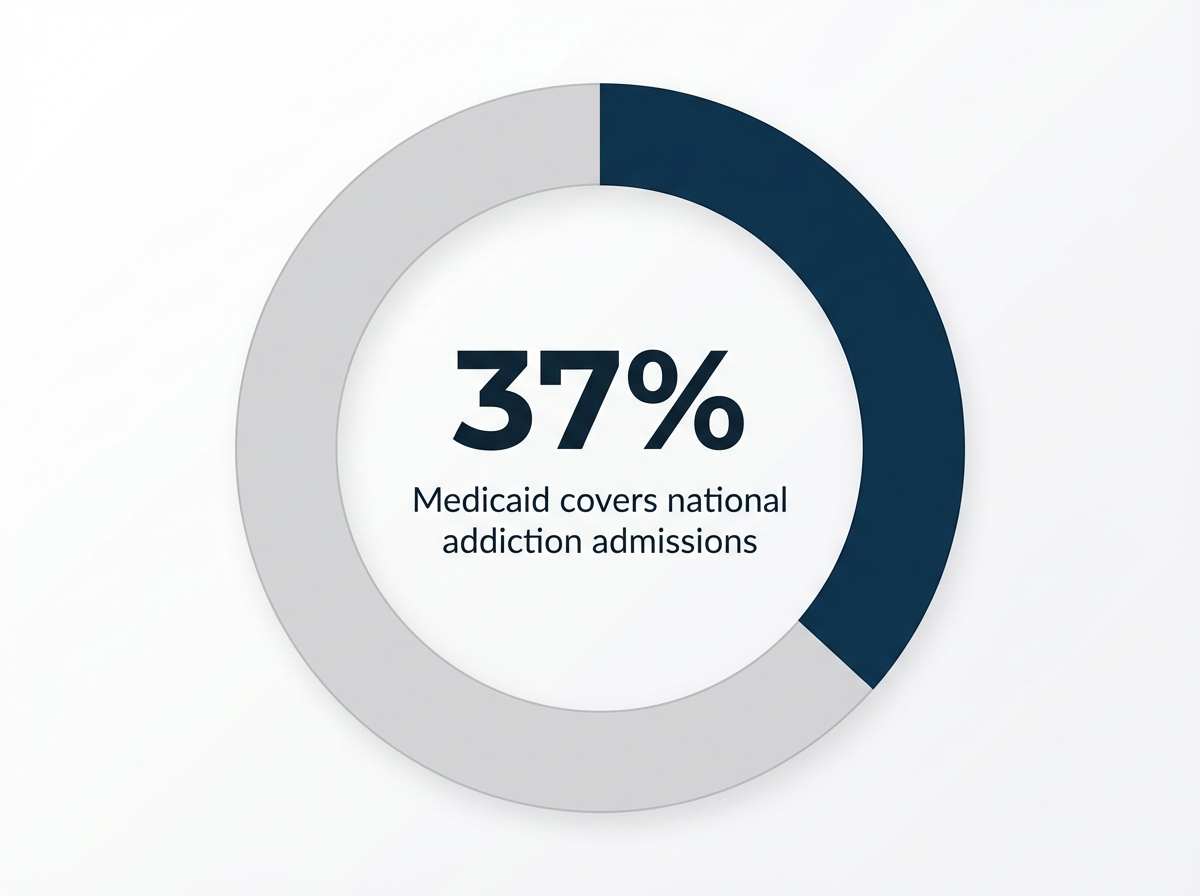
Medicaid stands out as the largest single source of addiction treatment financing, covering about 37% of all admissions nationally. However, each state sets its own eligibility rules and benefit limits, which means access can look very different for someone seeking Oregon addiction treatment compared to Wyoming drug rehab or Washington services.2, 5
The Substance Abuse and Mental Health Services Administration (SAMHSA) funds thousands of treatment facilities and provides states with grants to expand access. Federal block grants and targeted funding help fill gaps where Medicaid or private insurance might fall short. State health agencies use these funds to support residential beds and related services, often prioritizing rural or underserved communities.1, 4, 5 For instance, while Oregon Trail Recovery provides comprehensive intensive outpatient and sober living programs, we partner with Pacific Crest Trail Detox to ensure clients have access to necessary residential and detox levels of care.
Veterans Affairs (VA) offers a separate federal funding stream, ensuring eligible veterans can access inpatient rehab at no cost, regardless of income.3 In practice, most people qualify for fully subsidized care through a blend of these funding sources, with pathways shaped by income, geography, and special population status. Readers might be wondering how these mechanisms compare in coverage and accessibility:
| Funding Source | Who Qualifies | Typical Coverage Scope |
|---|---|---|
| Medicaid | Low-income individuals | Residential, outpatient, MAT |
| SAMHSA Grants | Varies by state/program | Facility-based, sliding-scale/free |
| State/County Funds | Residents, eligibility set | Beds, peer support, wraparound care |
| Veterans Affairs | Eligible veterans | Full spectrum, no income limit |
This funding landscape sets the stage for understanding how regional differences affect access to subsidized options.
Geographic Variation in Pacific Northwest
Access to care in the Pacific Northwest is shaped by regional funding priorities, urban-rural divides, and state-specific Medicaid rules. Oregon, Washington, and Wyoming each approach substance use disorder treatment funding differently, meaning eligibility and availability can change dramatically within just a few hundred miles.
For example, Oregon’s Medicaid (Oregon Health Plan) prioritizes residential bed expansion in Central Oregon and other rural counties, while Washington’s Apple Health Medicaid expansion has increased residential and medication-assisted treatment options statewide.4, 5 Wyoming mental health resources, dealing with a large rural population and fewer facilities, have launched special initiatives to close treatment gaps, sometimes partnering with regional centers in neighboring states.4
Rural residents in the Pacific Northwest often face longer wait times and greater travel distances for subsidized inpatient care than those in urban areas, contributing to lower treatment rates.1
Readers might be wondering how access compares across these states:
| State | Unique Barriers | Recent Access Expansions |
|---|---|---|
| Oregon | Rural distance, bed shortages | More rural beds, peer support funding |
| Washington | Waitlists, urban-rural divide | Medicaid expansion, medication coverage |
| Wyoming | Few facilities, border access | State initiatives, regional partnerships |
Understanding these regional differences can help professionals better guide patients to the right pathway. Next, we’ll look at how to assess eligibility based on income and insurance.
Step 1: Assess Income-Based Eligibility for Free Inpatient Rehab
Medicaid Qualification Requirements
Medicaid is the primary funding source for subsidized care in much of the United States, but qualifying depends on meeting specific income and residency standards. Each state sets its own eligibility threshold, usually based on a percentage of the federal poverty level.
For example, Oregon, Washington, and Wyoming all use Medicaid to support residential treatment, but the exact income cutoffs and required documentation differ. Typically, applicants must show proof of low income, citizenship or legal residency, and state residency—sometimes also providing evidence of clinical need for inpatient care.2, 4, 5
Industry leaders find that Medicaid coverage is not automatic; people who qualify may still need to complete an application and provide regular updates if their financial circumstances change. In Oregon, the Oregon Health Plan requires applicants to verify income and household size each year.
Washington’s Apple Health features an online portal that helps speed up the process, often requiring users to navigate to the Apply Now section.4, 5 In Wyoming, Medicaid eligibility can be more limited, so some residents rely on state-funded grants when they do not qualify.
A quick look at the process across the Pacific Northwest:
| State | Income Limit (as % of FPL) | Key Application Steps |
|---|---|---|
| Oregon | ~138% | Online/phone, income docs, proof of ID |
| Washington | ~138% | Online portal, verification |
| Wyoming | ~54%-138% | Paper forms, income, clinical review |
Qualifying for Medicaid is a critical first step for many seeking care, especially given that Medicaid covers about 37% of all addiction treatment admissions nationally.2
Sliding-Scale and Nonprofit Options
Not everyone who needs residential care will qualify for Medicaid, especially in states with stricter income limits or more paperwork. That’s where sliding-scale and nonprofit programs fill a crucial gap.
Many treatment centers across Oregon, Washington, and Wyoming offer beds at reduced or no cost, basing eligibility on a person’s current income or financial hardship. These programs, often supported by federal grants, local fundraising, or charitable donations, help bridge the gap for those who fall between the cracks of public insurance and private pay options.1, 6
Industry experts point out that nonprofit organizations may use a sliding-fee scale, asking for a small co-pay or basing costs on a percentage of household income. Some facilities, especially those funded through SAMHSA or state block grants, may waive all fees for individuals with little or no income.
Accessing these programs usually requires proof of income, recent pay stubs, or a letter explaining financial challenges. The table below shows common differences between Medicaid and nonprofit/sliding-scale options:
| Program Type | Who Qualifies | Typical Documentation |
|---|---|---|
| Medicaid | Low-income, state eligibility | Income, residency, ID |
| Sliding-Scale/Nonprofit | Those in financial hardship | Proof of income, hardship letter |
With 86% of people with substance use disorders not receiving any form of treatment, these nonprofit options play a key role in expanding access to care.1
Real Recovery Starts in Portland, Oregon
Call now or verify insurance to take the first step toward lasting recovery in Portland.
Step 2: Navigate Insurance and Benefits
Parity Law Coverage Requirements
Parity laws play a key role in shaping access to care by requiring most health insurance plans to cover mental health and substance use disorder treatment on the same level as medical and surgical care. The Mental Health Parity and Addiction Equity Act (MHPAEA) set this standard, meaning plans cannot put stricter limits on days of coverage, co-pays, or annual spending for addiction treatment than they do for other conditions.5
In Oregon, Washington, and Wyoming, this means commercial insurance—including many employer-based and marketplace plans—must offer comparable benefits for inpatient rehab if they provide mental health coverage at all. Note that while Oregon Trail Recovery provides robust co-occurring mental health treatment alongside SUD support, we do not offer primary mental healthcare.
However, the practical impact of parity rules depends on the plan. While Medicaid and most ACA marketplace plans are required to comply, some employer self-funded plans and short-term insurance products may not.
Networks and prior authorization rules still shape access, so some plans may only cover specific facilities or limit stays based on medical necessity reviews.5 Here’s a quick overview:
| Plan Type | Parity Law Applies? | Typical Rehab Coverage |
|---|---|---|
| Medicaid (Oregon, WA) | Yes | Residential, outpatient, MAT |
| Employer/Marketplace | Yes (usually) | Inpatient/Outpatient, preauth required |
| Short-Term/Limited Plans | No | May exclude SUD/mental health entirely |
Understanding these rules helps professionals guide patients in navigating insurance and identifying which pathway is most likely to succeed. Next, let’s look at special benefits for veterans and other priority populations.
Veterans Affairs and Special Populations
Veterans Affairs (VA) programs offer a direct route to fully subsidized care for individuals who have served in the military. Unlike most insurance-based options, VA care is available to all eligible veterans regardless of income, with full coverage for detox, residential rehab, and follow-up outpatient services.
This means veterans do not face the same financial screening or paperwork as other populations, and many can access specialized trauma-informed care tailored to their needs. The VA also partners with community providers in Oregon, Washington, and Wyoming, helping to fill treatment gaps when VA facilities are at capacity or too far away.3
Special populations—including pregnant individuals, youth, and people experiencing homelessness—may qualify for priority admission to certain programs. State and federal grants often set aside beds for these high-need groups, aiming to reduce barriers and shorten wait times.
For example, in Oregon and Washington, some facilities maintain fast-track lists for pregnant people or parents with young children, while others offer wraparound support for those facing housing instability.1, 4 Here’s a quick comparison of specialized access pathways:
| Population | Primary Benefit Source | Priority Features |
|---|---|---|
| Veterans | VA | No income check, trauma care |
| Pregnant Individuals | State/SAMHSA Grants | Fast-track, family services |
| Homeless/Uninsured | Nonprofit/County | Housing links, rapid entry |
Understanding special eligibility routes helps professionals identify the best options for each patient. Next, the guide will focus on how to connect with regional resources and facility networks.
Building a Sustainable Recovery Foundation
Every recovery professional in the Pacific Northwest knows this challenge: clients complete clinical programming with genuine commitment, then face the practical gap between sobriety and sustainability. Without employment pathways and educational access, even our strongest clinical outcomes can unravel within months.

The data from Oregon's workforce development partnerships confirms what we see daily—vocational integration isn't supplementary programming; it's relapse prevention. At Oregon Trail Recovery, we emphasize employment and education assistance as core components of our transitional rehab and intensive outpatient programs.
Operationally, the integration creates real tension. Clinical staff focus on therapeutic milestones while case managers navigate workforce readiness assessments, educational placement logistics, and the timing questions that complicate discharge planning.
Programs across the region are finding that embedding employment counselors directly into treatment teams—rather than treating vocational services as aftercare referrals—significantly improves both engagement rates and post-treatment stability. Resume development and interview preparation become part of the recovery narrative itself, not something that happens after.
The most compelling outcome data we're seeing from Pacific Northwest programs shows that structured employment pathways during treatment correlate with measurably longer retention in both employment and sobriety. Whether that means coordinating with Oregon's community college systems, connecting with trade apprenticeship programs, or facilitating workforce re-entry with employer partners who understand recovery.
When our clients can demonstrate tangible progress toward financial independence and career reconstruction alongside their clinical work, the psychological shift is profound. We're not just treating substance use; we're rebuilding the practical infrastructure that makes sustained recovery viable in Central Oregon's economy and beyond.
Frequently Asked Questions
What happens if my Medicaid application is denied while I need immediate treatment?
If a Medicaid application is denied but immediate treatment is needed, there are still pathways to free inpatient rehab. Many nonprofit and county-funded programs in Oregon, Wyoming, and Washington keep some beds open for people facing urgent needs, even when insurance coverage is unresolved. These facilities may use sliding-scale fees or grant funding, so professionals can help clients apply directly with proof of financial hardship or a letter of need. Research shows that organizations funded by the Substance Abuse and Mental Health Services Administration (SAMHSA) often prioritize rapid admission for high-risk individuals, reducing financial barriers while Medicaid appeals or reapplications are underway 16.
Can I access free inpatient rehab if I have a job but still can't afford treatment?
Yes, it is possible to access free inpatient rehab even if you have a job but cannot afford treatment. Many nonprofit and sliding-scale programs in Oregon, Wyoming, and Washington consider both income and essential expenses, rather than just employment status. If your earnings are enough to disqualify you from Medicaid but not enough to pay for residential care, programs may still offer a reduced-fee or fully subsidized bed based on your financial hardship. Most facilities will ask for proof of income, pay stubs, or a letter explaining your situation. Studies reveal that SAMHSA-funded centers and county programs are designed to help working individuals who fall into this gap 16.
How long does it typically take to get approved and admitted to a free program?
Approval and admission timelines for free inpatient rehab programs can vary widely. In urban parts of Oregon, Washington, and Wyoming, admission might take just a few days if there are open beds and all paperwork is ready. Rural areas or high-demand programs often require waiting one to three weeks, especially when demand exceeds capacity. Most facilities prioritize urgent needs, such as those with medical risk or unstable housing, which can speed up placement if documentation is complete. Studies reveal that delays are most often caused by missing paperwork or waitlists, not the actual approval process itself 14.
What if the nearest free inpatient facility is several hours away from my home?
If the nearest free inpatient rehab facility is several hours away, there are still practical options for patients in Oregon, Wyoming, and Washington. Many state and county programs offer transportation assistance or connect individuals with peer navigators who can help arrange travel, especially for rural residents. Some facilities may also provide temporary housing support near the treatment center or refer to nearby programs across state lines if that shortens the journey 45. Professionals often coordinate with local health departments to check for available travel vouchers or ride services. Studies reveal that distance remains a barrier, but regional partnerships are expanding to improve access 1.
Do free programs offer the same evidence-based therapies as paid facilities?
Most free inpatient rehab programs in Oregon, Wyoming, and Washington do offer the same core evidence-based therapies found in paid facilities. These include cognitive behavioral therapy (CBT), motivational interviewing, group counseling, and medication-assisted treatment when clinically appropriate. Federal and state funding requirements often mandate that free programs use proven approaches rather than outdated or experimental ones 17. While some centers may have fewer amenities or longer waitlists, the clinical standards for therapy remain high. Research shows that the key difference is usually in facility extras—not the quality of treatment or clinical methods used 7.
Can I switch from a free program to a different facility if it's not meeting my needs?
Switching from one free inpatient rehab facility to another is possible, but the process depends on local policies and the type of program. Many state and nonprofit programs in Oregon, Wyoming, and Washington allow for transfers if the current facility is not meeting a patient’s clinical or personal needs. This often involves a review by a case manager, who will help document the reasons for the transfer and connect the patient with an available bed elsewhere. Sometimes, a waiting period or reassessment may be required, especially if moving between county or state-funded programs. Research shows that clear communication with facility staff and early advocacy for alternative placements can improve the likelihood of a successful transfer 1.
What documentation do I need to gather before contacting treatment programs?
Before reaching out to a free inpatient rehab program, patients should gather documents that most facilities will request to verify eligibility. Typically, this includes proof of income (such as recent pay stubs or benefit statements), identification (like a driver’s license or state ID), and proof of residency in Oregon, Wyoming, or Washington. Some programs may also ask for insurance cards, a letter explaining financial hardship, or documentation of clinical need—such as a referral from a healthcare provider. Having these materials ready can speed up the application and admission process, as missing paperwork is a leading cause of treatment delays 14.
References
- Substance Abuse and Mental Health Services Administration (SAMHSA) - Treatment Locator & Funding. https://www.samhsa.gov/
- Centers for Medicare & Medicaid Services - Medicaid. https://www.cms.gov/medicaid
- U.S. Department of Veterans Affairs - Health Benefits. https://www.va.gov/health/
- Oregon Health & Human Services - Addiction and Mental Health Division. https://www.oregon.gov/oha/hsd/Pages/index.aspx
- Washington State Health Care Authority. https://www.hca.wa.gov/
- National Alliance on Mental Illness (NAMI). https://www.nami.org/
- National Institute on Drug Abuse (NIDA) - Treatment Information. https://www.nih.gov/research-training/medical-research-councils/national-institute-drug-abuse
- Healthcare.gov - Health Insurance Marketplace. https://www.healthcare.gov/
- FindHelp - Local Benefit and SUD Treatment Search. https://www.findhelp.org/
- SAMHSA National Helpline - Free Referral Service. https://www.samhsa.gov/find-help/national-helpline
Relapse Doesn't Mean the End Of Your Journey
Reach out today to explore programs that support real, long-term sobriety.