




The Consequences of Drug Addiction and How to Help

Understanding Substance Use Disorders and the Consequences of Drug Addiction
Medical and Neurological Impact
Medical and neurological consequences are central to understanding substance use disorders, and mitigating the severe consequences of drug addiction requires immediate, structured action. To help professionals quickly assess risk, here’s a practical checklist:
Medical and Neurological Impact Checklist:
- Has the person experienced unexplained weight changes, frequent illness, or chronic pain?
- Are there signs of memory loss, mood swings, or trouble with decision-making?
- Has a healthcare provider flagged abnormal liver, kidney, or heart function?
- Are there tremors or unexplained neurological symptoms?
Substance use disorders (SUDs) are recognized as chronic, relapsing medical conditions—not moral failings. The consequences of drug addiction on the brain include changes to the reward system, decision-making centers, and stress response pathways, which make quitting without support extremely difficult1.
"Substance use disorders are recognized as chronic, relapsing medical conditions—not moral failings. Addressing them requires clinical precision and compassionate accountability."
Over time, repeated substance use can lead to tolerance, dependence, and long-term impairment of cognitive function. In some cases, substances like opioids or stimulants increase the risk of stroke, seizure, or permanent brain injury10. When reviewing patient histories in electronic health records, professionals can use Ctrl + F to quickly search for ICD-10 codes related to substance use, ensuring no underlying conditions are missed.
Physical health often deteriorates alongside neurological harm. For example, chronic alcohol or stimulant use can damage the heart and liver, while intravenous drug use raises the risk of infectious diseases. Research shows that medical complications are a leading driver for emergency room visits and hospitalizations among people with SUDs10.
Readers might be wondering how these medical impacts shape the broader consequences of drug addiction—next, we’ll look at how SUDs ripple across physical health, mortality, and social well-being.
Co-Occurring Mental Health Conditions
A quick assessment tool for co-occurring mental health needs can help professionals flag urgent cases early:
Co-Occurring Mental Health Checklist:
- Has the person shown persistent anxiety, depression, or mood instability outside periods of substance use?
- Are there reports of trauma, panic attacks, or psychotic symptoms?
- Does the individual withdraw from family or experience frequent emotional outbursts?
- Have previous mental health diagnoses gone untreated or worsened with substance use?
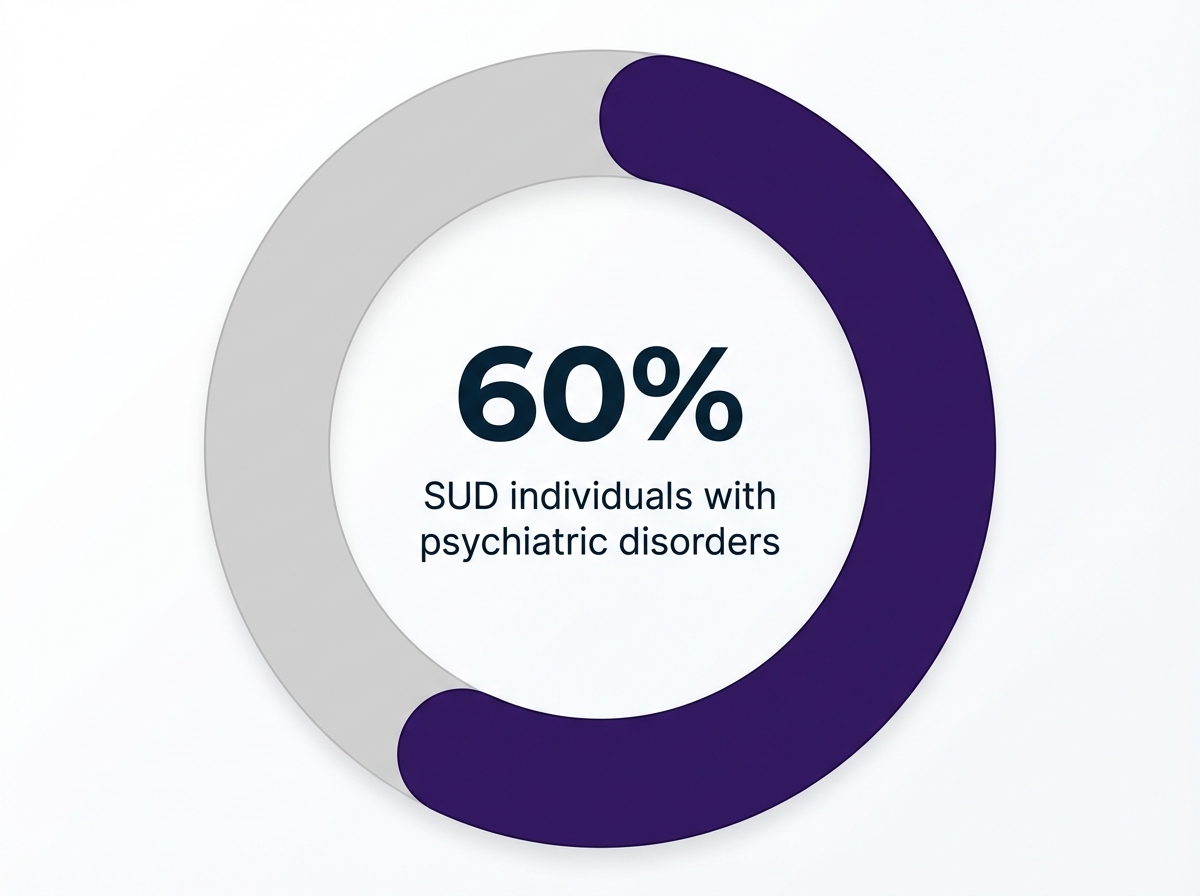
Co-occurring mental health conditions—sometimes called dual diagnoses—refer to when a person experiences both a substance use disorder and a psychiatric disorder, such as depression, bipolar disorder, or PTSD. This combination complicates treatment and recovery. Recent clinical research shows that about 60% of people with a substance use disorder also have an underlying mental health diagnosis10. For families and professionals in Oregon or the Pacific Northwest, this overlap means that intervention plans should always account for both sets of needs.
It is important to note that Oregon Trail Recovery does not offer primary mental healthcare—only co-occurring mental health treatment alongside SUD support. This approach is ideal for organizations serving populations where trauma, anxiety, or mood disorders are common, as ignoring co-occurring issues increases relapse risk and worsens the consequences of drug addiction. Integrated care models—those that address substance use and mental health together—improve sustained recovery rates by up to 40% compared to treating each problem separately4.
| Care Level | Estimated Time Investment | Typical Cost Range (Out-of-Pocket/Copay) | Resource Requirements |
|---|---|---|---|
| Medical Detoxification | 5 to 10 days | $1,000 - $3,500+ (varies by insurance) | 24/7 medical supervision, partner facility (e.g., Pacific Crest Trail Detox) |
| Intensive Outpatient (IOP) | 9 to 12 weeks (9+ hours/week) | $250 - $800 per week | Flexible scheduling, local housing/sober living |
With these complexities in mind, the next section explores how substance use disorders contribute to broader health, economic, and community consequences.
Health, Economic, and Social Consequences of Drug Addiction
Physical Health and Mortality Risks
A practical assessment tool can help professionals evaluate immediate physical health and mortality risks:
Physical Health and Mortality Risk Assessment:
- Has the individual experienced unexplained weight loss, persistent infections, or wounds?
- Are there signs of liver, kidney, or heart strain (e.g., jaundice, swelling, irregular heartbeat)?
- Any recent non-fatal overdoses, seizures, or episodes of unconsciousness?
- Has there been a documented decline in overall physical functioning?
The consequences of drug addiction on physical health are both acute and long-term. Overdose remains the most pressing threat, with over 110,000 overdose deaths in 2023 alone—though new CDC data show a 27% decrease in 2024, the risks are still substantial, particularly in regions like Oregon and the Pacific Northwest where fentanyl and polysubstance use are on the rise3. Synthetic opioids now account for nearly 70% of these fatalities, highlighting the dangerous shifts in drug supply and accessibility3.
Physical complications extend beyond overdose. Chronic substance use can damage vital organs—including the liver, heart, and kidneys—and increases susceptibility to infectious diseases, especially among those who inject drugs. Even when mortality rates dip, the burden of chronic illness, disability, and hospitalizations remains high for people with substance use disorders10.
Prioritize this when organizations need to focus on urgent medical stabilization and prevent repeat emergencies.
Next, we’ll examine how the consequences of drug addiction ripple out to families and communities.
Family and Community Impact
Family and community impacts are often underestimated when discussing the consequences of drug addiction. For professionals guiding families in Central Oregon, Wyoming, and the broader Pacific Northwest, a practical assessment can clarify where support is most urgently needed:
Family and Community Impact Quick Assessment:
- Have family relationships become strained or disconnected?
- Are children or dependents experiencing instability at home or school?
- Has the individual’s substance use led to job loss or housing insecurity affecting others?
- Are there signs of increased isolation, local crime, or diminished community trust?
Drug addiction rarely stays contained to one person—it has a ripple effect across households and neighborhoods. Studies reveal that only about 11% of people with a substance use disorder receive specialized treatment, leaving most families to cope with instability, financial stress, and emotional exhaustion on their own2. These pressures can escalate to involvement with child welfare, legal challenges, or community resource strain, often requiring families to seek out specialized Wyoming mental health resources or Oregon-based support networks.
This strategy suits organizations that work in close-knit or rural areas, where the stigma of addiction can lead to further isolation and decreased willingness to seek help. Family-based intervention models have been shown to boost treatment entry rates by up to 64%, especially when the person is resistant or disengaged9.
The consequences of drug addiction thus disrupt not just the individual, but the entire social fabric—making coordinated intervention and support essential. Next, we’ll look at how to recognize when professional intervention is urgently needed.
Real Recovery Starts in Portland, Oregon
Call now or verify insurance to take the first step toward lasting recovery in Portland.
Recognizing When Intervention Is Needed
Warning Signs and Assessment Questions
Early recognition of warning signs is critical for families and professionals aiming to minimize the consequences of drug addiction. A structured assessment process can clarify when intervention should move from concern to action.

Warning Signs and Assessment Questions Tool:
- Has the person’s appearance or hygiene changed noticeably?
- Are there frequent absences from work, school, or family commitments?
- Do you observe increased secrecy, lying, or missing valuables and money?
- Has there been a recent legal issue, accident, or unexplained injury?
- Are there visible changes in mood, energy, or social circles?
Studies indicate that only about 11% of those with a substance use disorder receive specialized treatment2. This gap often results from delays in recognizing or acting on these warning signs, especially in regions like Oregon and the Pacific Northwest where stigma or geographic barriers may limit access to care3. The consequences of drug addiction can escalate rapidly—what starts as missed family events or mood swings may progress to significant health crises or legal troubles if left unaddressed10.
Opt for a formal assessment when multiple warning signs cluster together or when risk behaviors (such as overdose or reckless driving) emerge. This path makes sense for organizations and families committed to early, proactive intervention rather than crisis response.
Next, we’ll explore practical approaches to help families and professionals overcome resistance to treatment.
Overcoming Resistance to Treatment
Overcoming resistance to treatment is a challenge many professionals and families in Oregon, Wyoming, and the Pacific Northwest encounter. To guide a constructive response, here’s a practical tool:
Resistance Response Planning Tool:
- Has the person explicitly refused help, or do they minimize the consequences of drug addiction?
- Is there a history of unsuccessful treatment attempts or abrupt dropouts?
- Are family members unintentionally enabling continued substance use (e.g., providing money or housing without boundaries)?
- Has communication broken down, or do discussions about treatment consistently escalate into conflict?
Consider this method if organizations are facing high levels of denial or ambivalence—especially when loved ones cycle between brief engagement and withdrawal. Research shows that family-based intervention models, such as ARISE and Johnson, increase treatment entry rates by up to 64% even for individuals who initially refuse help9. Collaborative approaches that invite the person into the process, rather than confront or coerce, tend to reduce defensiveness and open pathways to treatment.
Early, sustained engagement from family and professionals can break the cycle of avoidance and help mitigate the broader consequences of drug addiction10.
Up next: we’ll review evidence-based intervention models that empower families to facilitate lasting treatment entry and recovery.
Evidence-Based Intervention Strategies
Family-Centered Intervention Models
Family-centered intervention models have become a cornerstone for addressing the consequences of drug addiction, especially when a loved one is resistant to treatment or the family system is under strain. To help professionals assess readiness and select an appropriate intervention, use the following decision tool:

Family Intervention Model Selector:
- Is the person consistently refusing help or minimizing the problem?
- Has the family attempted prior conversations or informal interventions without results?
- Are there multiple family members willing to participate in a structured process?
- Does the situation involve significant risk (overdose, legal trouble, or child welfare concerns)?
These questions can guide whether to pursue a formal model like ARISE—which is designed to build engagement gradually—or a more directive approach such as the Johnson model. Research shows ARISE achieves a 64% treatment entry rate even for individuals initially resistant to care, a stark contrast to the national average of about 11% for treatment engagement without family intervention9, 2. Opt for this framework when families want to prioritize collaboration and reduce confrontation, while the Johnson model may fit urgent or high-risk situations that demand clear boundaries and swift action.
The consequences of drug addiction ripple through entire households, but evidence-based, family-inclusive strategies can dramatically improve treatment entry and long-term outcomes. Up next, we’ll walk through a 30-day action plan to help families put these models into practice.
Your 30-Day Action Plan for Families
A structured action plan can help families move from feeling overwhelmed to making real progress. Here’s a practical 30-day roadmap, designed for professionals guiding families in Oregon, Wyoming, and across the Pacific Northwest:
30-Day Family Action Plan Tool:
- Week 1: Schedule a family meeting to set clear, respectful boundaries and agree on shared goals. Begin documenting concerning behaviors and triggers as a group.
- Week 2: Consult with a regional interventionist or addiction specialist—ideally one versed in ARISE or Johnson models. Gather information about treatment options, insurance coverage, and timing for entry.
- Week 3: Practice communication skills, such as reflective listening and non-confrontational language. Prepare for the intervention by assigning roles (who will speak, who will support, etc.). Revisit boundaries if needed.
- Week 4: Hold the intervention with the support of a professional. Provide treatment options and a clear next step for your loved one. Debrief as a family and arrange ongoing support, whether the individual accepts help or not.
Consider this route if organizations and families are ready to act but unsure where to start. Studies show that following a stepwise process, especially with professional guidance, increases the likelihood of treatment entry and reduces the long-term consequences of drug addiction9, 2. For residential/inpatient or detox treatment, Oregon Trail partners with Pacific Crest Trail Detox to ensure safe, medically supervised stabilization before transitioning to outpatient care.
With a 30-day plan in place, the next step is connecting families to comprehensive care resources throughout the Pacific Northwest.
Finding Comprehensive Care in the Pacific Northwest
Families working in behavioral health know the reality: when someone struggling with substance use in Central Oregon or across Wyoming finally shows readiness for treatment, that window can close in hours, not days. We understand the frustration of 4-6 week waitlists when your loved one needs help now.
Geographic isolation across the Pacific Northwest compounds this challenge—limited provider networks in rural Wyoming, long drives from Portland area suburbs, and the constant risk that momentum toward recovery will evaporate before a bed opens up. Finding reliable Wyoming drug rehab or Oregon addiction treatment requires a facility that prioritizes immediate access.
Insurance & Admission Checklist
- Verify in-network vs. out-of-network benefits.
- Confirm coverage for co-occurring mental health treatment.
- Gather necessary medical records and identification.
- Coordinate transportation to the facility.
Effective treatment across Oregon, Washington, and Wyoming requires more than clinical expertise—it demands programs that understand the cultural and environmental factors shaping recovery in our region. Families navigating this landscape need partners who can address both substance use and co-occurring mental health concerns through evidence-based approaches, with the full continuum of care ready when it matters most.
Research shows that seamless coordination from medically supervised detoxification through transitional support prevents the gaps where relapse takes hold. Oregon Trail Recovery works alongside families through this entire journey, with admission typically available within 24 hours rather than weeks.
Here's what makes the difference for families dealing with a resistant loved one: intervention expertise combined with immediate treatment access. We've seen countless situations where professional intervention models—whether ARISE or Johnson approach—create that crucial opening for someone who's been refusing help.
When treatment teams can move quickly from successful intervention to comprehensive care without delay, outcomes improve dramatically. That's why Oregon Trail Recovery integrates intervention services directly with our clinical programs, eliminating the coordination challenges that often derail momentum between "yes, I'll go" and actually walking through the door.
Frequently Asked Questions
What insurance coverage options exist for addiction treatment in Oregon and the Pacific Northwest?
Insurance coverage for addiction treatment in Oregon and the Pacific Northwest typically includes both public and private options. Medicaid (Oregon Health Plan) covers a wide range of services—such as outpatient care, detox, and co-occurring mental health treatment—while most private insurers are required by law to provide parity for substance use disorder services, including counseling and group therapy. Studies indicate, however, that only about 11% of people with a substance use disorder access specialized treatment, often due to confusion about coverage or network limitations2. This approach works best when families and professionals verify benefits early, clarify in-network providers, and advocate for comprehensive care. Regional mental health resources and patient advocates can help navigate coverage questions and minimize out-of-pocket costs.
How quickly can someone begin treatment after an intervention?
Treatment entry after a professional intervention can happen very quickly—sometimes within 24 to 48 hours if the person is ready and resources are lined up. Many programs in Oregon and the Pacific Northwest prioritize rapid admission, especially for those at high risk, but actual timing depends on factors like insurance approval, bed availability, and the type of service needed (detox, residential, or outpatient care). Studies indicate that family intervention models speed up access to care, with up to 64% of resistant individuals entering treatment soon after a structured intervention9. Acting promptly helps minimize the consequences of drug addiction and reduces the risk of crisis escalation.
What happens if my loved one refuses treatment even after a professional intervention?
If a loved one refuses treatment even after a professional intervention, it can feel discouraging, but the process is rarely a single event. Research shows that family-based interventions like ARISE or Johnson models may still prompt treatment entry after repeated or ongoing engagement, with up to 64% ultimately agreeing to seek help9. Families and professionals should maintain clear boundaries, avoid enabling behaviors, and keep communication open. Continuing to offer support and resources—while respecting autonomy—can help reduce harm and keep the door to recovery open. Persistent, compassionate involvement often lessens the long-term consequences of drug addiction10.
How do polysubstance use patterns affect treatment planning?
Polysubstance use—when a person regularly uses more than one substance, such as combining opioids with stimulants or alcohol—creates added complexity in treatment planning. This pattern raises the risk of overdose, unpredictable withdrawal symptoms, and drug interactions, all of which can complicate medical stabilization and ongoing care. Research highlights that rising rates of polysubstance use, particularly involving fentanyl and stimulants in the Pacific Northwest, are driving more severe health emergencies and require integrated, flexible treatment approaches3. A tailored care plan should include comprehensive assessment, frequent monitoring, and collaboration among addiction medicine, mental health, and medical teams to address the full scope of risks and needs. This solution fits situations where the consequences of drug addiction are heightened by multiple substance use patterns.
What role does medication-assisted treatment play in comprehensive recovery programs?
Medication-assisted treatment (MAT) combines FDA-approved medications—such as buprenorphine, methadone, or naltrexone—with counseling and behavioral therapies to support recovery from opioid use disorder and some other substance use disorders. MAT helps reduce cravings, stabilize brain chemistry, and lower the risk of overdose deaths, which are a major part of the consequences of drug addiction. Research shows MAT improves treatment retention and long-term recovery, especially when integrated with therapy and social support5. This approach works best for individuals who have struggled with relapse or need medical stabilization, and it’s increasingly recognized as a gold standard in comprehensive recovery programs.
How can families maintain boundaries while supporting someone through treatment?
Maintaining boundaries while supporting someone in treatment is a balancing act that professionals and families across Oregon and the Pacific Northwest often navigate. Clear boundaries—like not providing money for non-essentials or setting expectations around communication—protect everyone’s well-being without undermining support. Research shows that families who set and uphold boundaries are less likely to enable harmful behaviors and more likely to foster treatment engagement9. This method works when families communicate openly and consistently reinforce limits with empathy, not anger. It's helpful to remind all involved that boundaries aren’t punishment—they’re a form of care that reduces the long-term consequences of drug addiction10.
What specific outcomes should we expect in the first 90 days of treatment?
During the first 90 days of treatment, families and professionals can expect to see early stabilization in physical health, improved daily routines, and the beginnings of trust-building between the person and their care team. Most individuals experience reduced cravings and fewer withdrawal symptoms as medication and counseling take effect. Relapse risk remains highest in this period, so consistent support, boundary-setting, and engagement in therapy are crucial. Research shows that active family involvement and integrated care increase treatment retention and reduce the long-term consequences of drug addiction9, 10. Progress may be gradual, but even small positive changes signal a strong foundation for continued recovery.
References
- Substance Use Disorder | National Institute on Drug Abuse. https://www.nida.nih.gov/research-topics/substance-use-disorder
- SAMHSA Data and Statistics | Substance Abuse and Mental Health Services Administration. https://www.samhsa.gov/data-research/data-statistics
- Overdose Prevention | Centers for Disease Control and Prevention. https://www.cdc.gov/overdose/index.html
- PubMed Central | National Center for Biotechnology Information. https://www.ncbi.nlm.nih.gov/pubmed/
- American Society of Addiction Medicine (ASAM) Resources. https://www.americanaddictionsociety.org/
- Addiction | American Psychological Association. https://www.apa.org/science/about/psa/addiction
- Why Some People Are More Vulnerable to Addiction | NIH. https://www.nih.gov/news-events/nih-research-matters/why-some-people-are-more-vulnerable-addiction
- Co-Occurring Substance Use and Mental Health Disorders | NAMI. https://www.nami.org/mental-health/substance-use
- Family Interventions for Substance Use Disorders: A Synthesis of Evidence | Journal of Substance Abuse Treatment. https://www.ncbi.nlm.nih.gov/pmc/articles/PMC4893829/
- Substance Use Disorders | StatPearls / NCBI Bookshelf. https://www.ncbi.nlm.nih.gov/books/NBK570621/
Relapse Doesn't Mean the End Of Your Journey
Reach out today to explore programs that support real, long-term sobriety.